The Best HubSpot Meeting Scheduler Alternatives in 2027
Table of Contents
Create and share intuitive booking pages in minutes
Start your 14-day free trial of OneCal to create and share booking pages that are easy to use, manage and customize. No credit card required.
HubSpot is a very popular CRM among startups and companies of all sizes, and we used it ourselves in 2022 to store the people who requested access to the OneCal Private Beta.
One of the sales tools inside HubSpot is the HubSpot Meeting Scheduler, also called HubSpot Meetings, which lets you share a booking page where customers can book time with you.
The scheduler is part of HubSpot's free tools, where the free version is limited to one personal meeting link, and an upgrade to a HubSpot paid plan is needed to use features like team links, branding, etc. In this article, we explain the downsides of the HubSpot Meeting Scheduler and list the best HubSpot Meeting Scheduler alternatives, with prices checked in November 2026.
Quick answer: the best HubSpot Meeting Scheduler alternatives
- OneCal: best if you work across Google Calendar, Outlook, iCloud, and CalDAV calendars and want unlimited booking links plus calendar synchronization, a unified calendar view in one tool, for a very reasonable price.
- Calendly: best-known option, with a free plan and a native HubSpot integration.
- SavvyCal: best for a polished booking experience with round robin and a HubSpot integration.
- Zoho Bookings: best low-cost option with a free plan for one user.
- Scheduler AI: best if you want an AI assistant that books meetings over email.
- Cal.com: best free plan for one user who needs many links.
- Reclaim AI: best if you also want AI task and focus time planning.
- Kronologic: best for sales teams that want AI to book meetings with leads.
If you are happy inside HubSpot and only need more links or team links, the simplest move is to upgrade to Sales Hub Starter instead of switching tools.
HubSpot Meeting Scheduler alternatives compared
Tool | Free plan | Starting price | Calendars | HubSpot integration | Team scheduling |
|---|---|---|---|---|---|
HubSpot Meetings | Yes, 1 personal link with HubSpot branding | Sales Hub Starter, $20 per seat per month | Google, Office 365, Exchange | Built in | Paid seats only |
OneCal | No, but there is a 14-day free trial | $6 per user per month ($5 billed annually) | Google, Outlook, iCloud, CalDAV | Through Zapier triggers | Collective links, but no round robin |
Calendly | Yes, 1 event type and 1 calendar | $10 per seat per month, billed annually | Google, Outlook, Office 365 and Exchange, with no new iCloud connections | Native | Paid plans |
SavvyCal | Free to set up, paid to accept bookings | $12 per user per month ($10 billed annually) | Google, Microsoft, iCloud, Fastmail | Native | Collective and round robin |
Zoho Bookings | Yes, 1 user | $8 per user per month ($6 billed annually) | Zoho, Google, Microsoft 365 | Through Zapier | Paid plans |
Scheduler AI | No, but there is a 7-day trial | $50 per month | Not listed on its pricing page | Yes, through a HubSpot Marketplace app | Routing to team members |
Cal.com | Yes, 1 user | Teams, $12 per user per month billed yearly ($16 monthly) | Google, Outlook, Apple, Exchange, CalDAV and more | Yes, listed on the Free plan | Teams plan, with round robin |
Reclaim AI | Yes, Lite for 1 user | $12 per seat per month ($10 billed annually) | Google, Outlook | Not listed on its integrations page | Paid plans |
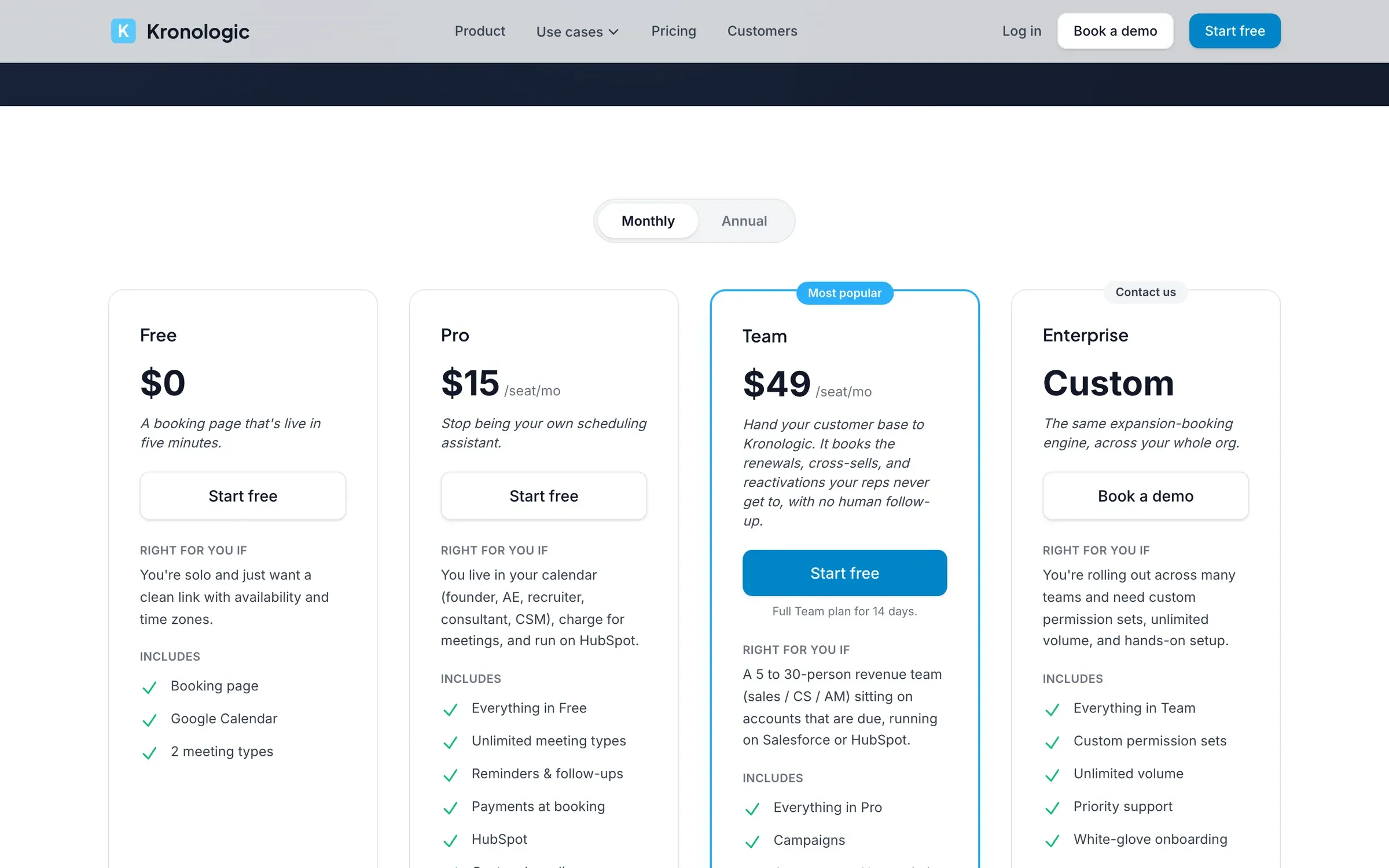
Kronologic | Yes, 2 meeting types | Pro, $15 per seat per month | Google Calendar on the free plan | HubSpot on Pro and Team | Team plan, $49 per seat per month |
What does the free HubSpot Meeting Scheduler include?
Here is how the free tools compare to a paid Sales Hub seat, based on HubSpot's pricing page.
HubSpot free tools | Sales Hub Starter and above | |
|---|---|---|
Price | $0, up to 2 users | From $20 per seat per month |
Meeting links | 1 personal meetings link | 1,000 personal and team meeting links |
HubSpot branding on the booking page | Shown | Removed |
Team meeting links | No | Yes |
AI meeting assistant | No | Professional ($100 per seat per month) or Enterprise only |
Calendars | Google, Office 365, Exchange | Google, Office 365, Exchange |
When should you stay with the HubSpot Meeting Scheduler?
HubSpot Meetings is a good choice if your team already works in HubSpot every day, since bookings are logged on the contact record without extra setup and you don't pay for a second tool. If one personal link is enough, the free tools should be sufficient for your use case, and if you need team links or want the branding removed, Sales Hub Starter is usually cheaper than moving your whole team to another product.
Look for an alternative if you do not use HubSpot as your CRM, if you use iCloud or other calendars that HubSpot does not connect, or if people outside the sales team need booking links too.
What are the downsides of the HubSpot Meeting Scheduler?
The HubSpot Meeting Scheduler is built to work inside HubSpot, which comes with some downsides:
1. You need a HubSpot Account
To use the HubSpot Meeting Scheduler, you have to sign up for a HubSpot account. The scheduler is part of the Sales Hub, so your bookings and contacts live in the HubSpot CRM, and you cannot use it as a standalone scheduling tool.
2. Takes time to get used to the HubSpot User Interface
Given that HubSpot handles everything related to marketing, sales, and customer success, it can be quite a strain to get used to the app's UI and UX, as you’re overwhelmed with features.
Suppose you’ve used Calendly or any other appointment-scheduling software in the past. In that case, you’ll find the interface overwhelming at first, as the Meeting Scheduler is not the primary feature offered by HubSpot.
3. The free plan is limited to one link with HubSpot branding
The HubSpot Meeting Scheduler is free to start, as HubSpot's free tools cover up to 2 users. Each user gets 1 personal meeting link, and the booking page shows HubSpot branding.
If you need a second link, for example, one for intro calls and one for demos, you have to upgrade to one of the paid plans.
4. Team features and more links need a paid Sales Hub seat
Sales Hub Starter costs $20 per seat per month, raises the limit to 1,000 personal and team meeting links and removes the HubSpot branding. However, every person who needs these features needs a paid seat.
For a team of 5, that is $100 per month for Sales Hub Starter, while the same team pays $30 per month on the OneCal Starter plan ($25 on annual billing). This only matters if scheduling is the main reason you would pay for HubSpot, because if you already pay for Sales Hub, the scheduler costs you nothing extra.
The AI meeting assistant needs Sales Hub Professional ($100 per seat per month, plus a $1,500 onboarding fee) or Enterprise ($150 per seat per month, plus a $3,500 onboarding fee).
5. No iCloud or CalDAV calendars
HubSpot integrates with Google Calendar, Office 365, and Exchange, but iCloud is not on the list, and neither are CalDAV calendars such as Fastmail or Nextcloud. If part of your schedule lives in one of those calendars, HubSpot cannot read the availability and check these calendars for conflicts.
6. Other limits that competing tools point out
Other scheduling vendors list more gaps in their own comparisons, and HubSpot's own help article confirms some of them. Meetings booked through a HubSpot scheduling page are created on your default personal calendar, and you can add up to three reminder emails before a meeting. The help article does not mention meeting polls or single-use links, which Calendly points out as missing, so it is worth testing these points in your own HubSpot account before you decide.
The Best HubSpot Meetings Alternatives
1. OneCal
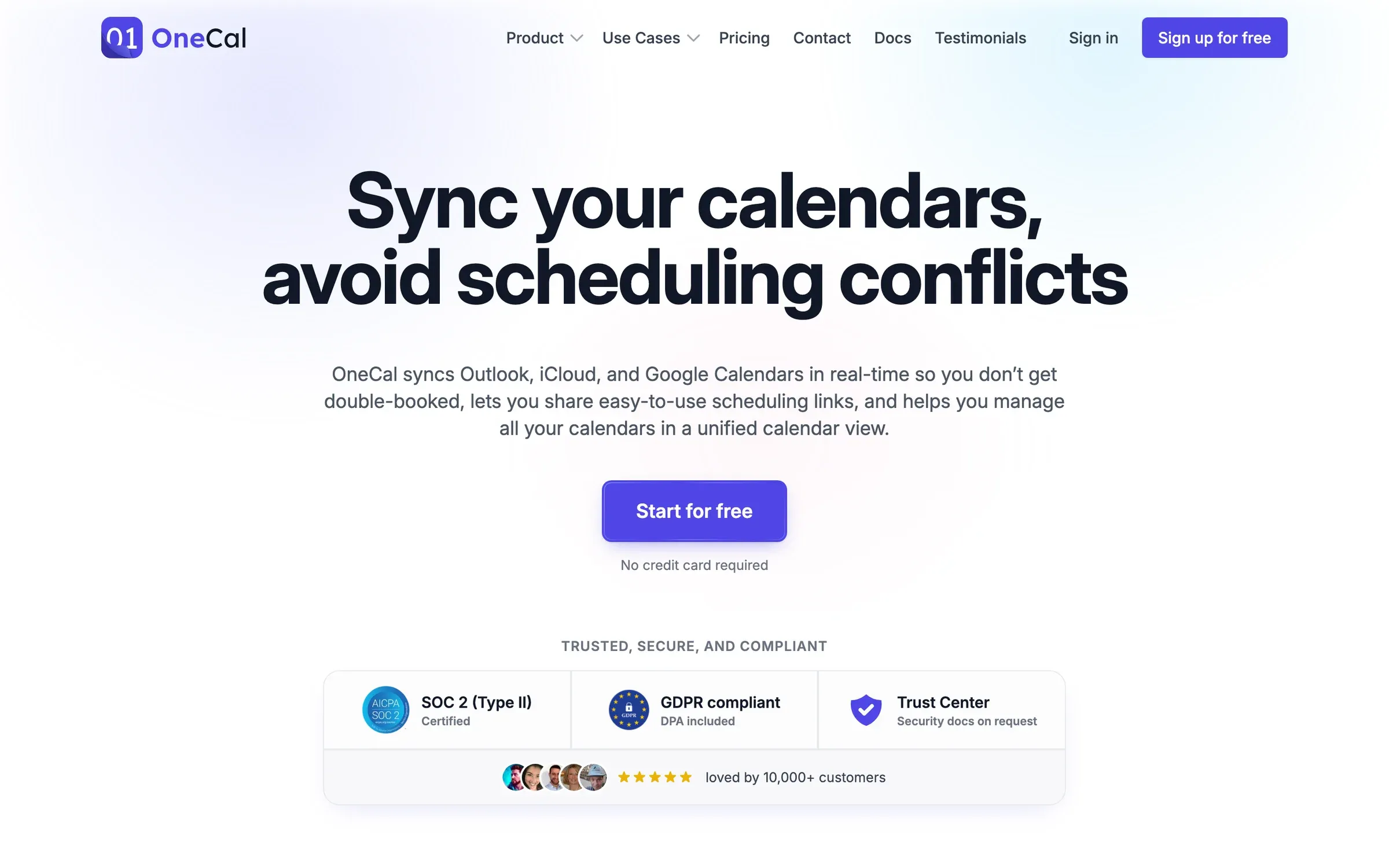
OneCal is a meeting scheduler and calendar platform that keeps all your calendars in one place, with booking links, calendar sync, a unified calendar view, an AI Assistant, and iOS and Android apps.
Unlike HubSpot, OneCal offers scheduling links that work across many calendars and are not tied to a CRM.
Features
- Works with more calendars than HubSpot: OneCal integrates with Google Calendar, Outlook, iCloud and any CalDAV calendar, such as Fastmail, Yahoo, Zoho or Nextcloud, while HubSpot does not connect iCloud. iCloud and CalDAV calendars connect with an app-specific password and work with all OneCal features like calendar synchronization, scheduling links, unified calendar view, and more. See the iCloud calendar scheduling app and CalDAV integration pages for more information.
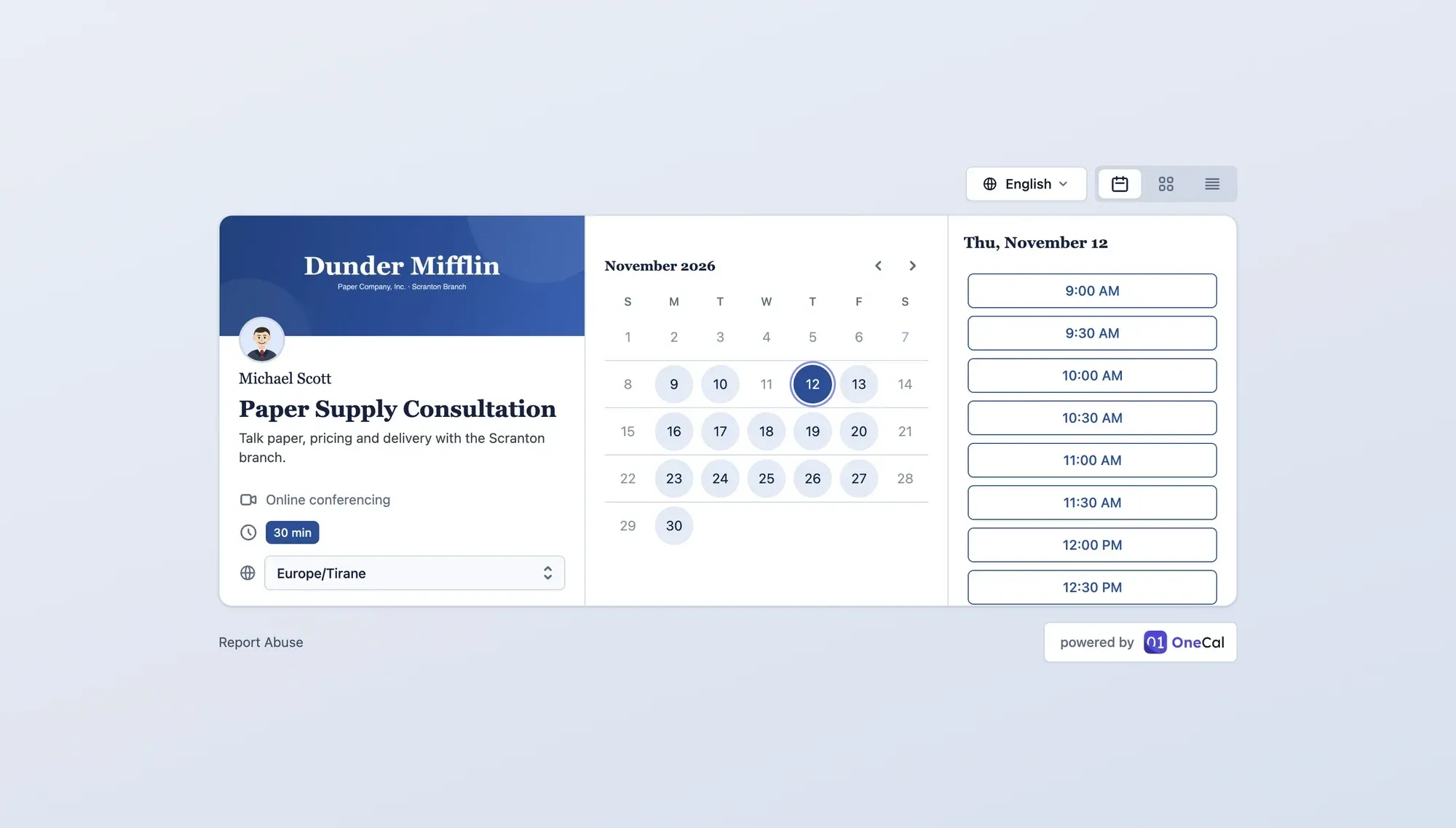
- One-on-one scheduling links: Similar to HubSpot Meeting Scheduler, you can easily create scheduling pages where others can book meetings with you. The OneCal Booking Pages take into account the availability from all your connected calendars, and booking links are unlimited on every plan.
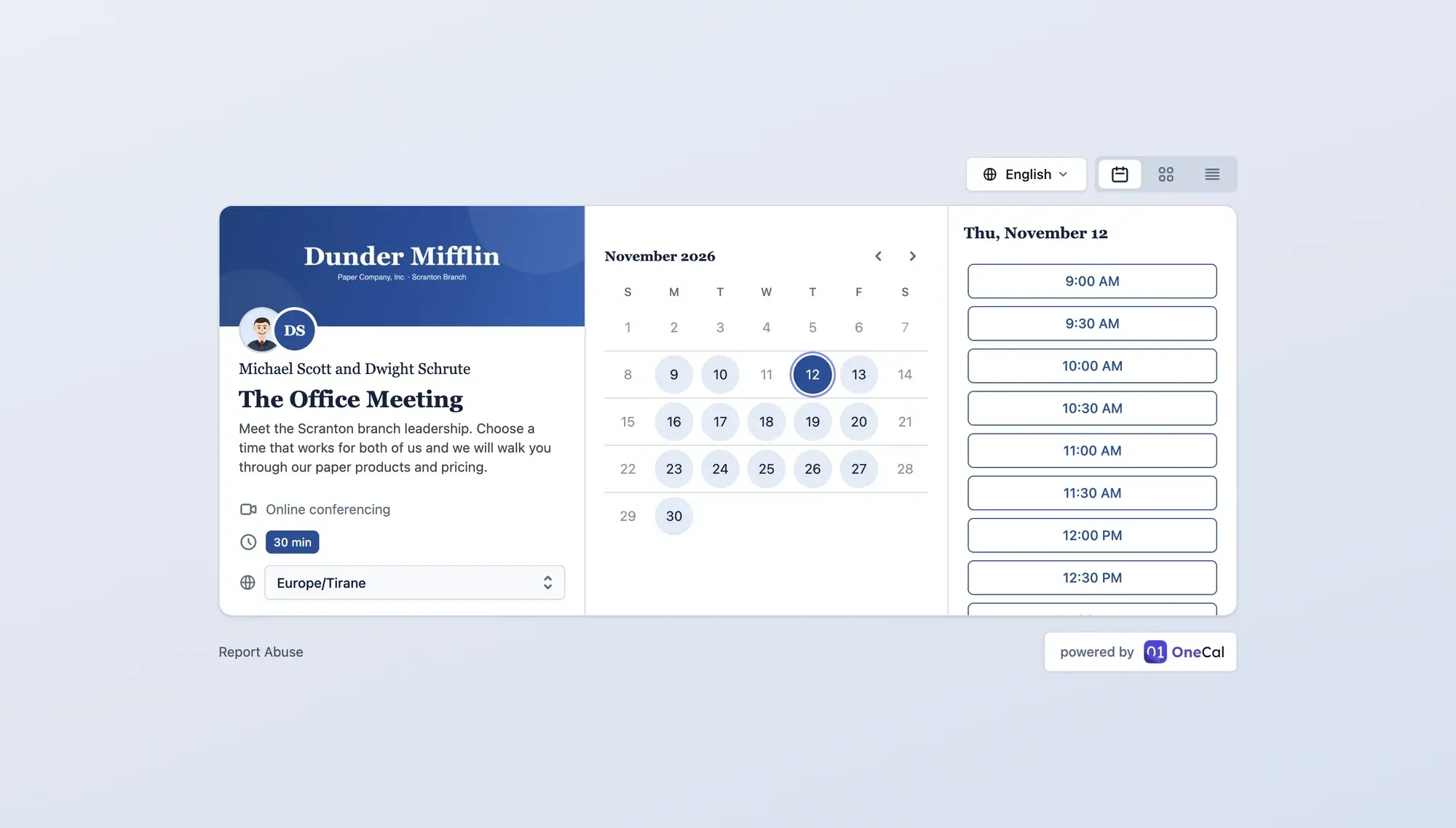
- Collective Booking Pages: OneCal has support for teams, meaning that you can invite your team members to OneCal and create collective booking links where others can book meetings with you and your team.
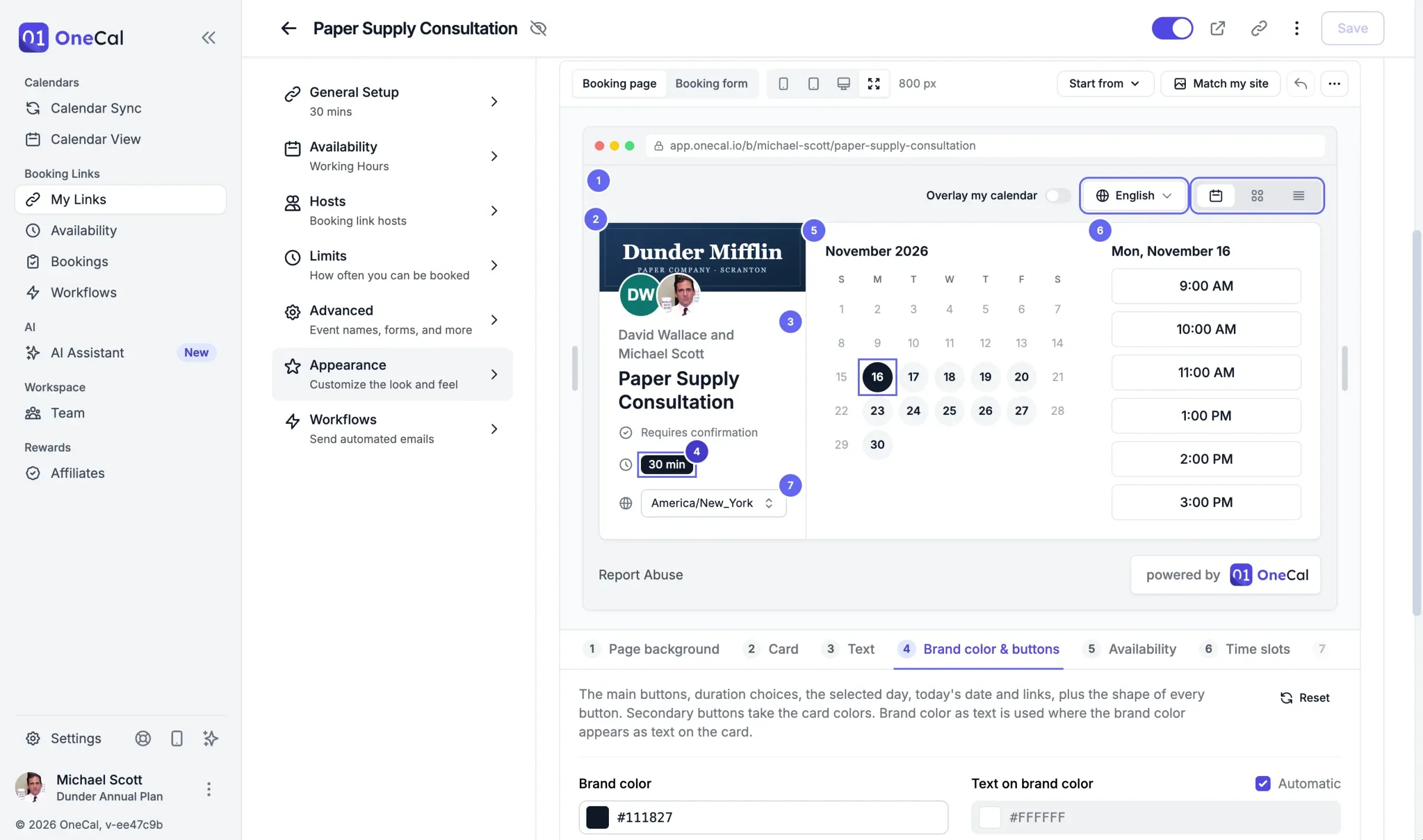
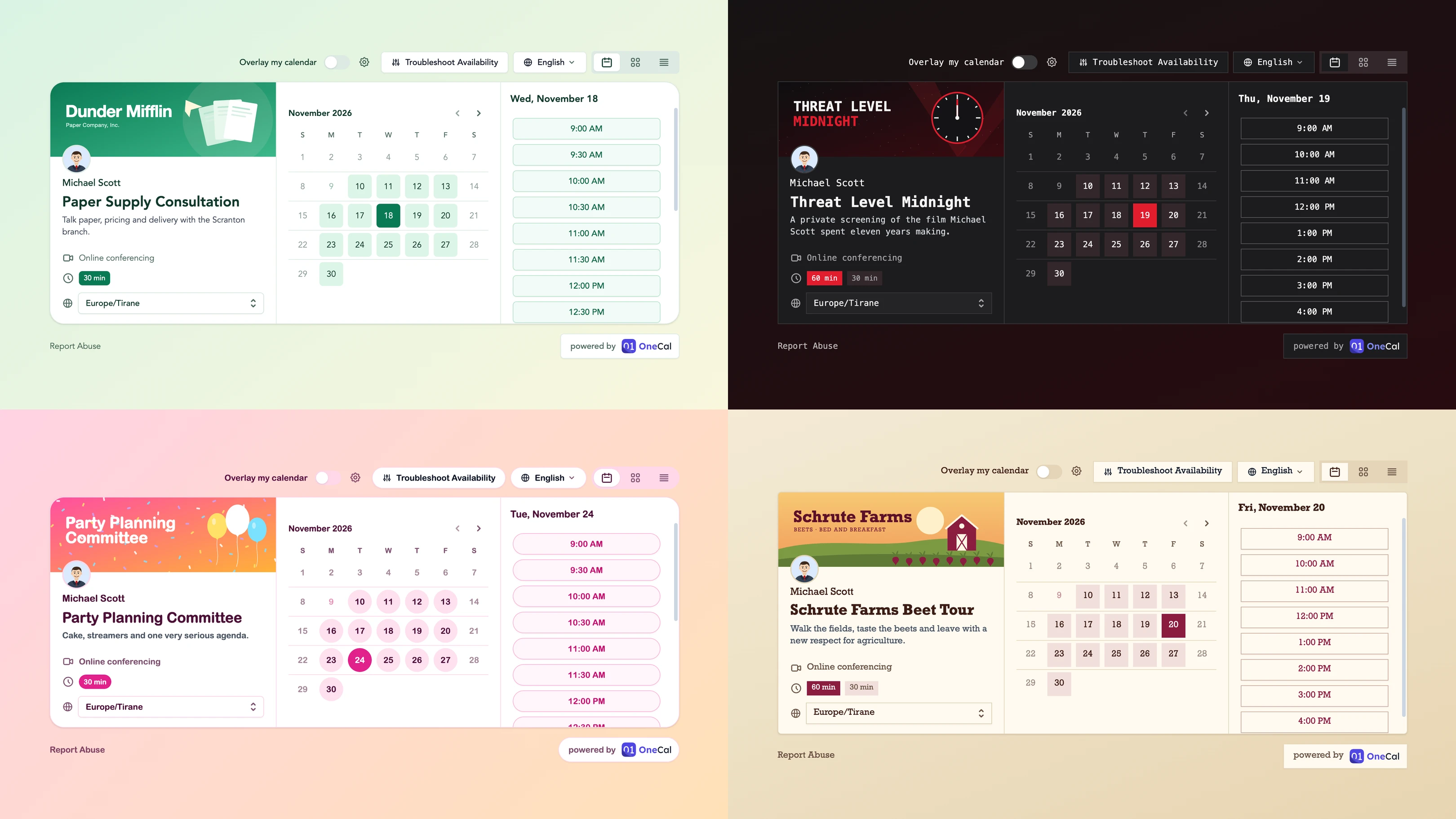
- Appearance editor and layouts: You can style the background, text, fonts, buttons and time slots of your booking pages, start from presets, or use "Match my site" to build a theme from a screenshot of your website. Booking pages come in Monthly, Weekly and Column layouts, and guests can turn on Overlay my calendar to see their own free and busy times next to your open slots. Read more in the appearance editor announcement.
- Website embed and private links: You can embed a booking link on your website, or share private booking links that are one-time, usage-limited or expiring.
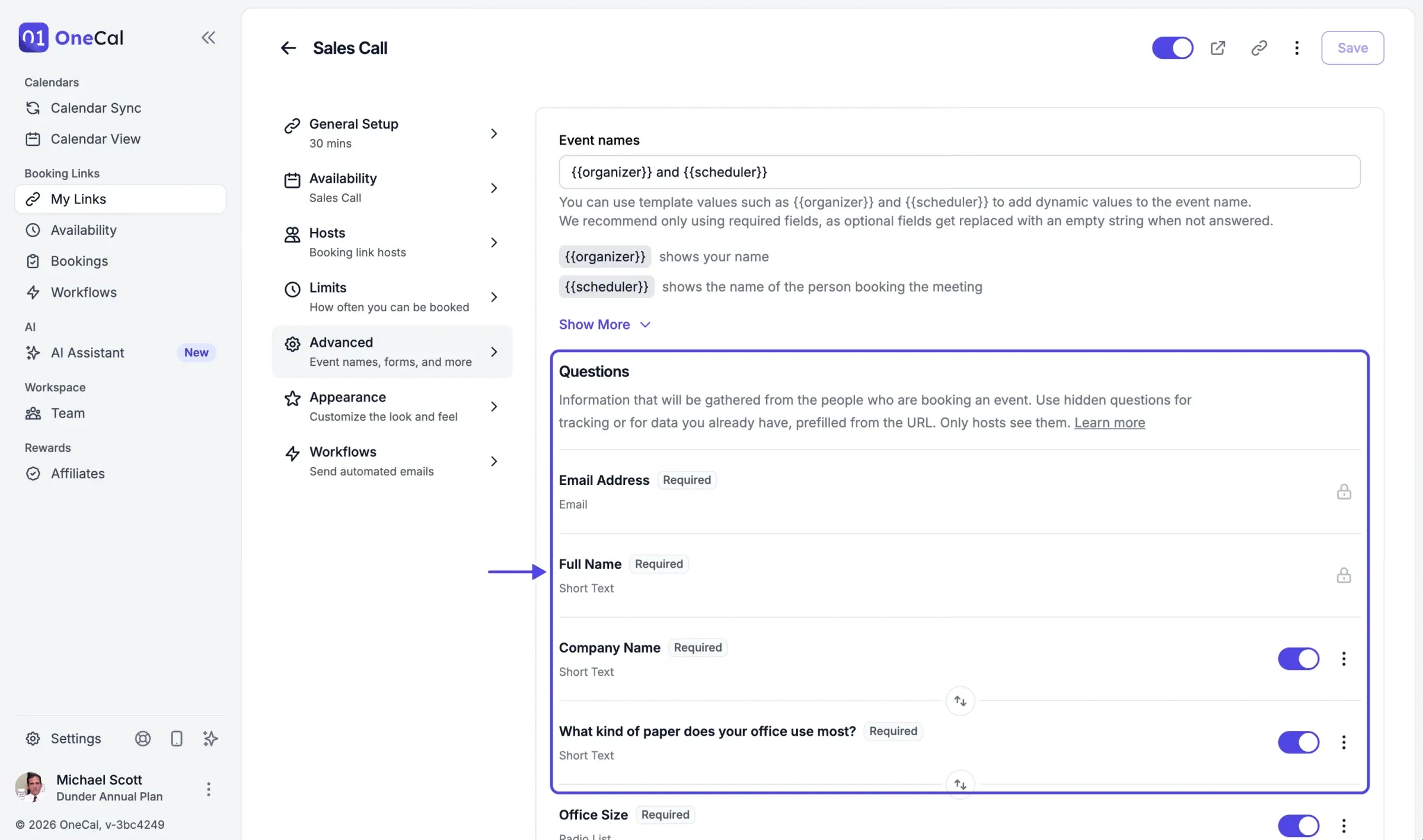
- Custom Questions: Also supported by HubSpot Meeting Scheduler, OneCal can create custom questions for your booking form. You can ask your guests questions with short or long text answers, phone numbers, dropdowns, checklists, and radio lists.
- Booking Limits: OneCal allows you to set booking limits so you don’t get overloaded with meetings. Limits include Buffer times before and after meetings, notice periods, and the ability to limit future bookings.
- Workflows: OneCal can send automated emails before an event, after an event, or when a booking is created, canceled, or rescheduled.
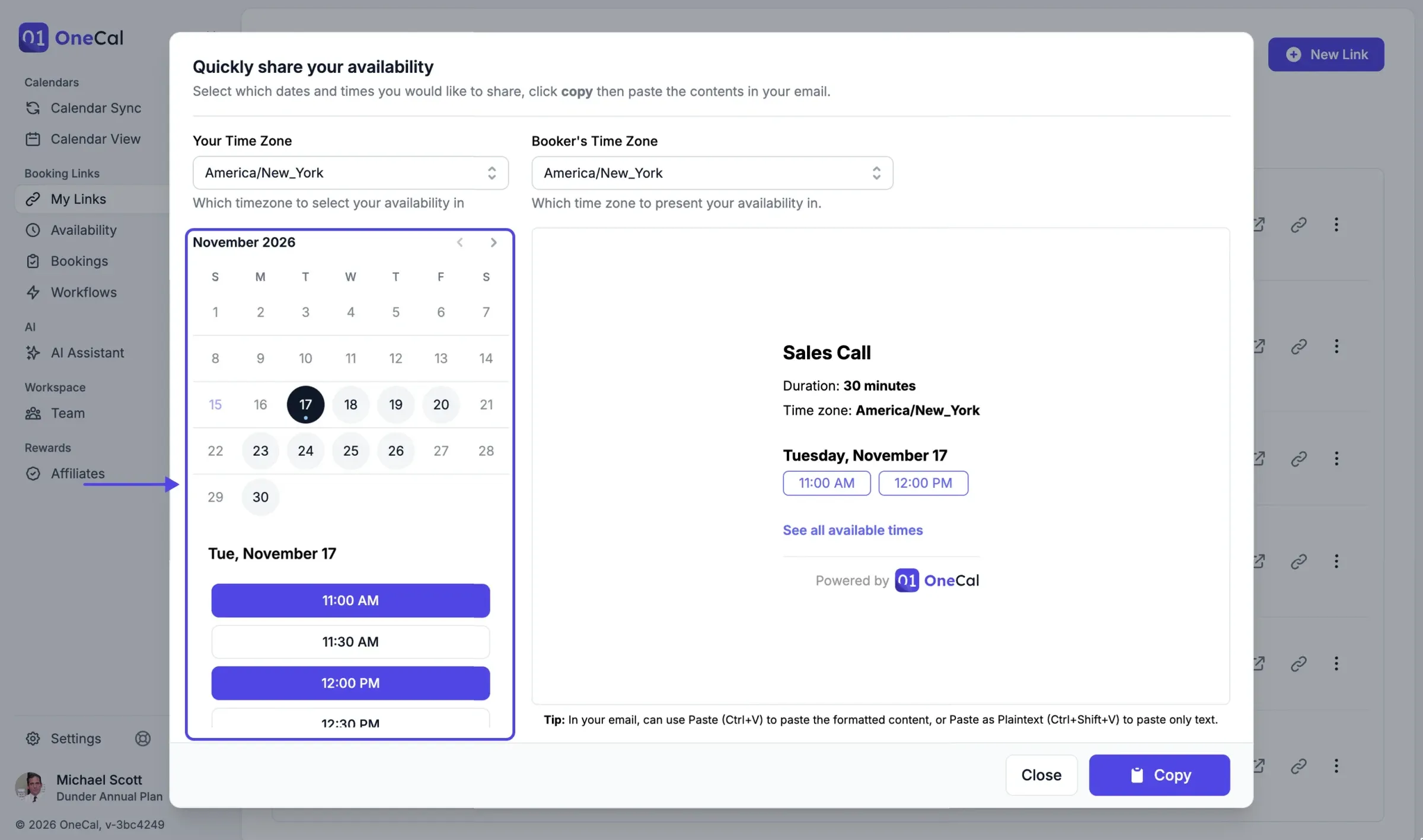
- Copy availability via email: You can select a booking link and out of it, select slots that you’d like others to book time with you. You can copy those suggestions and paste them via email or other mediums.
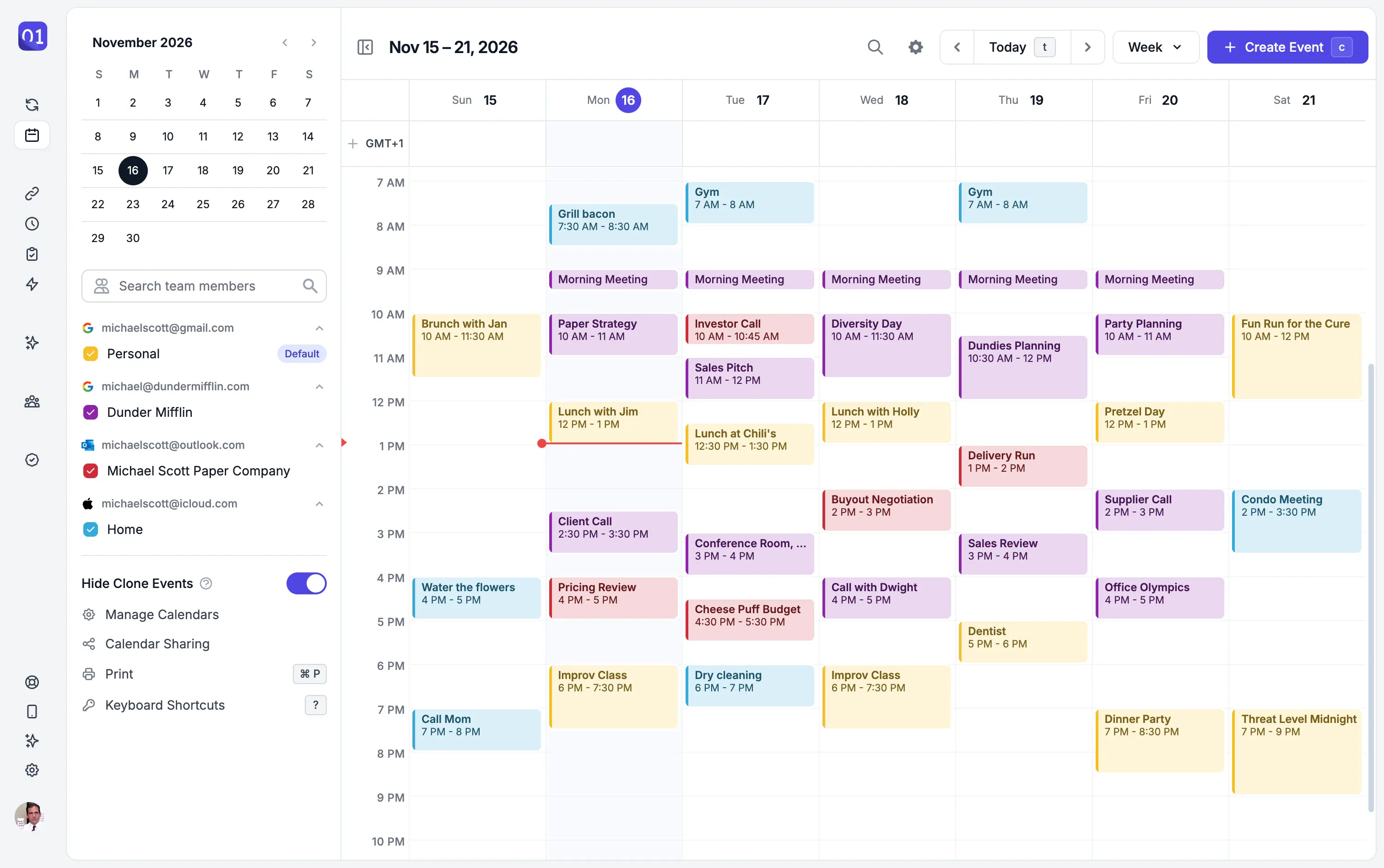
- View all your calendars in one place: Aside from the booking links feature, OneCal has a Calendar View feature that allows you to see the meetings from all your calendars in one view, and create, edit and delete events.
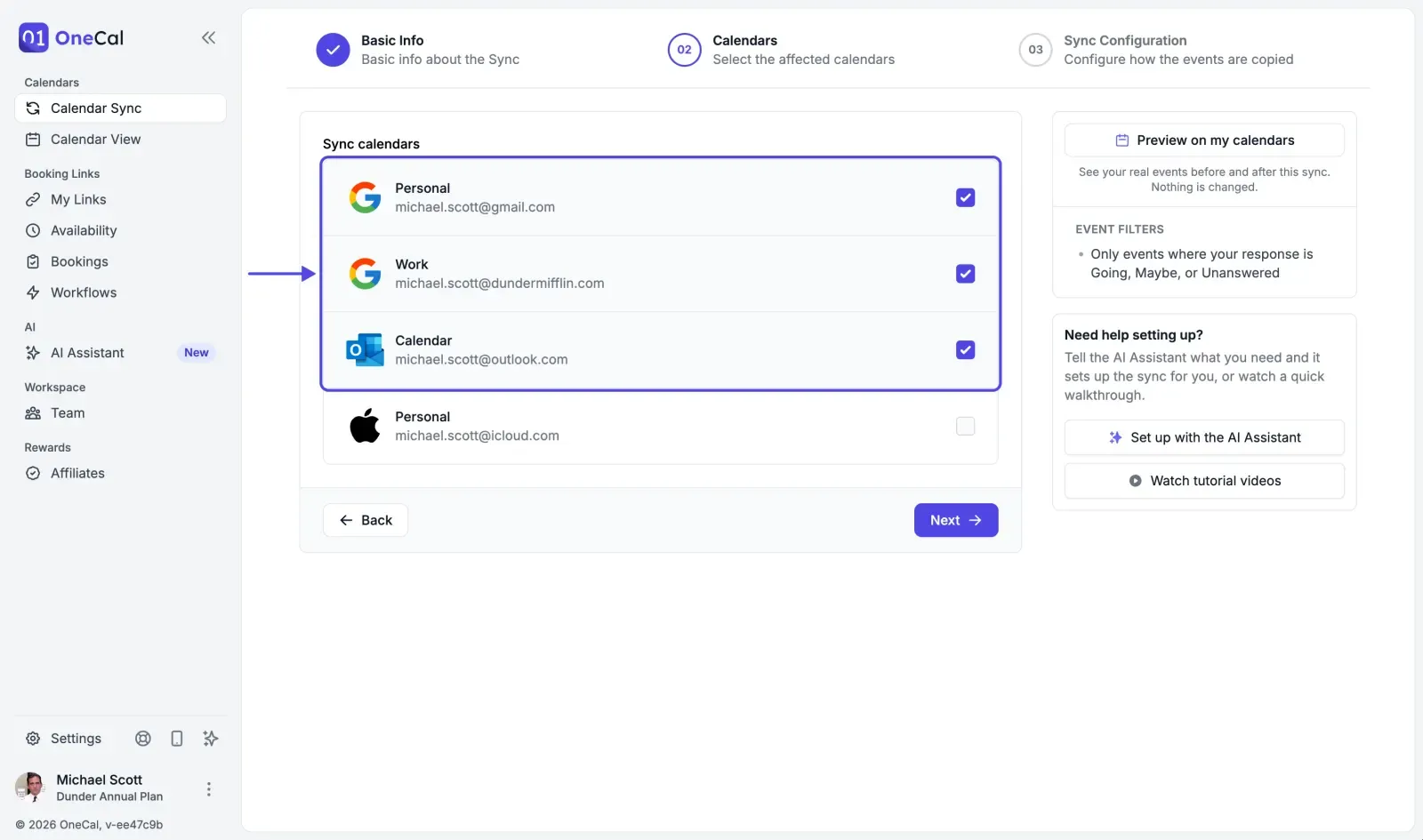
- Sync multiple calendars: If you manage several Google, Outlook, iCloud or CalDAV calendars, you can use OneCal Calendar Sync to keep them in step. For example, if you have a Google Calendar and an Outlook Calendar and sync them using OneCal, events from the Google Calendar will be reflected in Outlook and vice versa. Google and Outlook update in real time, while iCloud and CalDAV changes are picked up about every 10 minutes. You can read our guide on how to sync Outlook and Google Calendars to learn more about how the calendar synchronization feature works.
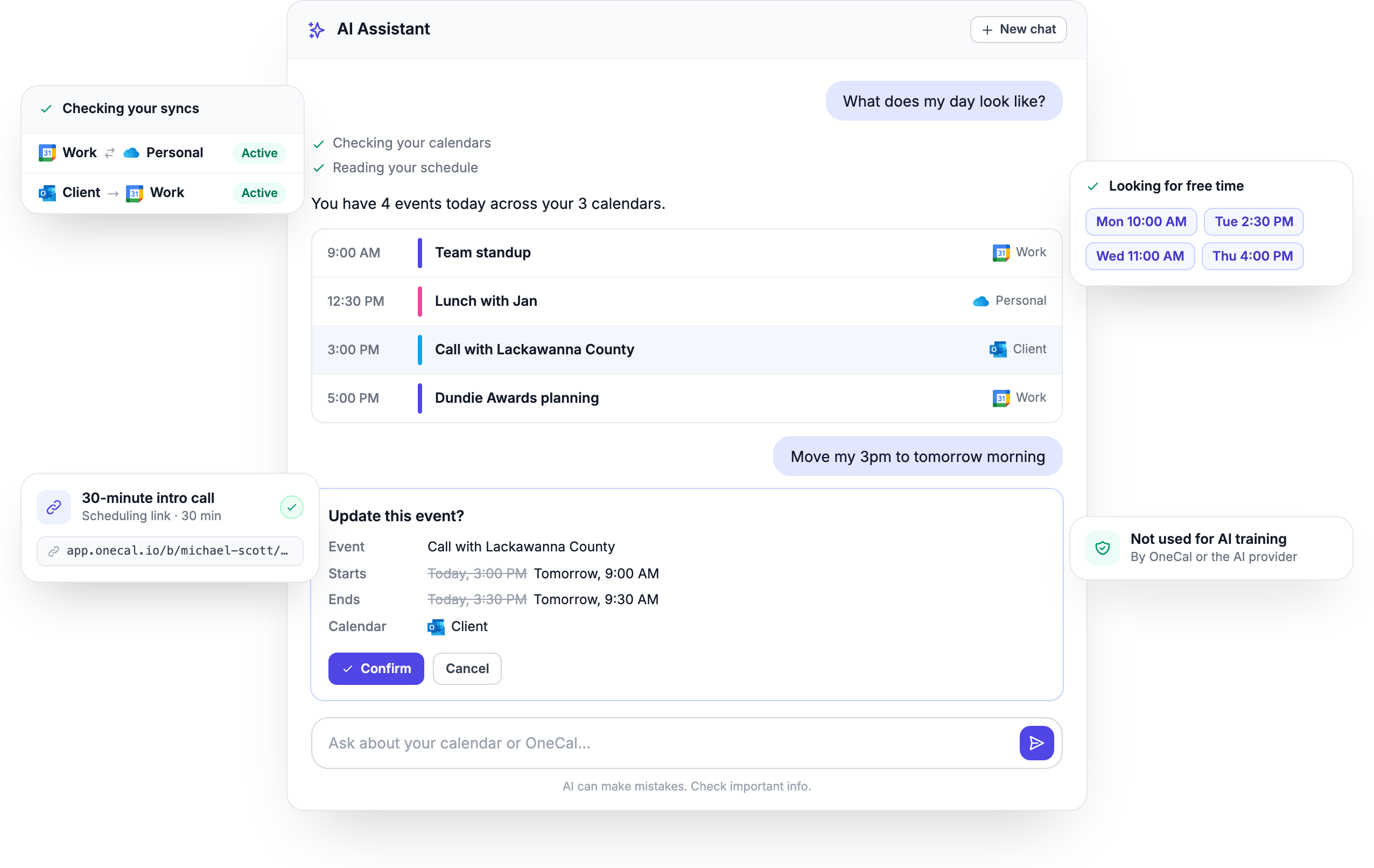
- AI Assistant and mobile apps: The AI Assistant can answer questions about your schedule and manage events, calendar syncs, and booking links in plain language, and every change needs your approval. OneCal also has iOS and Android apps, which means that you can use all the OneCal features straight from your mobile device.
How OneCal works with HubSpot
OneCal has no native HubSpot integration, but you can send bookings to HubSpot through Zapier. OneCal offers Zapier triggers for bookings that are requested, confirmed, changed, declined, or canceled, and a Zap can then create or update a contact in HubSpot. Read more in OneCal integrates with Zapier to learn more about the OneCal <> Zapier integration.
Pricing
- Starter: $6 per user per month, or $5 billed annually, with up to 2 connected calendars.
- Essential: $12 per user per month, or $10 billed annually, with up to 5 connected calendars.
- Premium: $30 per user per month, or $25 billed annually. It connects up to 50 calendars and removes OneCal branding from booking links.
- Custom/Enterprise Plans: Contact for pricing
Every plan includes unlimited booking links and unlimited calendar syncs, but there is no free plan.
OneCal offers a 14-day free trial, and no credit card is required. Start your 14-day free trial to create your scheduling pages and easily get booked.
2. Calendly
Calendly is the best-known scheduling tool in the market, and it is the alternative most people compare with HubSpot Meetings first.
Features
- Native HubSpot integration: On the Standard plan and above, Calendly offers the HubSpot integration, which means that it can get customer details and meeting activity to the HubSpot CRM when someone books. Calendly Routing can also be added to HubSpot forms, so qualified leads can book right after they submit a form.
- Team scheduling: If you upgrade to the paid plans, you can use team event types, such as collective and round robin meetings.
- Integrations and AI: Calendly connects to many sales and marketing tools, and in 2026 it also launched an MCP server, which is available on all plans.
- Calendars: Calendly integrates with Google Calendar, Outlook, Office 365, and Exchange, but it stopped accepting new iCloud connections on August 20, 2024, so it has the same iCloud gap as HubSpot.
Pricing
- Free: 1 event type, 1 calendar connection, one-on-one meetings only
- Standard: $10 per seat per month, billed annually, and it is the first plan that connects to HubSpot.
- Teams: $16 per seat per month, billed annually
- Enterprise: From $15,000 per year
Please read our article on The Best Calendly Alternatives to learn more about Calendly and the competition.
3. SavvyCal
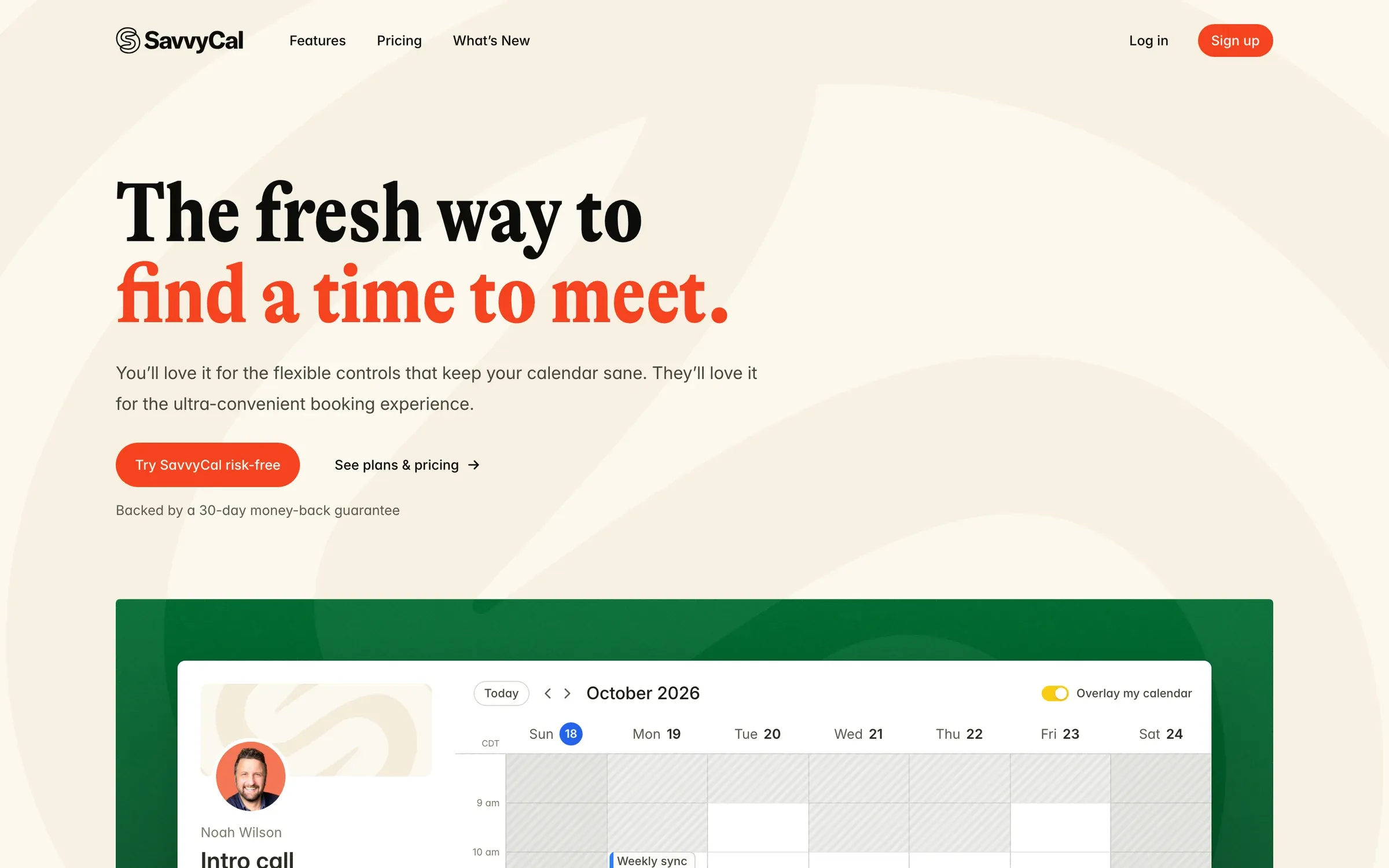
SavvyCal is a scheduling tool that focuses on the experience of the person who books via calendar overlay and using a calendar-like UI to get booked. It works with all the major calendar providers, and you can turn on its HubSpot integration when you want bookings logged to the CRM.
Features
- HubSpot integration: SavvyCal integrates with HubSpot and can log every booking to HubSpot, and you choose whether to use it.
- Team links: Users can create round-robin and collective links if they're part of a team. Note that every seat is paid.
- Calendars: SavvyCal connects Google, Microsoft, iCloud, and Fastmail calendars.
Pricing
- Free: You can sign up, connect calendars, create links and use meeting polls, but accepting bookings on links needs a paid plan.
- Basic: $12 per user per month, or $10 billed annually
- Premium: $20 per user per month, or $17 billed annually
SavvyCal has no free trial, but it offers a 30-day money-back guarantee.
To see how SavvyCal compares with similar tools, read our article on SavvyCal Alternatives.
4. Zoho Bookings
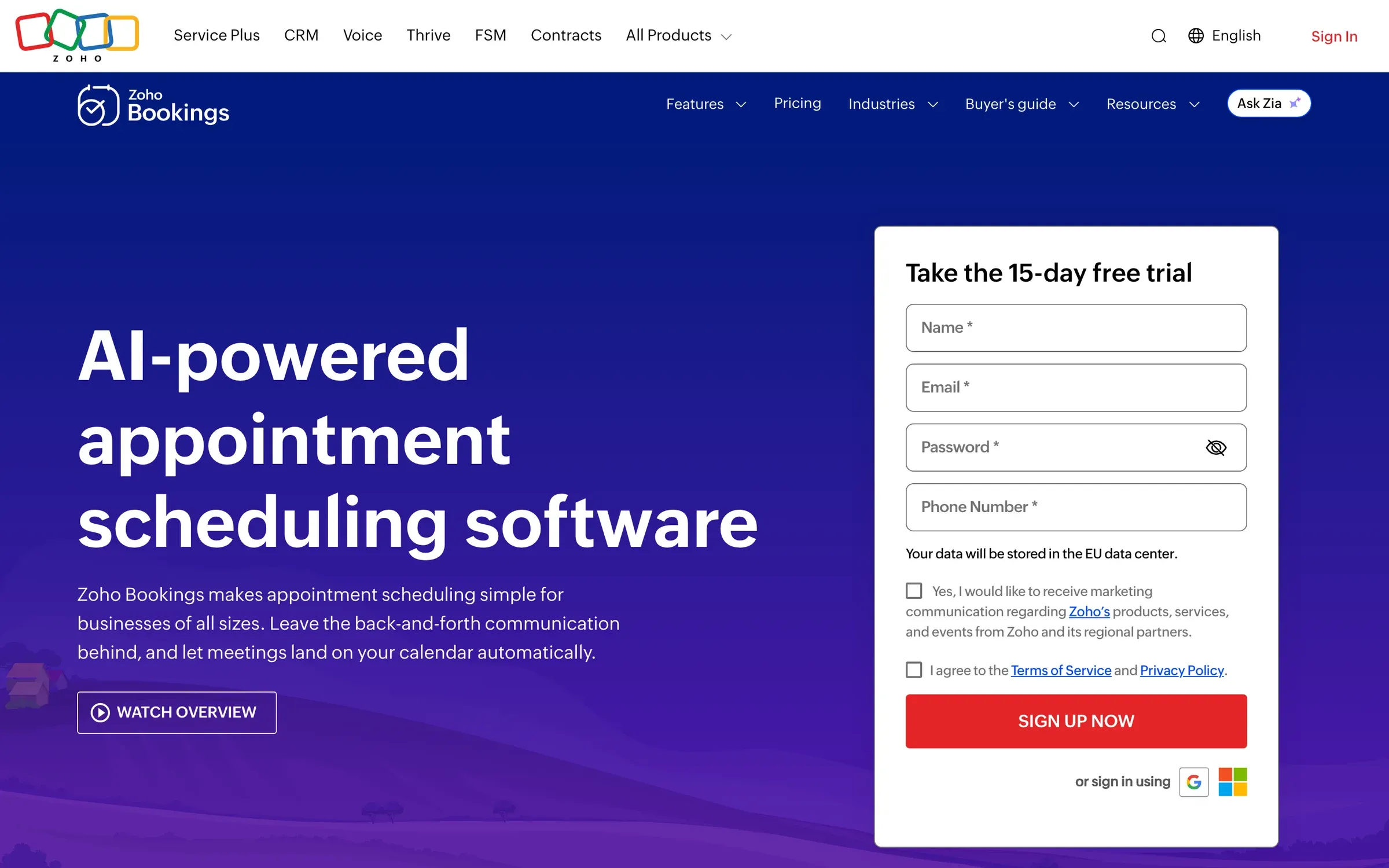
Zoho Bookings is the appointment scheduling tool in the Zoho suite and one of the cheapest ways to get a booking page, with a free plan as well.
Features
- Free plan: The Forever Free plan covers 1 user.
- Calendars: Zoho Bookings offers two-way calendar sync with Zoho Calendar, Google Calendar, and Microsoft 365, including on the free plan.
- Branding and reminders: The Premium plan adds white labeling and reminders over email, SMS, and WhatsApp.
Pricing
- Forever Free: 1 user
- Basic: $8 per user per month, or $6 billed annually
- Premium: $12 per user per month, or $9 billed annually
- FLEX: Custom pricing
Zoho Bookings fits best if you already use other Zoho products, and its integrations page lists HubSpot through Zapier, not as a native integration.
5. Scheduler AI
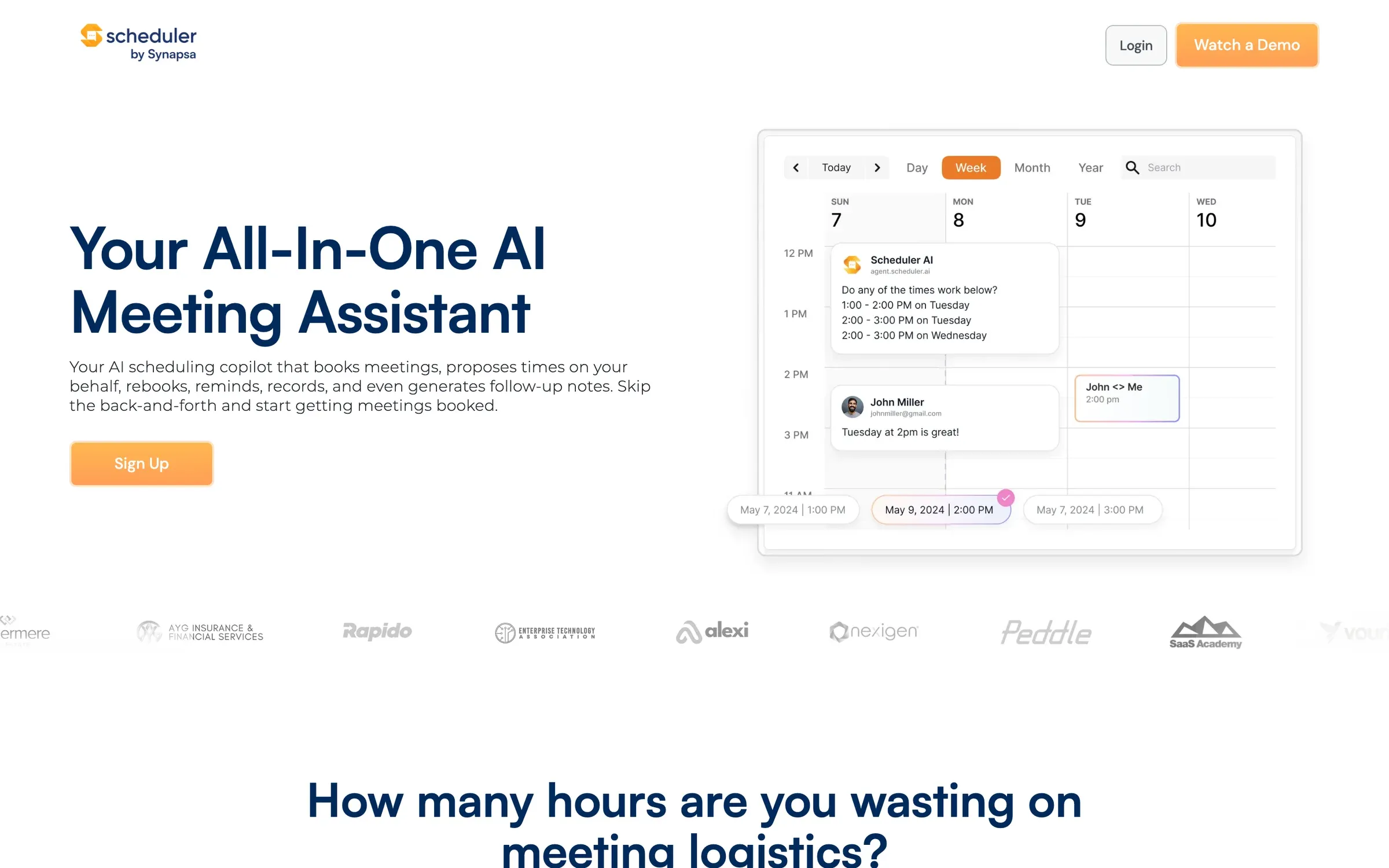
Scheduler AI is an unconventional scheduling assistant that leverages AI to coordinate meetings on the user's behalf. Think of Scheduler AI as your personal assistant, aware of your schedule and able to communicate with others to book meetings with you or your team.
In addition to integrating with various CRMs, including HubSpot through an app in the HubSpot Marketplace, Scheduler AI also works over email. One way to use it is to CC scheduler@scheduler.ai when sending someone an email to book time with them.
Say you want to book an intro call with Adam, an SEO expert at acme.com. You email Adam, CC Scheduler AI, and ask it to suggest a time this week. Scheduler AI replies to both of you with a proposed slot and sends a calendar invite. If the time does not work, Adam can reply with another time, for example, "Can we do April 14, 11 AM to 12 PM?", and Scheduler AI reschedules the meeting and updates the event.
Scheduler AI also has other features like:
- Automatic reminders: It can send you reminders before the meeting starts, so you’re aware that you have a meeting and attend it.
- Routing: Scheduler AI has the ability to route the meetings to your team, based on their availability and other factors.
- Group meetings: The demo that I showed above would work even if you email multiple people. Scheduler AI will propose times to meet based on your availability and go back and forth with all recipients until a time to meet is agreed upon.
- Ability to customize the availability: You can customize your general availability, by adding your working hours for each day. You can mark weekdays as unavailable (such as weekends), and Scheduler AI won’t propose times on those days.
Pricing
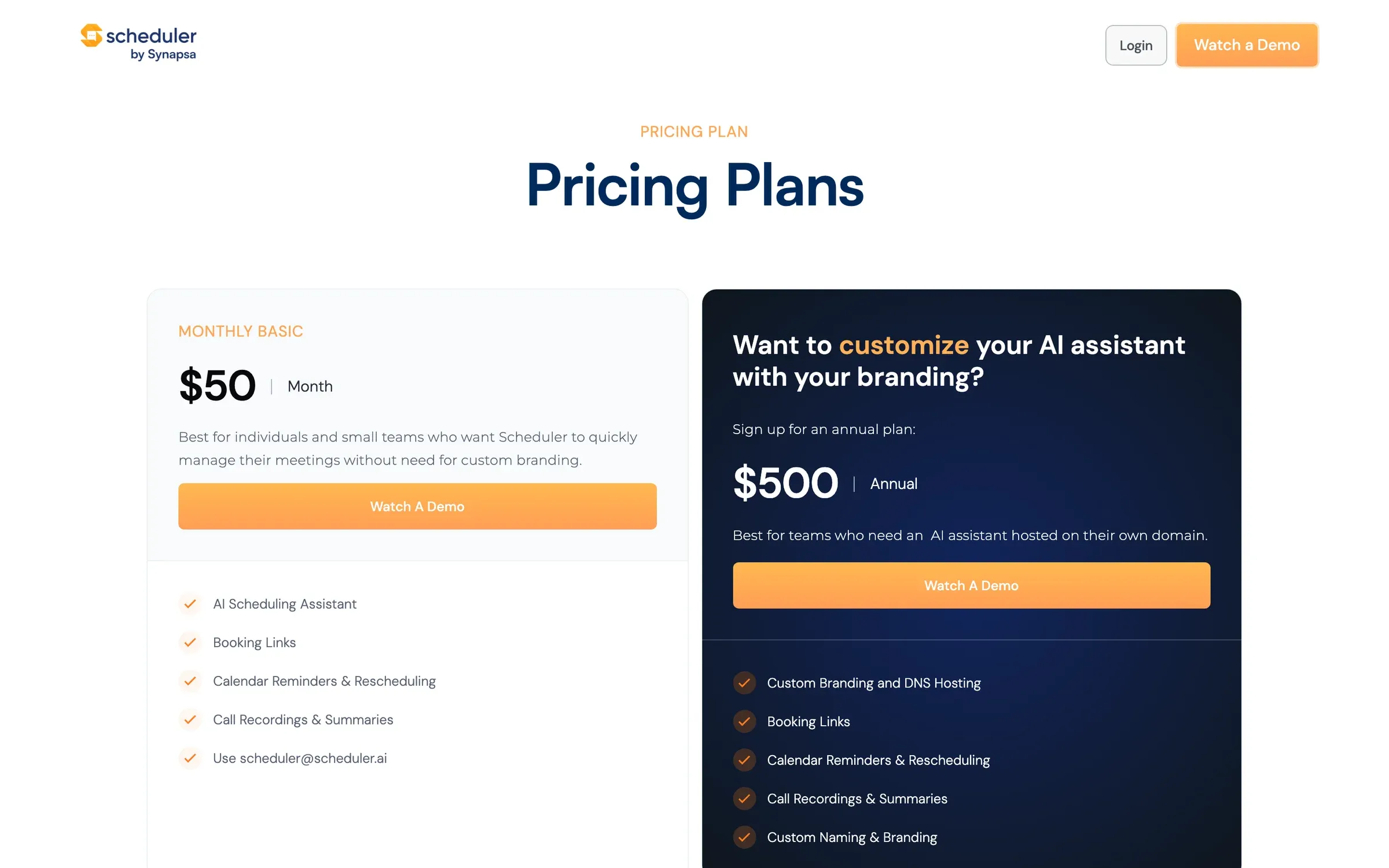
Scheduler AI has no free plan, but it offers a 7-day free trial.
- Basic: $50 per month
- Annual branded plan: $500 per year
- Start up: $5,000 per year, with 3 calendars
- Growth: $10,000 per year, with 6 calendars
- Enterprise: Contact sales
We wrote another article on The Best AI Calendar Tools and Apps, which lists AI tools similar to Scheduler AI. You can also read our list of the best AI scheduling assistants.
6. Cal.com
Cal.com is an appointment scheduling platform offering similar features to Calendly.
Features
- Individual and group scheduling: Cal supports individual scheduling, meaning that others can book time with you. The individual scheduling feature is part of the Cal.com free plan. To invite members to your teams, you have to upgrade to the paid plans. Having team members enables you to create group booking links, where schedulers can book time with your team.
- Plenty of integrations: The Cal team has put quite an effort into integrating with the main platforms, enabling your meetings to interact with your favorite CRMs and more.
- Intuitive User Experience: Oftentimes, when reviewing platforms, UI and UX are left out, but they are one of the most important aspects of a product. From my experience with Cal.com, I can attest that the team has put quite an effort into the product's ease of use. Everything seems well thought out and in its place.
- Workflows: Cal has powerful workflows, allowing you to take action based on the response of a booking, set up notifications, reminders, and more.
Pricing
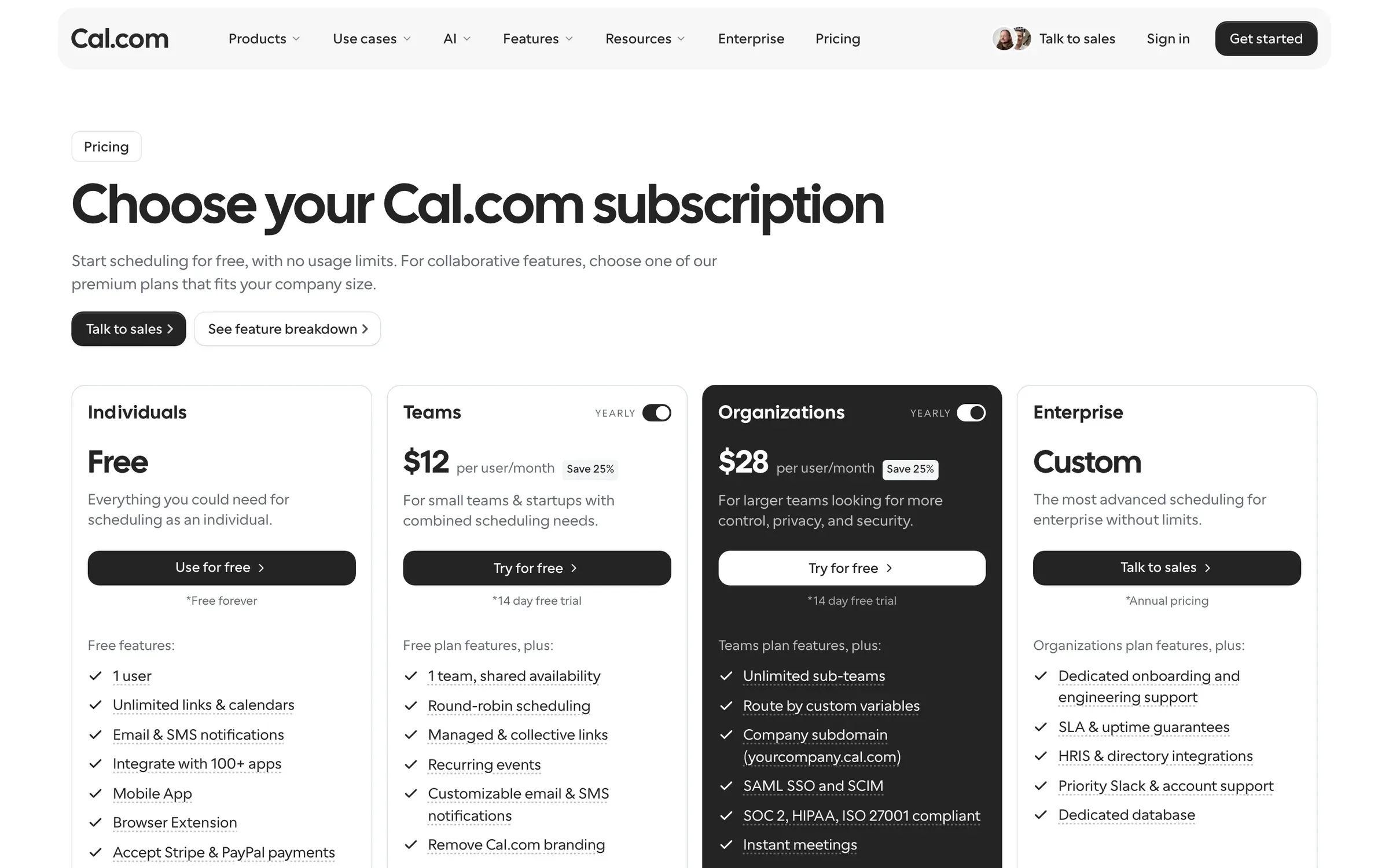
- Free: $0 for 1 user, with unlimited links and calendars
- Teams: $12 per user per month billed yearly, or $16 billed monthly
- Organizations: $28 per user per month billed yearly, or $37 billed monthly
- Enterprise: Contact sales
Cal.com went closed source in April 2026, and the open code now lives on as Cal.diy, without teams, organizations, workflows, SSO or routing forms. Self-hosting the full product is now an Enterprise offering, so older articles that call Cal.com open source are out of date.
Please read our article on The Best Cal.com Alternatives to learn more about Cal.com and the competition.
7. Reclaim AI
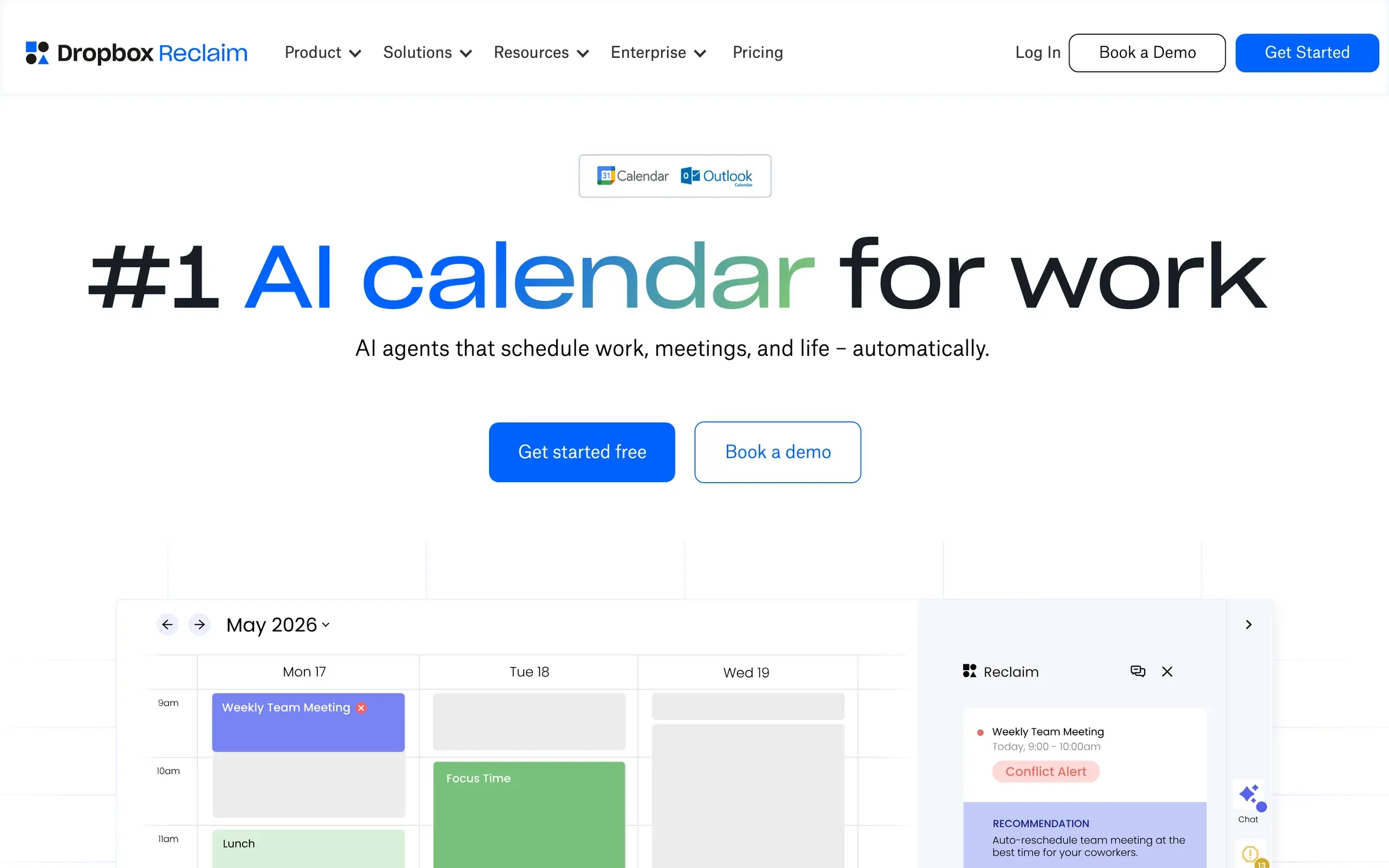
Reclaim AI is a smart assistant that mixes scheduling pages for others to book time with you using a link and the ability to manage tasks using AI.
Features
- Scheduling Links: The equivalent HubSpot Meeting Scheduler using reclaim would be using the Scheduling Links feature. This feature is very similar to what HubSpot Meeting Scheduler offers, allowing you to get booked individually or invite your members and get booked as a group.
- AI Task Management: You can add tasks to Reclaim, specifying a duration and whether you’d like Reclaim to split the task into smaller parts or not. After that, Reclaim will figure out the optimal time for you to complete your task.
- Smart Meetings: You can invite your team to Reclaim, and Reclaim can take care of your meetings, rescheduling them if there are conflicts or scheduling them at the optimal time.
- Calendar Sync: Reclaim started as a Calendar Sync Tool, meaning that you can use Reclaim to sync Google and Outlook calendars. Compared to OneCal, Reclaim offers less customization and only one-way directions, meaning that you can only send meetings from one calendar to another, under one config.
Pricing
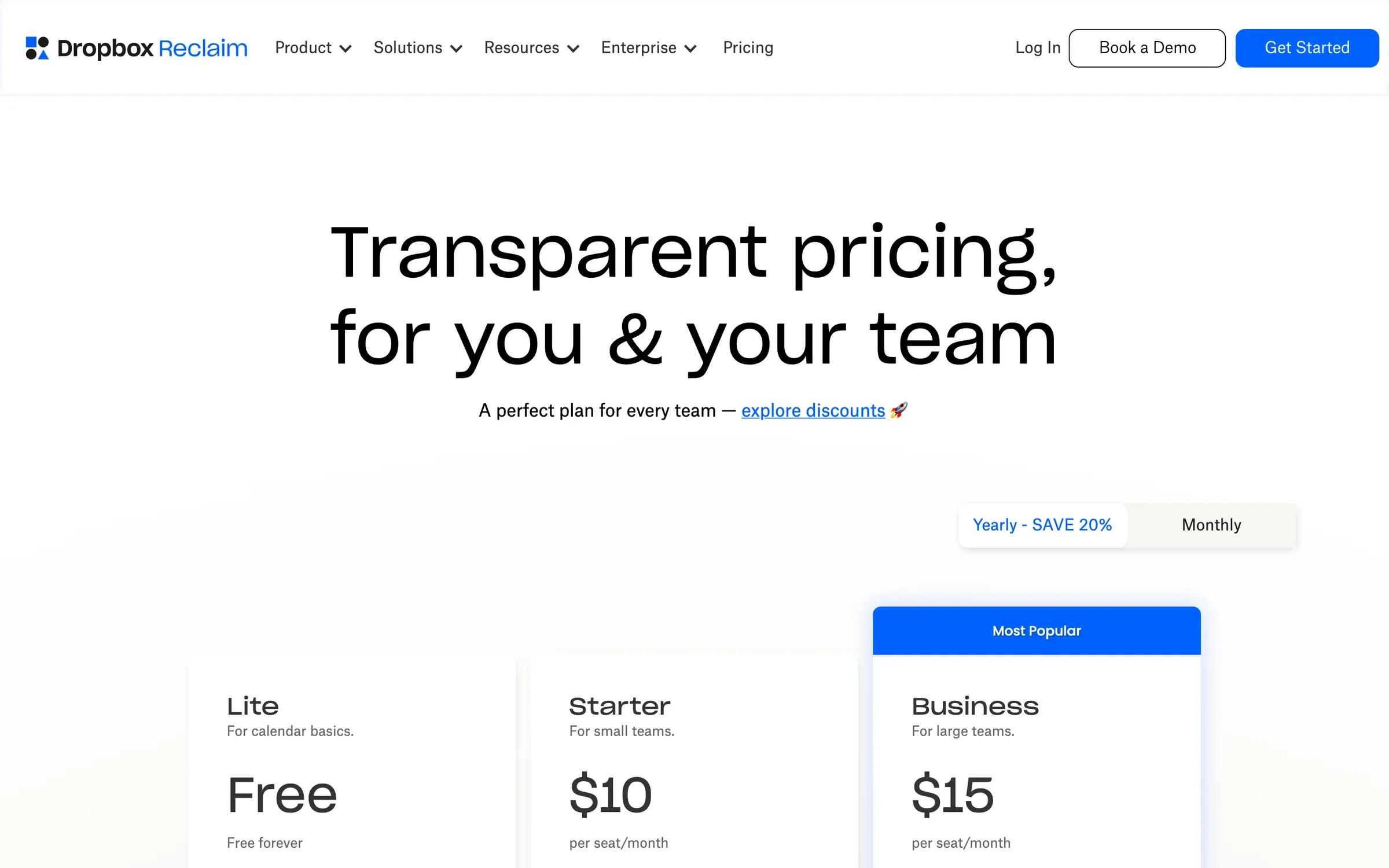
- Lite: Free for 1 user, with 1 Scheduling Link, 1 Calendar Sync and 2 connected calendars
- Starter: $12 per seat per month, or $10 billed annually
- Business: $18 per seat per month, or $15 billed annually
- Enterprise: $22 per seat per month, billed annually only
Dropbox owns Reclaim, which it acquired in August 2024. Accounts created after May 2026 are on Reclaim 2.0, which adds an AI Assistant and a new Planner.
To learn more about Reclaim AI and the competition, please read our article on the Best Reclaim AI Alternatives to try out.
8. Kronologic
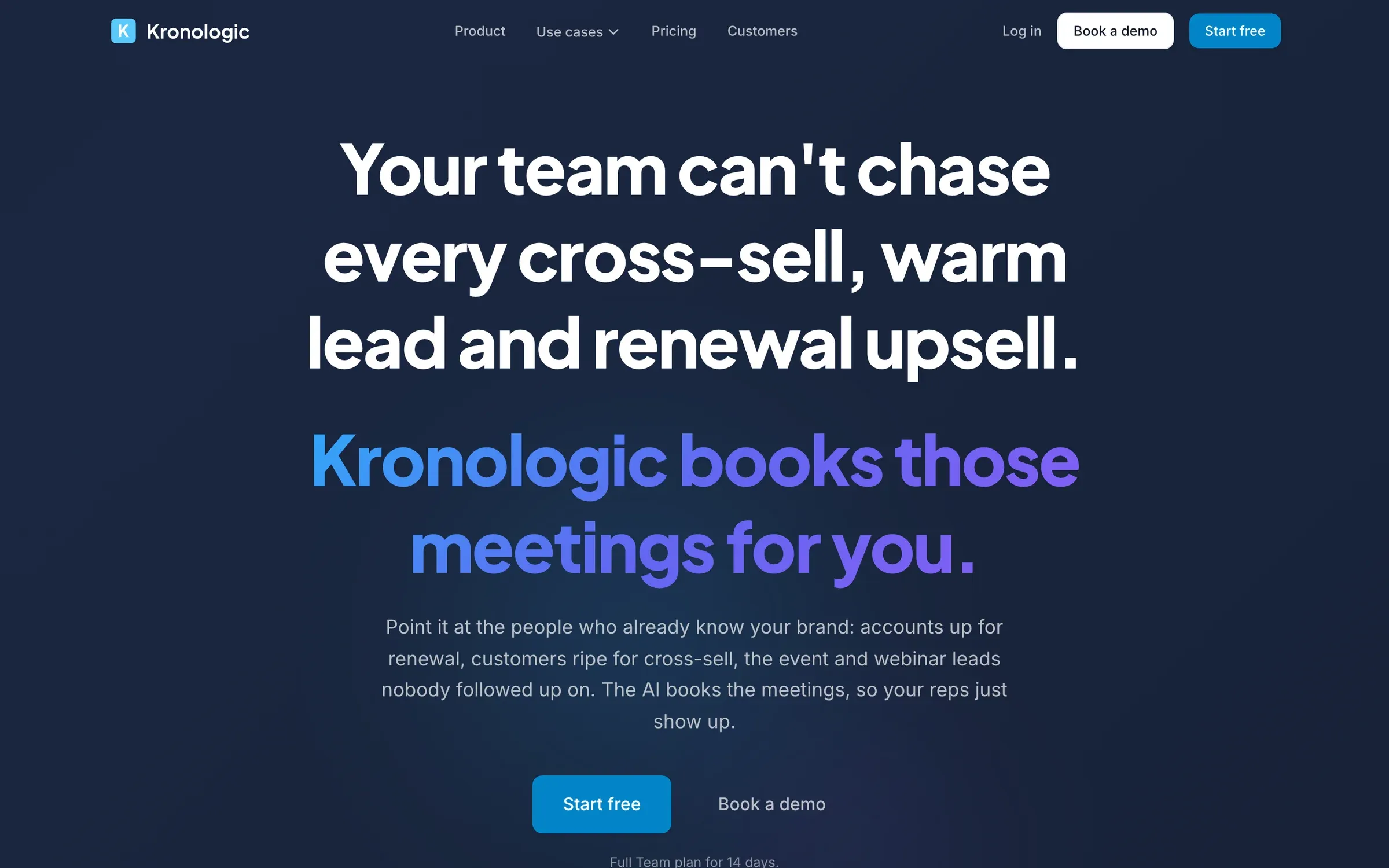
Kronologic is an AI-powered meeting scheduler, focused on sales, aiming to get you more qualified leads in less time.
Features
- Lead Importing: Kronologic is a mix of an AI scheduler and a Marketing/CRM platform where you can invite your team and upload your leads. Afterward, you can use the email templates tailored by Kronologic (or your custom ones) to create campaigns targeting specific leads.
- Campaigns: With Kronologic, you can enter all your leads and schedule campaigns, where Kronologic schedules the meetings after a lead responds to your inquiry. This feature is similar to Scheduler AI, where Kronologic’s AI interacts with the leads, scheduling or rescheduling the meeting based on the lead's response.
- Integrations: Given that it’s sales-focused, Kronologic integrates with HubSpot on the Pro plan and with both Salesforce and HubSpot on the Team plan. Kronologic allows you to automate your sales campaign from a trigger in your CRM.
Pricing
We checked the Kronologic pricing page in November 2026, and these are the plans:
- Free: $0, with a booking page and 2 meeting types
- Pro: $15 per seat per month, with unlimited meeting types, reminders, payments at booking, custom branding and the HubSpot integration
- Team: $49 per seat per month, with campaigns, team scheduling, the Salesforce and HubSpot integrations and a 14-day trial.
- Enterprise: Contact for pricing
Annual plans include 2 months free.
How to keep HubSpot as your CRM and use another scheduler
Switching scheduler does not mean leaving HubSpot, and there are three common ways to keep your CRM up to date:
- Use a tool with a native HubSpot integration, such as Calendly, SavvyCal, Cal.com or Kronologic, so bookings are logged to HubSpot without extra setup.
- Use Zapier. With OneCal, a booking trigger in Zapier can create or update the HubSpot contact.
- Keep your HubSpot meeting link for the sales team and use a second tool for everyone else. Your existing HubSpot links keep working, so you can move over step by step.
Which HubSpot Meeting Scheduler Alternative is the best?
The best HubSpot Meeting Scheduler Alternative depends on how dependent you are on HubSpot and the specific reason you’re using HubSpot Meeting Scheduler.
If you want to stay inside HubSpot and only need more links or team links, upgrade to Sales Hub Starter, since it is the least work.
For multi-purpose meetings across Google, Outlook, iCloud, and CalDAV calendars, OneCal is the best HubSpot Meeting Scheduler alternative, offering easy-to-use individual and collective scheduling plus calendar sync.
If you need a native HubSpot integration with round robin, pick Calendly or SavvyCal. If routing leads is the main job, also read our list of Chili Piper alternatives.
If you want the lowest price, start with the free plans from Zoho Bookings or Cal.com.
If you’d like to experiment with an AI meeting scheduler, try Scheduler AI or Reclaim AI.
If you’re using HubSpot to get more leads, Kronologic is very appealing, as it allows you to upload your leads and launch campaigns where Kronologic interacts with the leads and schedules the meetings for you.
If your team uses Salesforce instead of HubSpot, see our list of Salesforce Scheduler alternatives.
Frequently asked questions
Is the HubSpot meeting scheduler free?
Yes. The meeting scheduler is part of HubSpot's free tools, although the free version covers up to 2 users and shows HubSpot branding on the booking page. More links, team links, and branding removal require Sales Hub Starter, which costs $20 per seat per month.
How many meeting links does HubSpot free allow?
HubSpot's free tools allow 1 personal meeting link per user, while Sales Hub Starter and above allow 1,000 personal and team meeting links.
Does HubSpot Meetings work with iCloud?
No. HubSpot connects Google Calendar, Office 365, and Exchange, so if you use iCloud, you need a scheduler that supports it, such as OneCal or SavvyCal.
Can I use Calendly with HubSpot?
Yes. Calendly has a native HubSpot integration that adds bookings and contact details to the HubSpot CRM.
Can I use HubSpot Meetings without the HubSpot CRM?
No. You need a HubSpot account, and your bookings and contacts are stored in HubSpot, although you can still share the booking link anywhere or embed it on your website.
Why do people switch from HubSpot Meetings?
The most common reasons are the single link on the free plan, the HubSpot branding, the cost of paid seats for team features, and the missing iCloud support.
Use OneCal to get booked through branded booking pages easily
OneCal gives you unlimited booking links, calendar sync, and a unified calendar view for Google Calendar, Outlook, iCloud, and CalDAV calendars. It is a good fit for people and teams who want one tool for all their calendars and do not need scheduling built into a CRM. Because your calendars stay in sync, there is no room for double bookings.
Start your 14-day free trial of OneCal, with no credit card required.