How to Copy Microsoft Outlook Calendar Events to Google Calendar
Table of Contents
Copy Outlook events to Google Calendar in 1 minute!
Start a 14-day free trial of OneCal to automatically copy Outlook events into Google Calendar. No credit card required.
Managing two or more calendars and keeping track of all your events can be challenging.
When events are spread across Outlook and Google Calendars, it's easy to get confused and miss important appointments.
Today, we'll show you how to copy events from Outlook and add them to your Google Calendar easily, so you can keep all your schedules in one place. We'll cover three methods:
- Two Manual Methods: These methods involve using the Outlook and Google Calendar importing and exporting features, as well as sharing features.
- Automatic Method: This method uses a third-party Calendar Sync Tool to automatically copy Outlook events to Google Calendar.
Whether you prefer a manual or automatic approach, we will provide you with a step-by-step guide for better schedule management. We also explain how to copy a single event, which free tools can help, and what to do when the copy does not work.
This guide is about copying and moving events from Outlook to Google Calendar. If you want to keep both calendars updated in both directions all the time, read our guide on how to sync Outlook and Google Calendars instead.
To copy your Outlook events to Google Calendar, save the Outlook calendars as an ICS file and import the file in Google Calendar under Settings, Import & Export. You have to keep in mind that the import is a snapshot, so later changes in Outlook won't reach Google Calendar. For Outlook events to be reflected in Google Calendar after the initial export, you have to publish the Outlook Calendar and add its ICS link to Google Calendar. This method doesn't reflect the changes from Outlook to Google Calendar in real time, and often takes up to 24 hours. For automatic, real-time copy of events from Outlook to Google Calendars, use OneCal.
The Three Methods of Copying Events From Outlook to Google Calendar
Method | Works in | One-time or ongoing | Update speed | Privacy control | Cost |
|---|---|---|---|---|---|
1. Export and import an ICS file | Classic Outlook for Windows; in the new Outlook and Outlook on the web, you download the file from a published link. | One-time copy | No updates after the import | You pick the date range and the level of detail when you export | Free |
2. Published ICS link | Outlook on the web, the new Outlook, and Outlook.com | Ongoing, one-way and view-only | Google refreshes the link on its own schedule, which can take up to 24 hours | You pick one level of detail for the whole calendar | Free |
3. OneCal | Any Outlook version, because OneCal connects to the account and not to the app | Ongoing, one-way or multi-way | Real time | You choose each event detail, or hide details behind a custom title such as "Busy" | From $5 per user per month billed annually, with a 14-day free trial |
Method 1: How to Copy Events from Microsoft Outlook to Google Calendar by Exporting
The first method of copying events from Outlook to Google Calendar is by leveraging the export feature in Outlook and the import feature in Google Calendar. This method basically exports your Outlook events and imports them into Google Calendar.
The steps below work only in classic Outlook for Windows, because the File menu with the Save Calendar option does not exist in the new Outlook for Windows or Outlook on the web. If you use one of those versions, please skip these steps and go to the next section.
- Open classic Outlook. Sign in to the account that contains the calendar events you want to transfer.
- Access the Calendar. Navigate to your calendar by clicking the Calendar icon, then select the calendar you want to export.
- Save the Calendar. Go to File > Save Calendar.
- Choose what to export. Click More Options, then use Date Range to pick how much of the calendar to include, or choose Specify dates to enter your own range. Use Detail to choose how much information each event shows, and keep in mind that a large date range creates a large file that takes longer to generate.
- Click OK, then click Save, and the calendar events will be saved as an .ics file in the designated location on your computer.
- Open Google Calendar. Visit Google Calendar in your web browser and sign in with your Google account. You need a computer for this step, because Google only supports importing files on a computer.
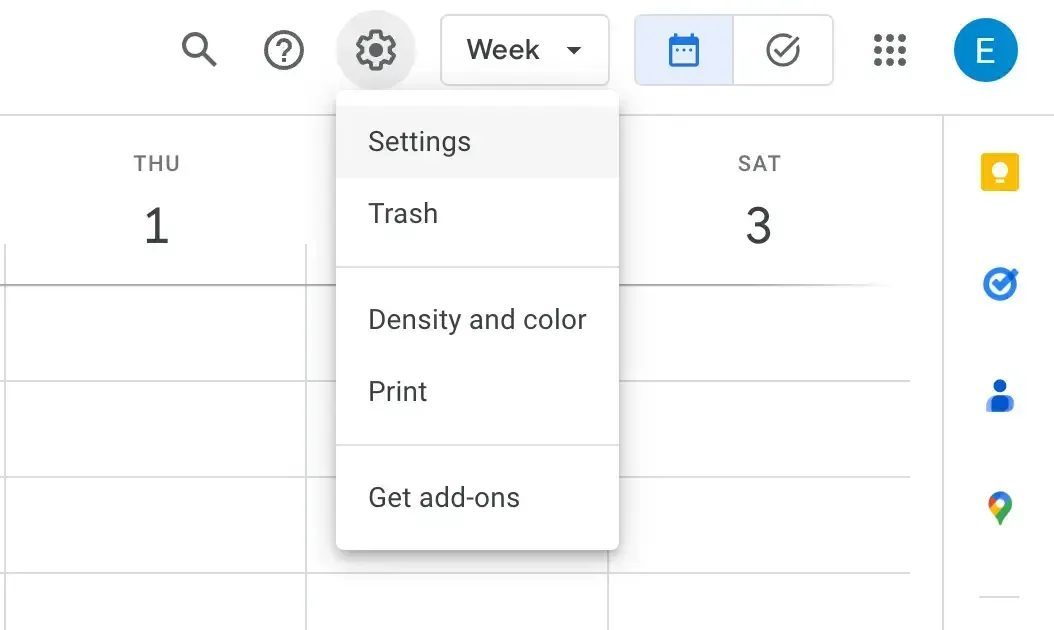
- Access Settings. Click on the “Settings” icon in the top right corner and select “Settings.”
- Select Import & export. In the menu on the left, select “Import & export.”
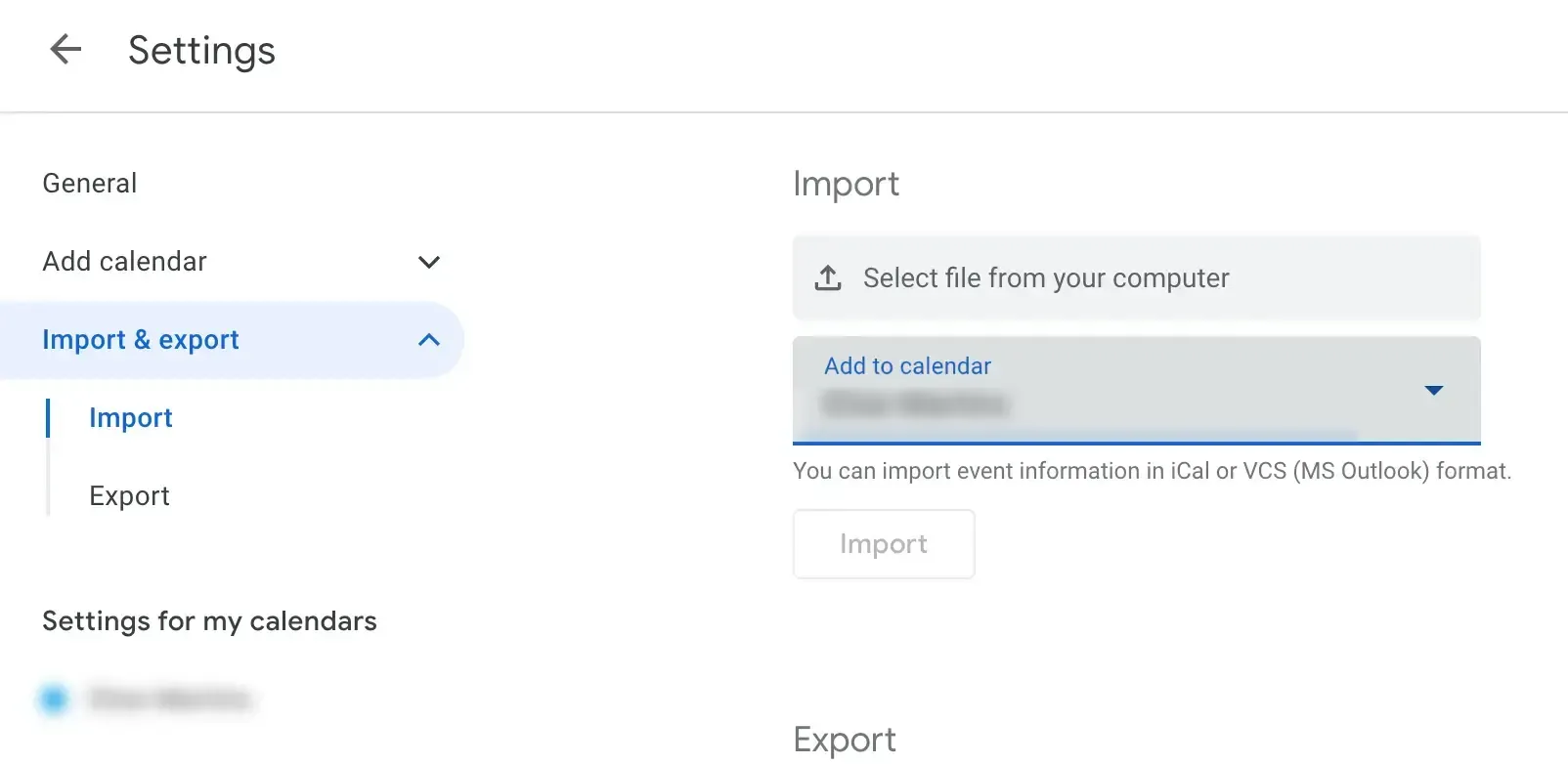
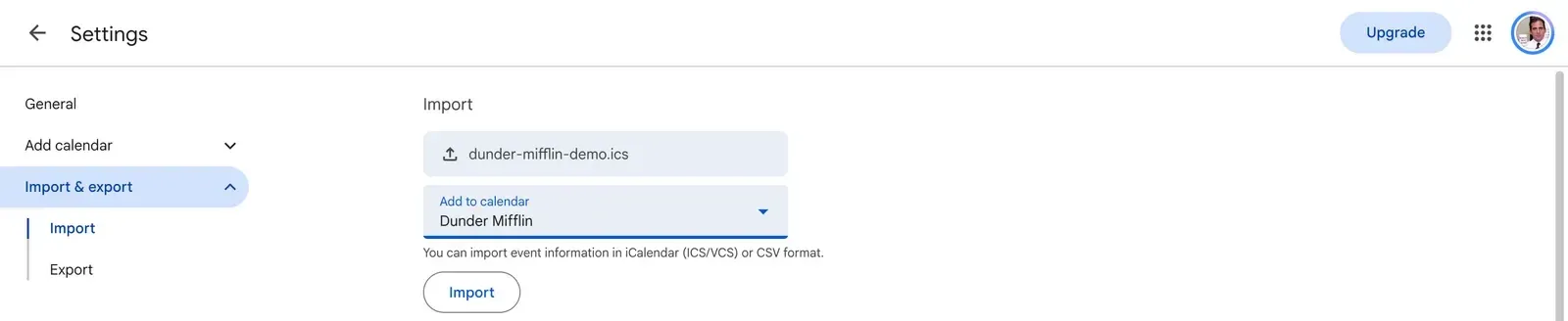
- Import the .ics file. Click "Select file from your computer" and choose the .ics file you exported from Outlook.
- Choose the Destination Calendar. Choose which calendar to add the imported events to. By default, events will be added to your primary calendar.
- Click Import.
Classic Outlook can also export a calendar as a CSV file from File > Open & Export > Import/Export, and Google Calendar accepts .csv files as well. We recommend the ICS file because Google warns that repeating events imported from a .csv file might show up as a series of one-time events.
How to Export a Calendar From the New Outlook or Outlook on the Web
The new Outlook and Outlook on the web have no export button for calendars, but you can still get an ICS file by publishing the calendar for a moment and saving its ICS link as a file:
- Open the Shared calendars settings. Sign in to Outlook on the web, click the gear icon in the top right corner, and select Calendar > Shared calendars. In the new Outlook for Windows, you find the same page under Settings > Calendar > Shared calendars.
- Choose the calendar and the level of detail. Under “Publish a calendar,” select the calendar you want to copy, then select “Can view all details” so the file includes the event titles, locations, and descriptions. If you choose “Can view when I'm busy,” the file only contains busy times.
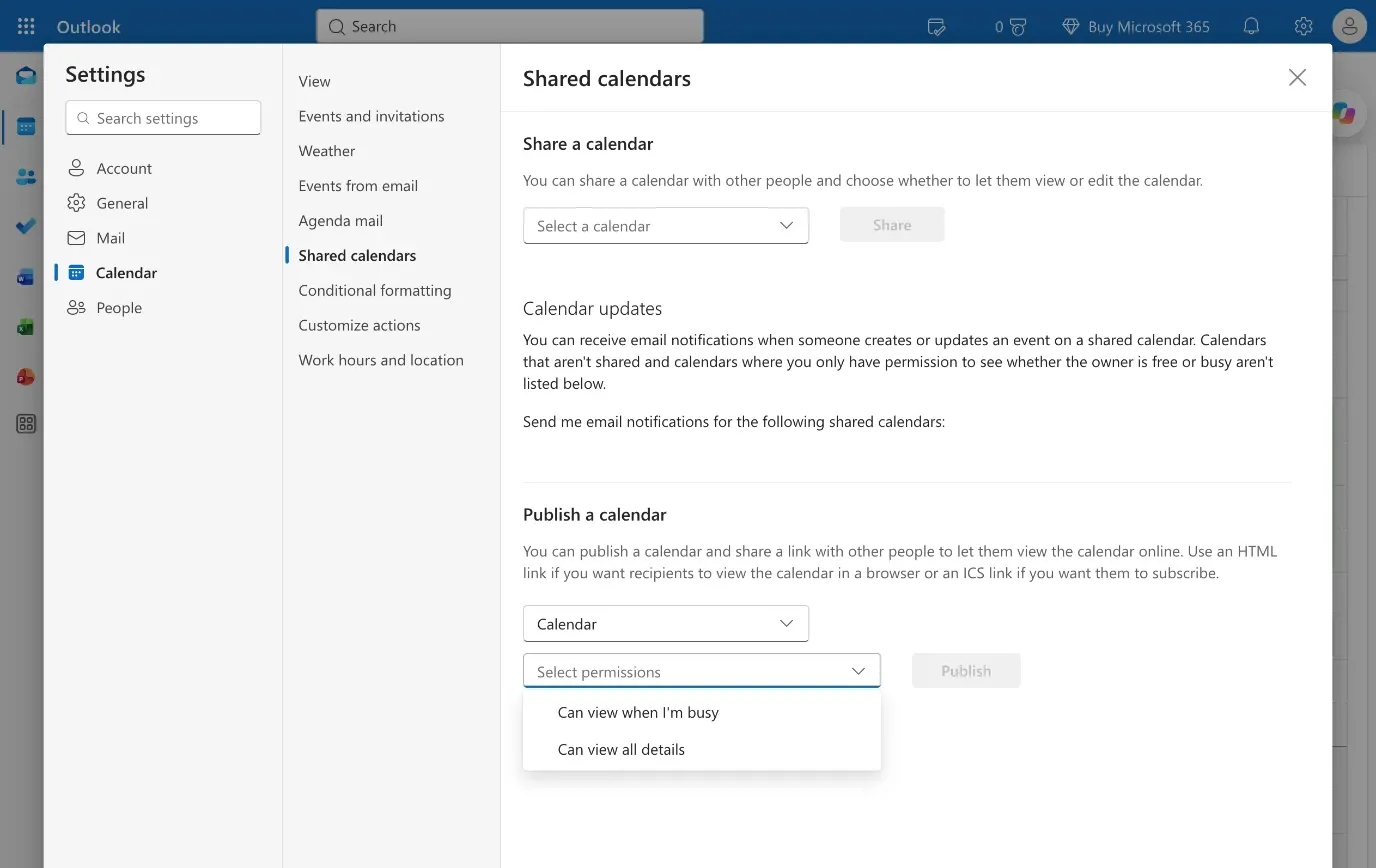
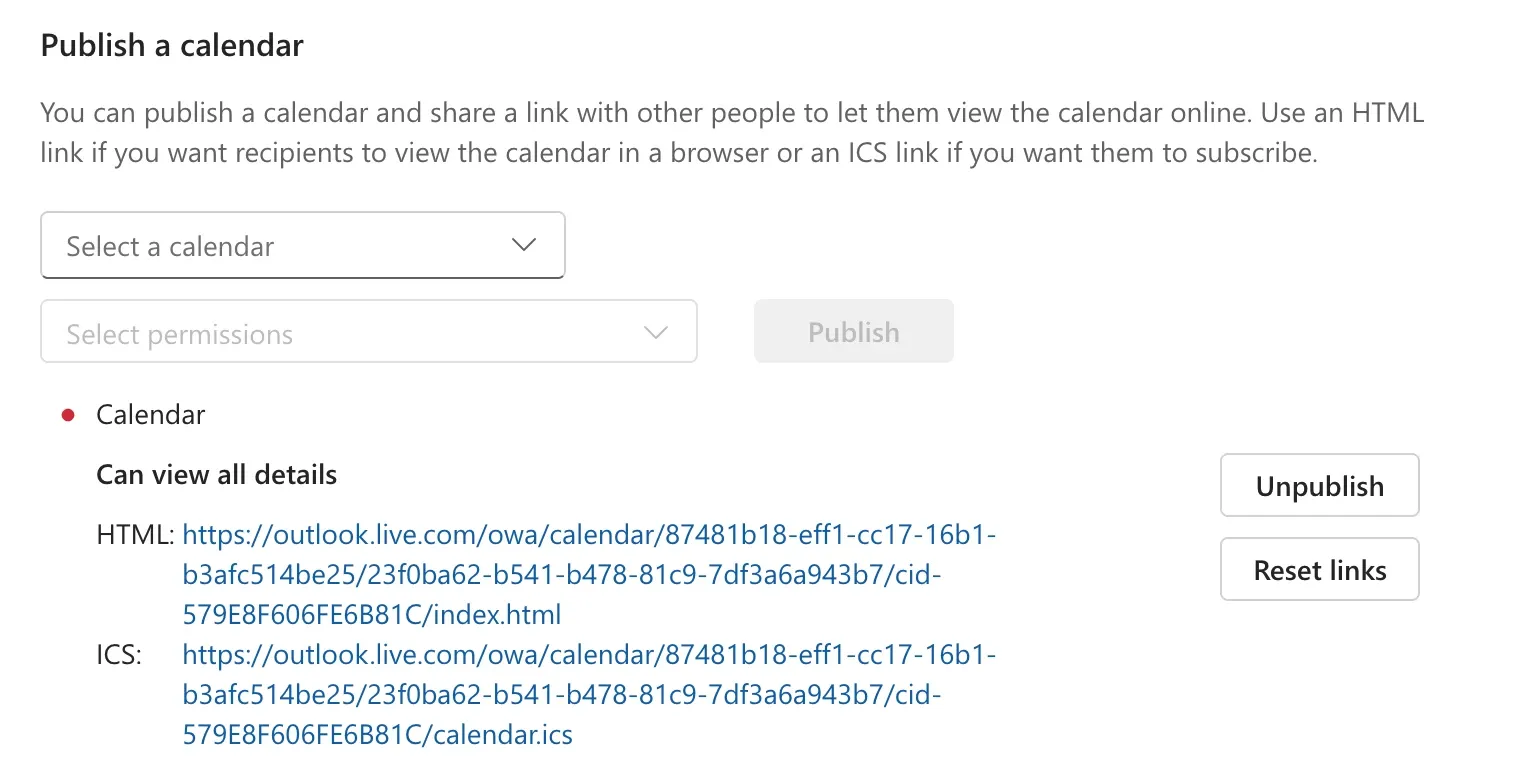
- Click Publish. Outlook shows two links under the calendar name: an HTML link and an ICS link.
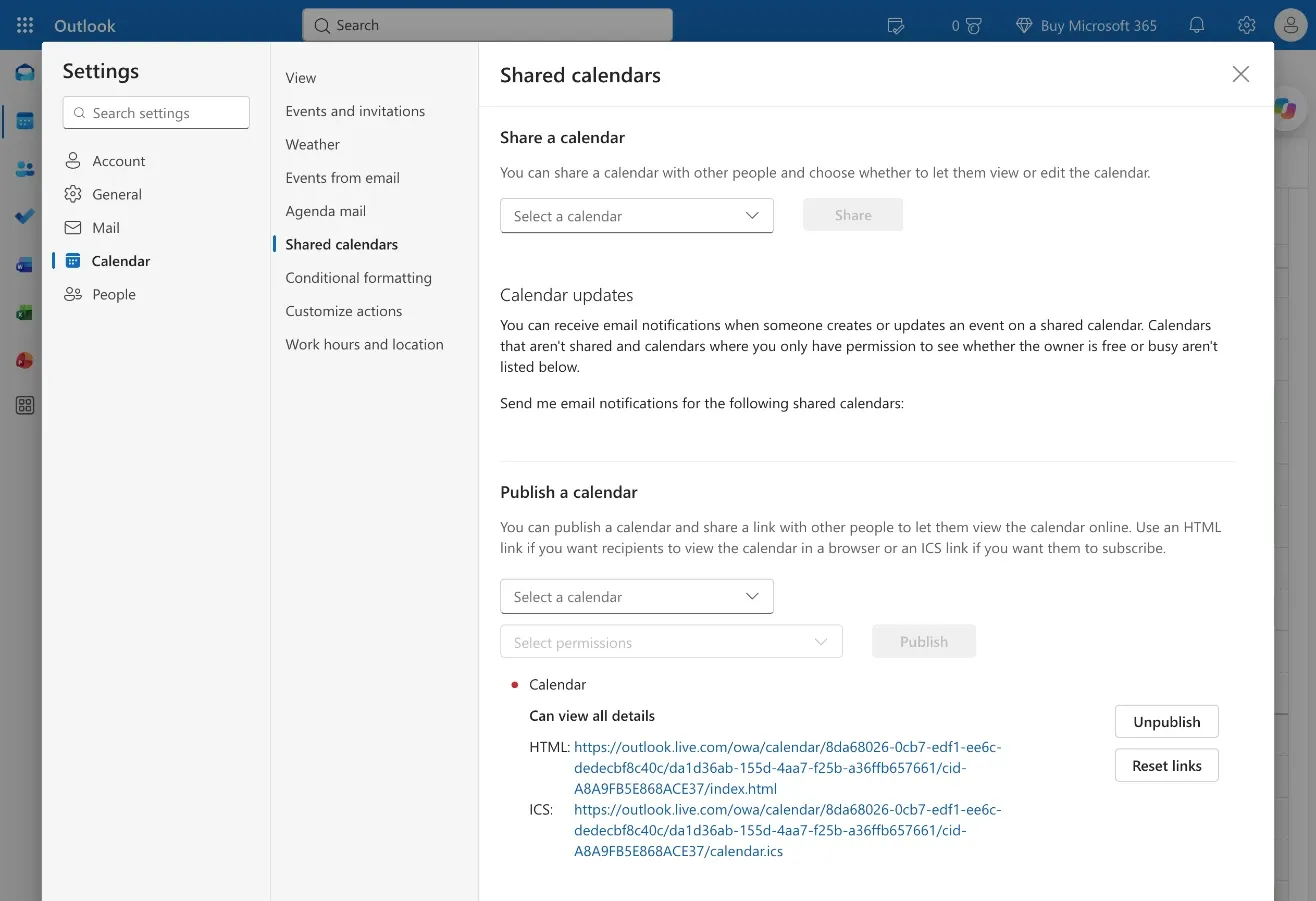
- Save the calendar as a file. Copy the ICS link, paste it into your browser's address bar, and press Enter. Chrome saves the calendar right away as a calendar.ics file in your Downloads folder, while other browsers may ask whether you want to open or save the file, so choose to save it.
- Import the file into Google Calendar. Open Google Calendar on a computer, click the gear icon, and select Settings > Import & export. Click “Select file from your computer,” choose the calendar.ics file, pick the Google calendar under “Add to calendar,” and click Import.
- Unpublish the Outlook calendar. Go back to Settings > Calendar > Shared calendars in Outlook and click Unpublish next to the calendar, so the public link stops working.
If you use Outlook on a Mac, sign in to Outlook on the web and follow the same steps. Outlook for Mac cannot save a calendar as an .ics file, and its only export option is an .olm archive, which Google Calendar cannot import.
Many readers are already on the new Outlook, and Microsoft plans to make it the default for enterprise customers in March 2027, so it is worth knowing this alternative even if you still use classic Outlook today.
Drawbacks of Copying Your Events with the Export Feature
This method comes with several significant drawbacks. Here are some:
Limited Availability. The limit depends on your Outlook version, not your Microsoft 365 subscription. The Save Calendar option works in classic Outlook for Windows, but it isn't available in the new Outlook or Outlook on the web, where you must publish the calendar first and download the file from the link.
Manual Updates and Outdated Data. An import is a one-time snapshot, and Microsoft and Google both state that changes you make in Outlook after the export are not reflected in Google Calendar. If you want to copy new events, you'll need to repeat this process manually every time you want to update your schedules. This manual repetition is not only time-consuming but also easy to mess up. You might miss appointments or important events because the calendar events won't copy automatically.
Missing Guests and Meeting Links. Google does not import the guests and conference details of an event, so copied events show the time and details but not the guest list.
Without automatic updates, it's hard to keep track of everything, which can lead to missed deadlines, overlooked tasks, and overall inefficiency in managing your time.
For those who want a simpler, automatic solution, read on as we go through the steps of syncing Outlook Calendar to Google Calendar using a calendar app like OneCal.
Method 2: How to Copy Events from Microsoft Outlook to Google Calendar by Calendar Sharing
Apart from leveraging the export feature on the Outlook desktop app, there is another easy alternative to copy events from Microsoft Outlook to Google Calendar through calendar sharing.
This method might be easier because it doesn't require downloading the Outlook app, since you can use Outlook on the web from any device. You publish the Outlook calendar, which creates an ICS link, and then add that link to Google Calendar.
- Open Outlook on the web. Go to https://outlook.office.com/calendar and sign in.
- Open Settings. Click the gear icon, then select Calendar > Shared calendars.
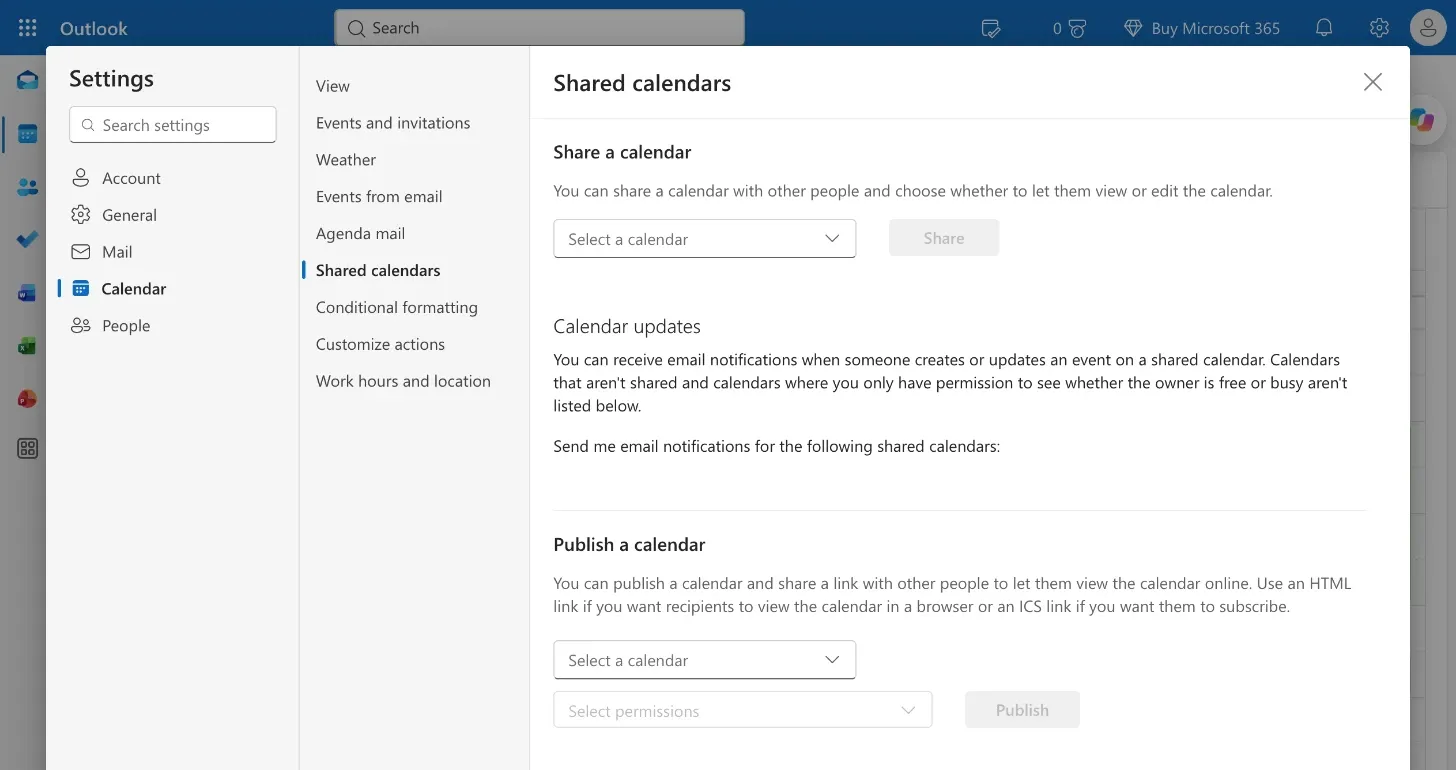
- Find the “Publish a calendar” section. Select the calendar you want to copy and the level of detail that people with the link can see.
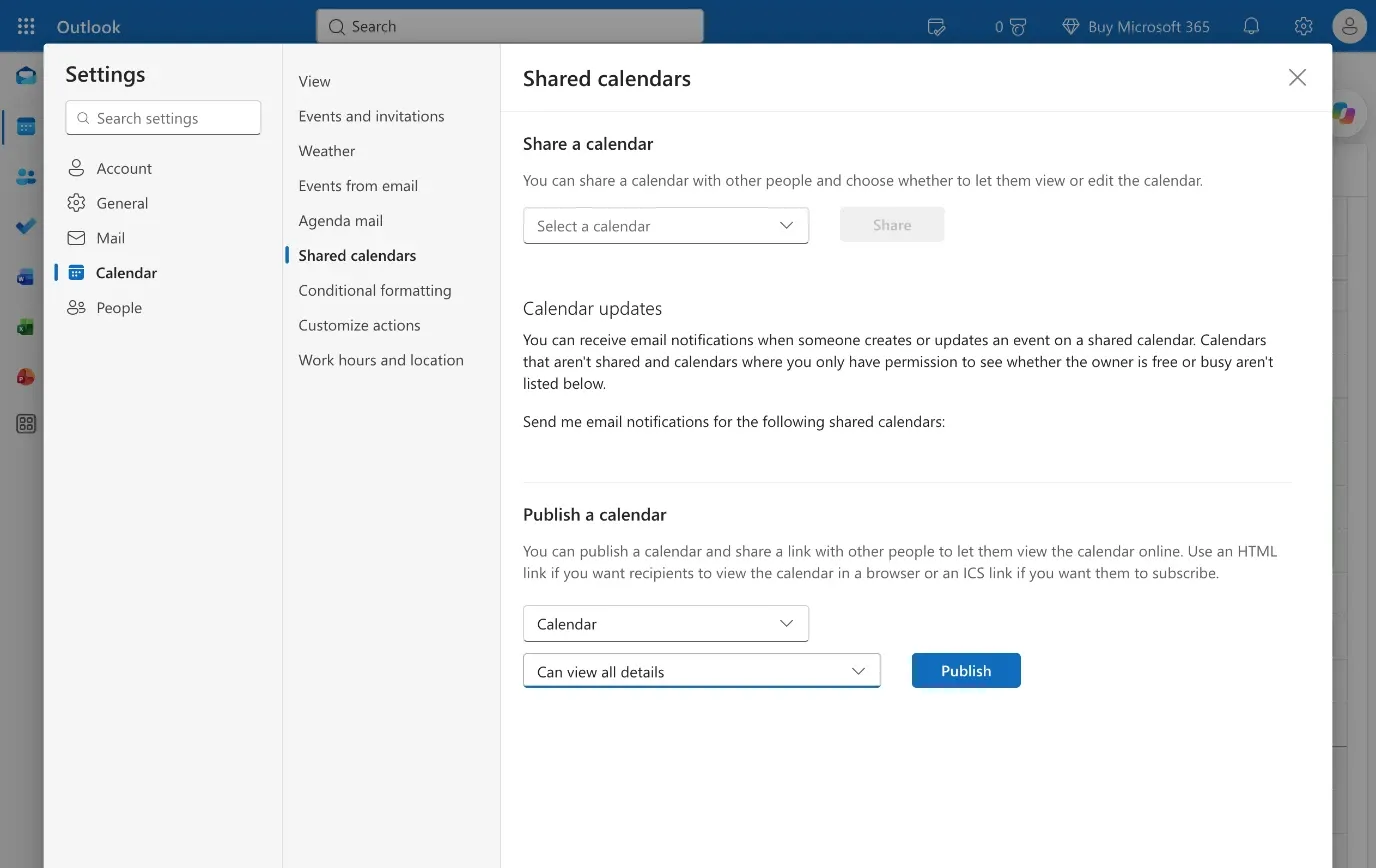
- Click Publish. Outlook creates two links, an HTML link and an ICS link.
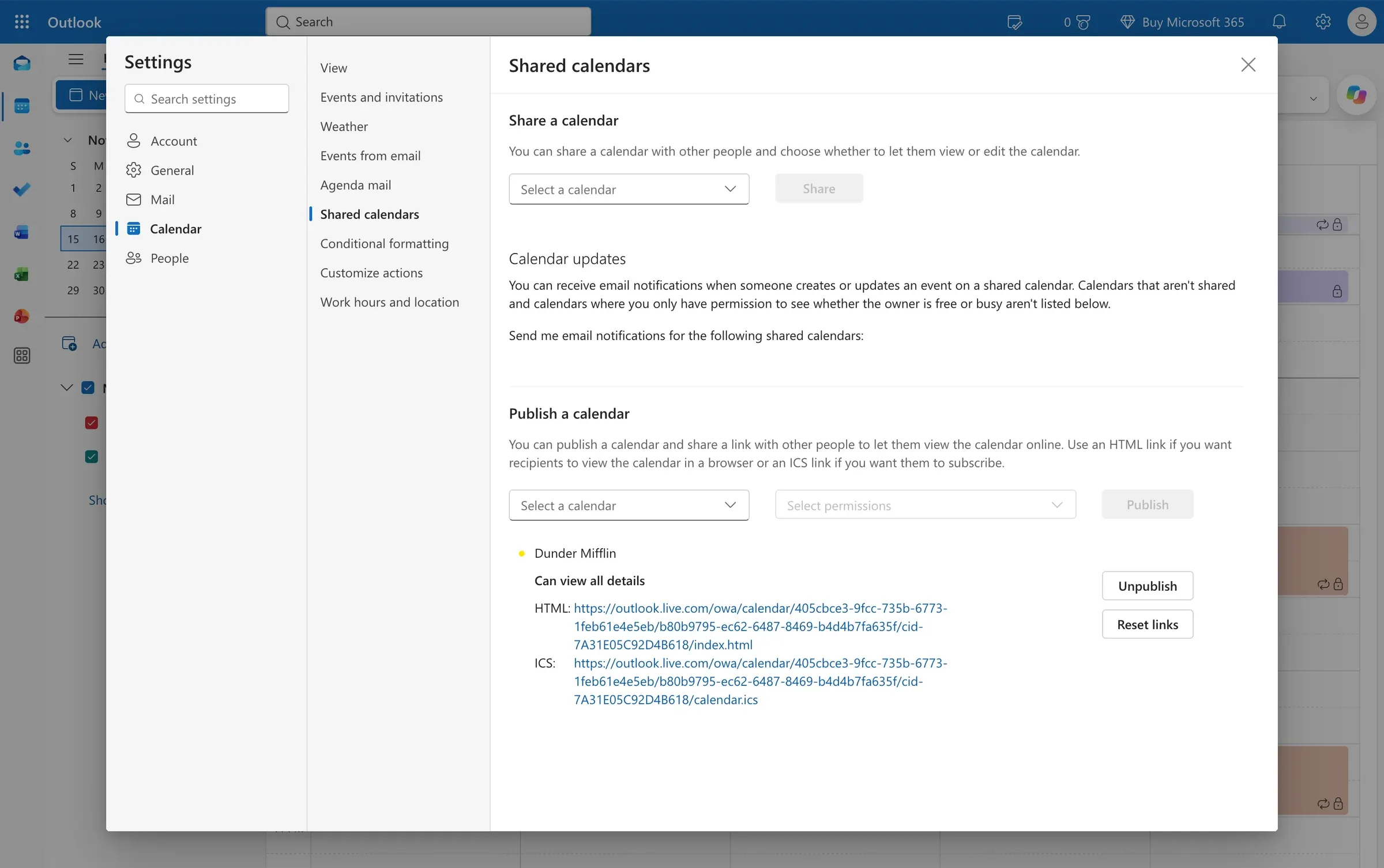
- Copy the ICS link.
- Open Google Calendar on a computer. In the left sidebar, click the plus icon next to “Other calendars” and select “From URL.”
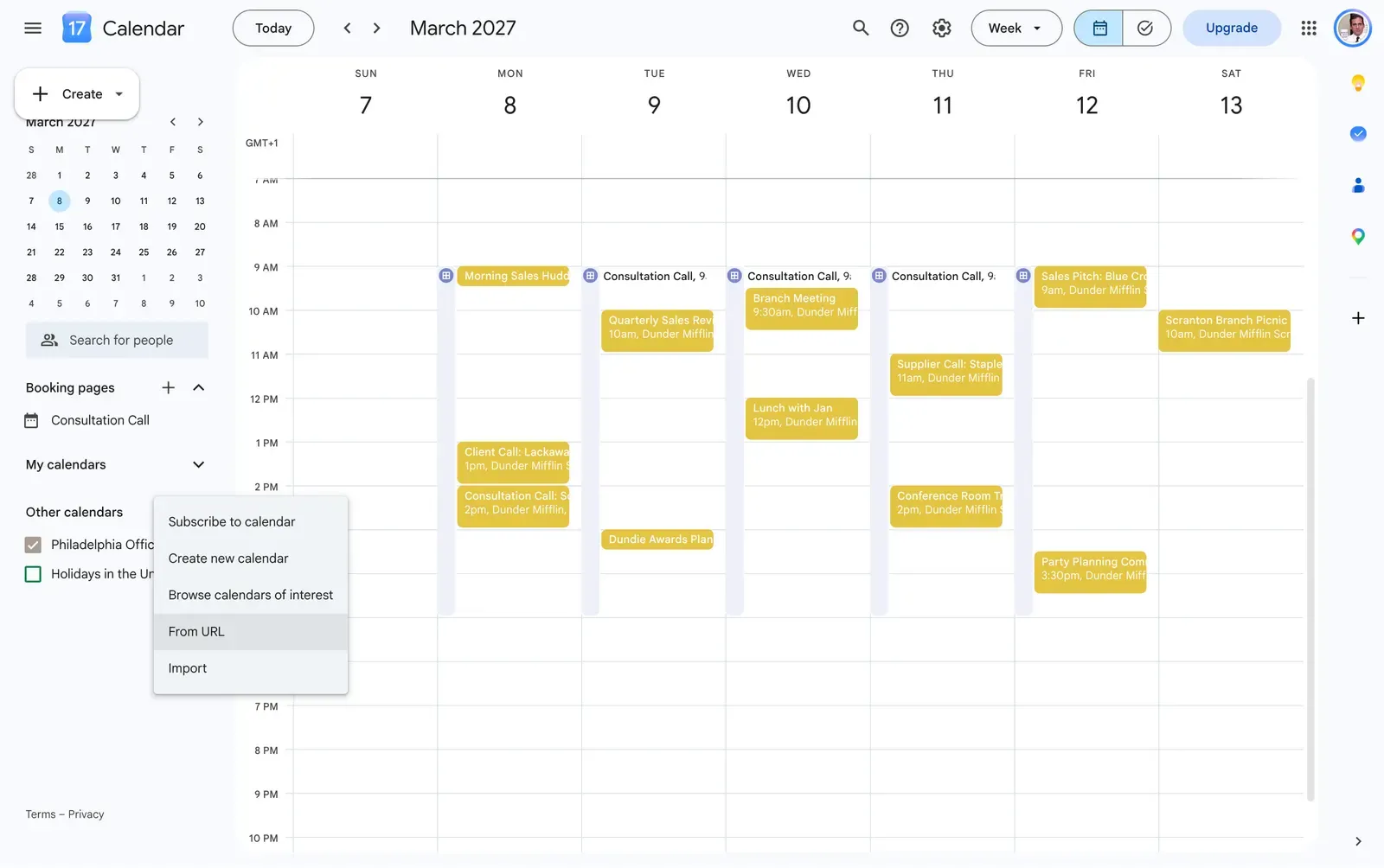
- Paste the ICS link and click “Add calendar.” Your Outlook calendar now appears under Other calendars.
We have more detailed guides for each part of this method: how to share an Outlook Calendar, how to get an ICS URL for your calendar, and how to subscribe to a web (ICS) calendar in Google Calendar.
Limits of the Published ICS Link
- It is one-way. Outlook events show in Google Calendar, but Google Calendar events do not show in Outlook.
- It is view-only. You cannot edit or delete the Outlook events from Google Calendar. The events are not copied into your own Google Calendar, and they stay in a separate calendar under Other calendars instead.
- It is slow. Google decides when to refresh a subscribed calendar, so a new Outlook event can take several hours, and sometimes up to 24 hours, to show in Google Calendar.
- The link is public. Anyone who has the ICS link can open the calendar at the level of detail you selected. This will raise a lot of concerns if you work at a company, as calendar events often contain sensitive information, and it's generally against company policies to make the calendar public.
- It can be blocked. Some organizations don't allow users to publish calendars, so if the Publish option is missing, ask your IT admin or use Method 3.
How to Copy a Single Outlook Event to Google Calendar
Sometimes you only want to copy one meeting from Outlook to Google Calendar and not a whole calendar, and there are two simple ways to do that.
Forward the invitation to your Gmail address. Open the event in Outlook, select Forward, and send it to the Gmail address of your Google account. Then open the email in Gmail and accept the invitation; the event will be added to your Google Calendar. Keep in mind that the meeting organizer may be notified that you forwarded the invitation.
Save the event as an ICS file. In classic Outlook for Windows, select the event, then on the Appointment tab click the arrow next to Forward and choose Forward as iCalendar. A new email opens with the event attached as an .ics file, so right-click the attachment, choose Save As, and save it on your computer. Then import the .ics file in Google Calendar by following steps 6 to 11 of Method 1. Like any import, the copy does not update when the original event changes.
Free Tools That Copy Outlook Events to Google Calendar
A few free tools can copy events automatically, and they are worth knowing, although each one has limits.
- Outlook Google Calendar Sync (OGCS). OGCS is a free, open-source desktop tool that syncs Outlook and Google Calendar one-way or two-way. It runs on Windows only, and you need the v3 release to use it with the new Outlook. We compare it with other tools in our OGCS alternatives article.
- Zapier and IFTTT. Both have ready-made automations that create a Google Calendar event when a new event is added to Outlook. They react to new events only, so if you edit or delete the event in Outlook later, the copy in Google Calendar does not change.
- Microsoft Power Automate. Community-built flows can copy Outlook events to Google Calendar, but they require manual setup, and users of the best-known flow report duplicate events and problems with recurring events.
Method 3: Copy Outlook Calendar events to Google Calendar Using OneCal
Here is a simple step-by-step guide on how to copy Microsoft Outlook Calendar events to Google Calendar using OneCal.
- Start a 14-day free trial of OneCal, with no credit card required. You can sign in with Microsoft, Google, Apple, an email link, or SSO.
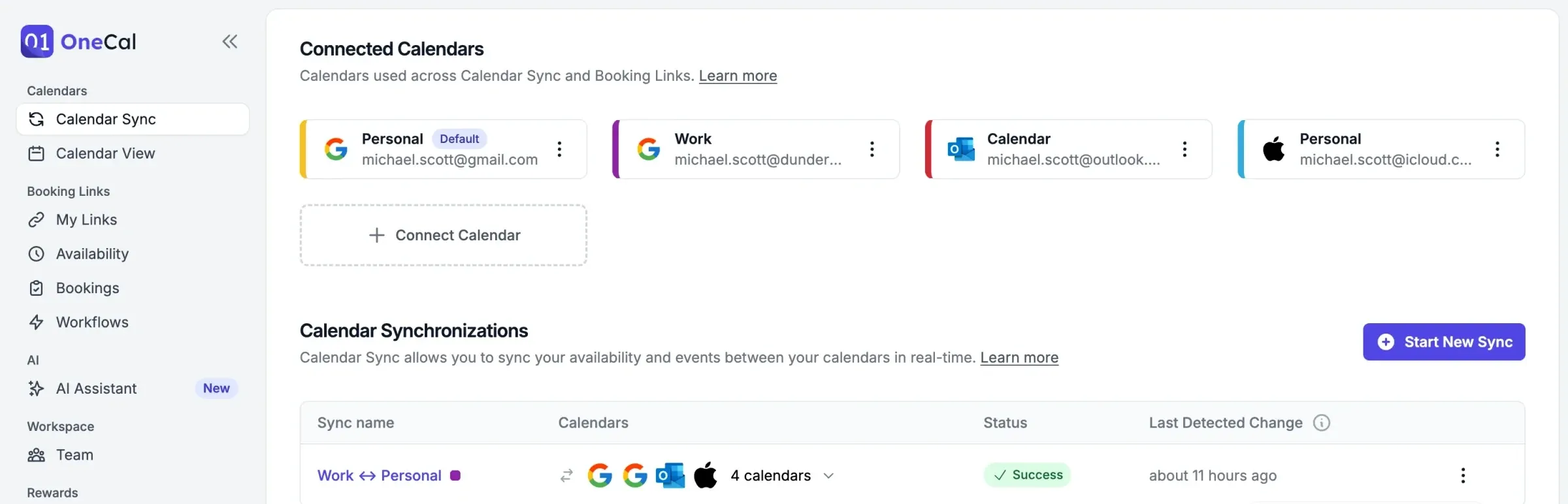
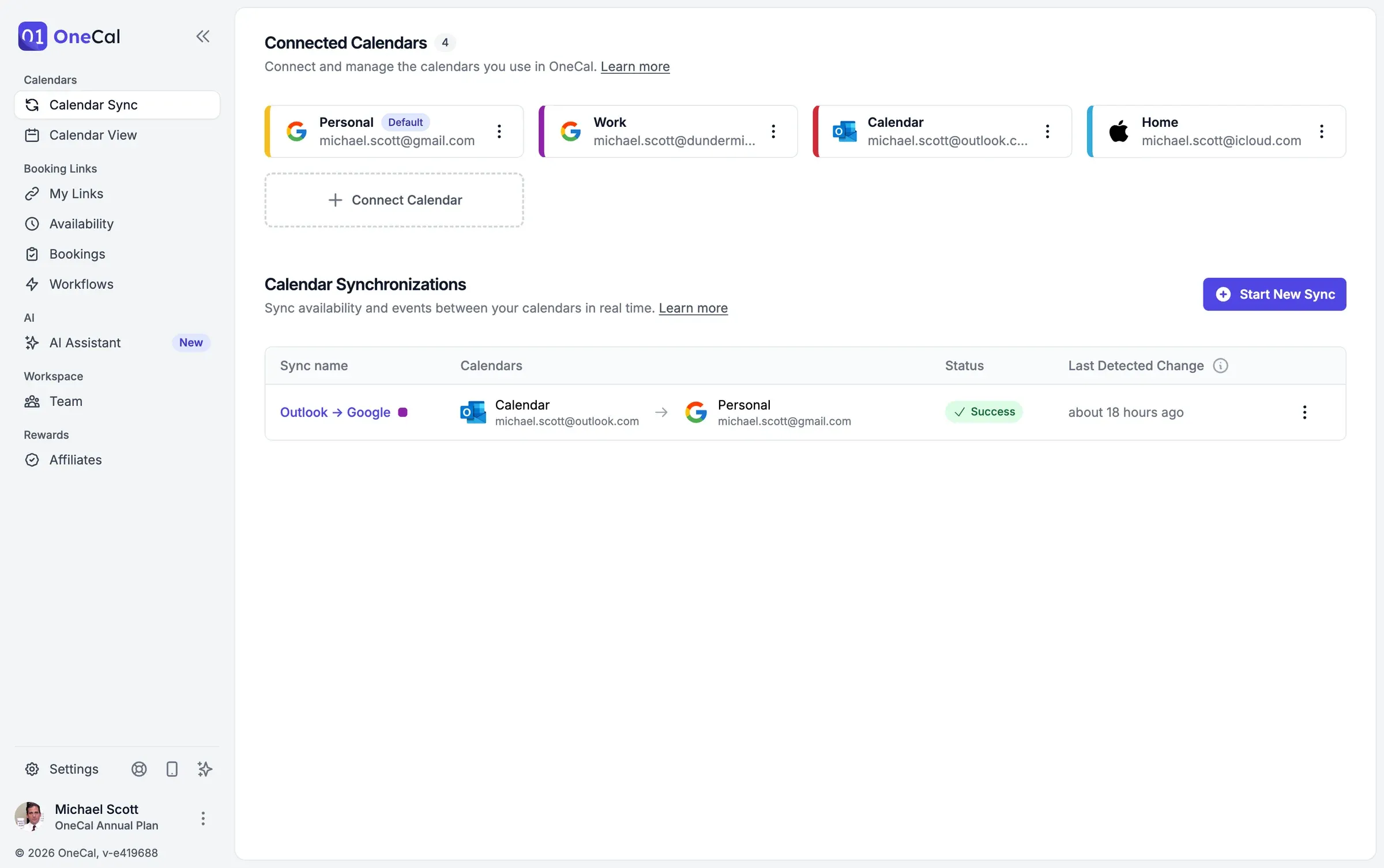
- Connect your Outlook and Google Calendars. On the Calendar Sync page, click “Connect Calendar” and choose “Connect Outlook Calendar,” then do the same with “Connect Google Calendar.” You can also connect calendars from Settings > Calendars. OneCal uses official APIs to ensure secure connection and data privacy. If you connect a work Microsoft 365 account, you may see a screen that asks for admin approval, and our guide on how to request admin approval explains what to do.
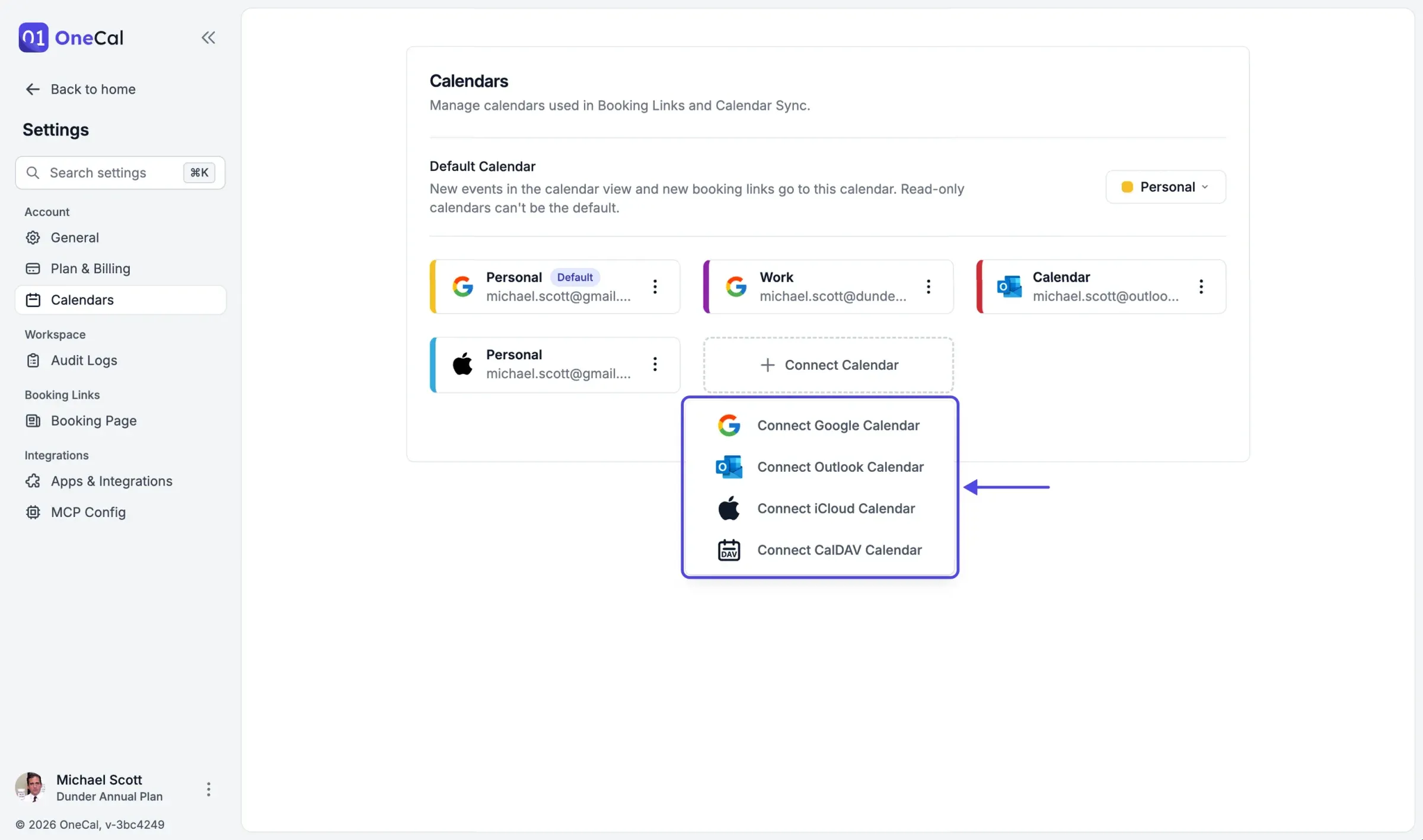
- Click Start New Sync: After connecting your calendars, open Calendar Sync in the sidebar and click “Start New Sync.”
- Choose the calendar copying direction. Under “How would you like to sync calendars?”, you can choose One-way or Multi-way. One-way copies events from a source calendar to one or more target calendars, while Multi-way copies events between all selected calendars.
For example, if you want to copy events from Outlook to Google Calendar, you can select One-way.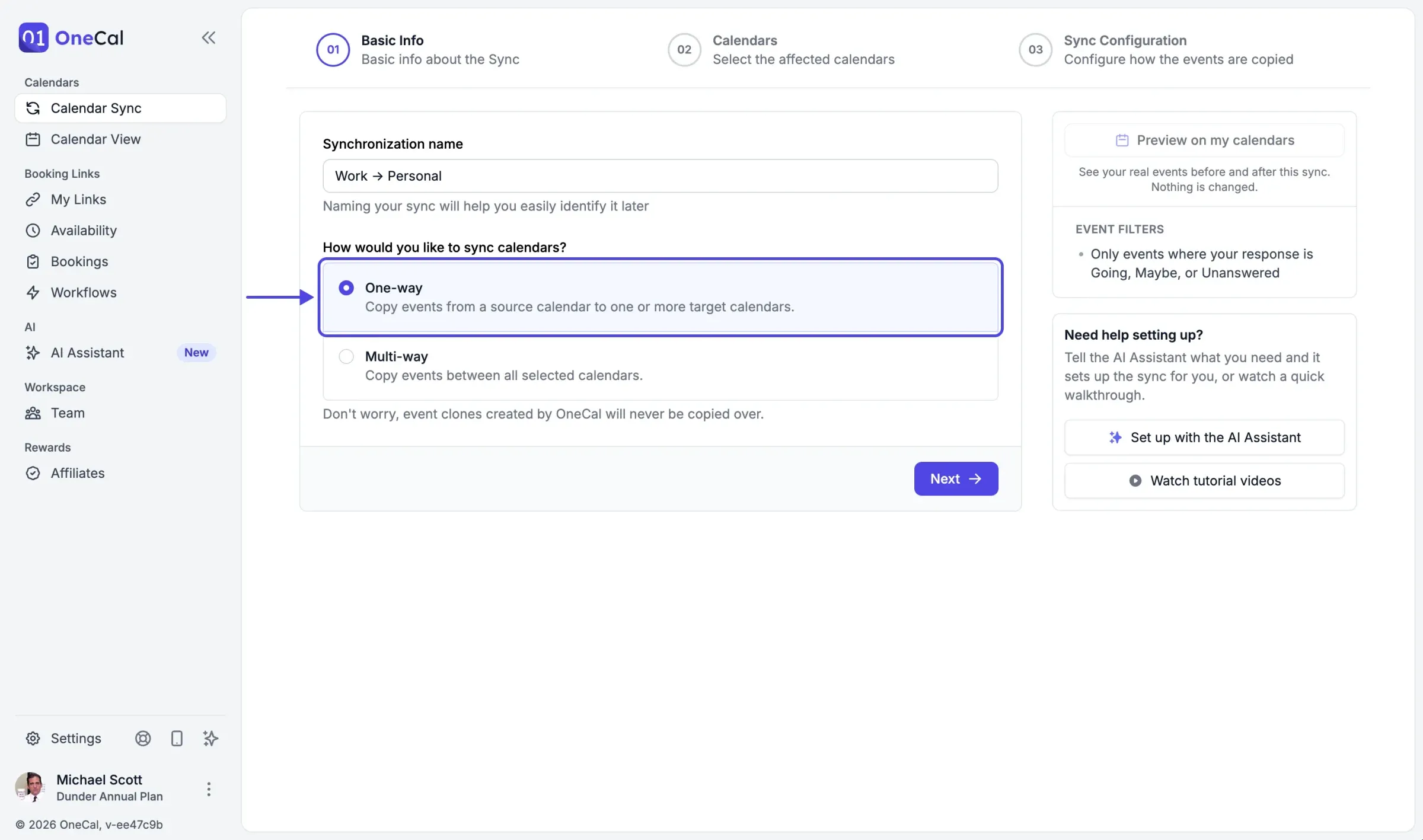
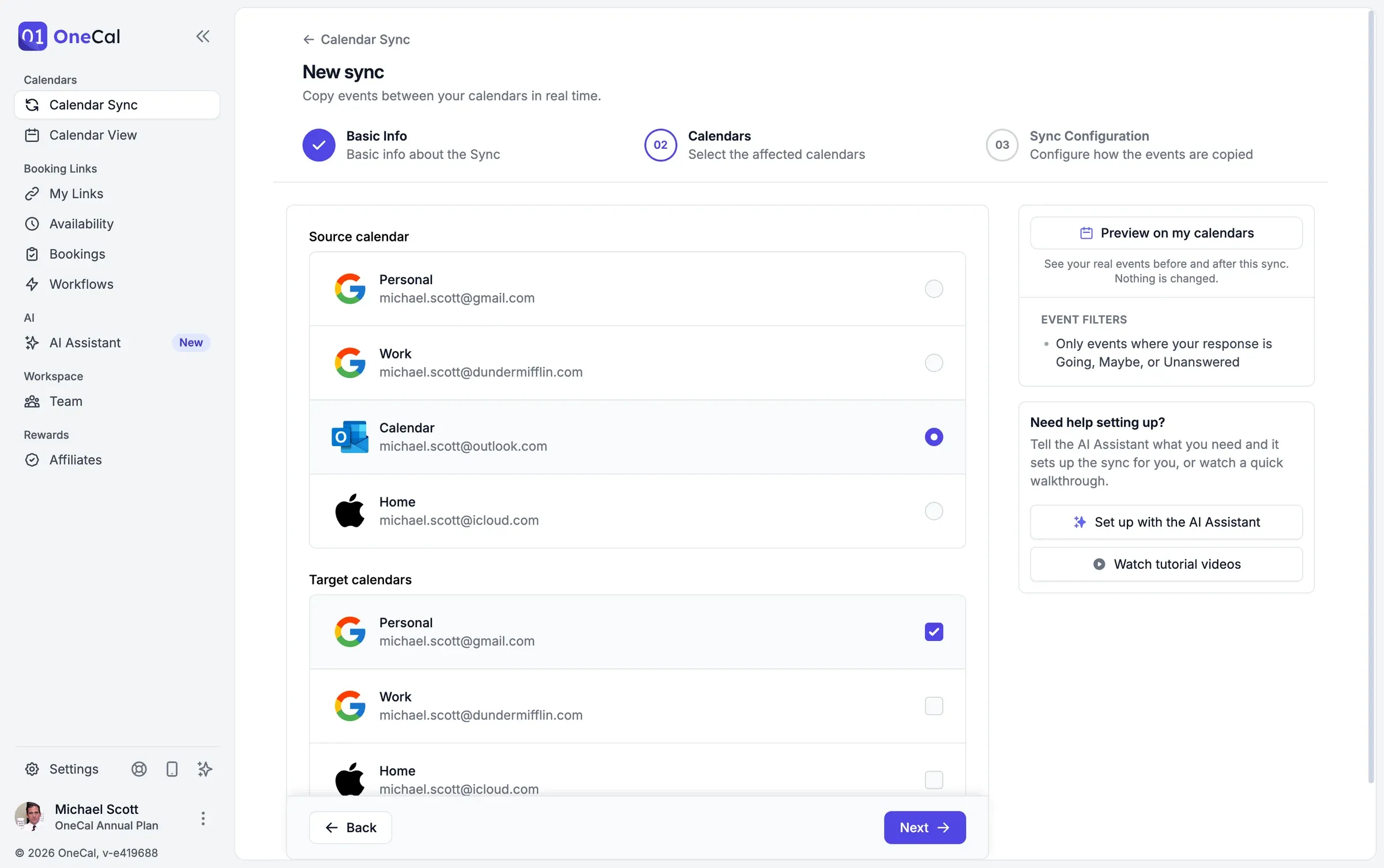
- Select the calendars to copy events from and to. After selecting the calendar copying direction, you can select the calendar to copy events from, and the target calendar. For this example, Outlook would be the source and Google Calendar would be the target.
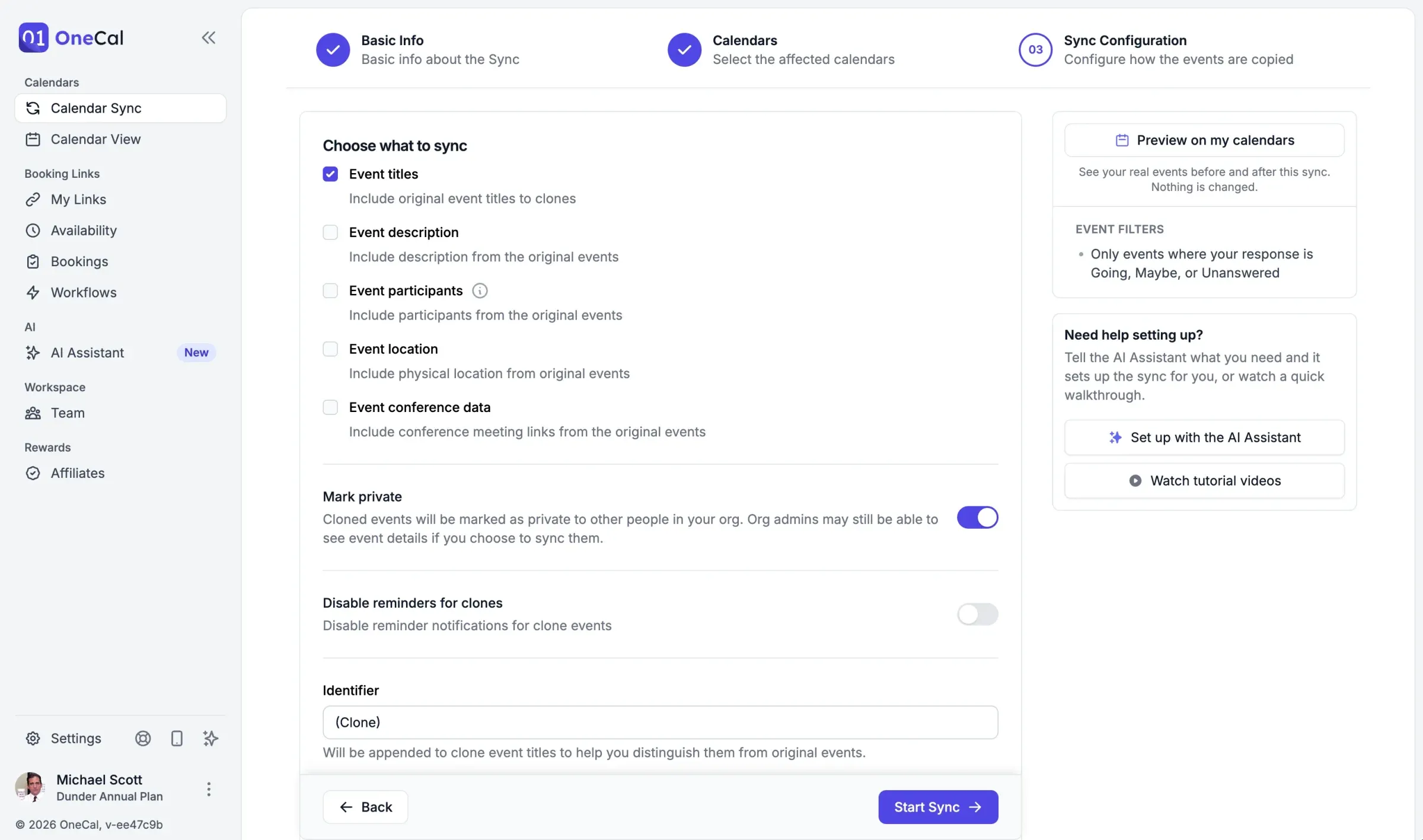
- Configure what to copy from events. In the Sync Configuration step, decide what event details to copy from Outlook to Google Calendar, such as titles, descriptions, and participants. You can also set custom titles for events and mark them as private. Event filters let you leave out events you do not want to copy, such as all-day events, events marked as free, or events with a certain color or title.
- Preview and start the calendar sync. Click “Preview on my calendars” to see how the copied events will look on your calendars. Nothing is written to your calendars until you click “Start Sync.”
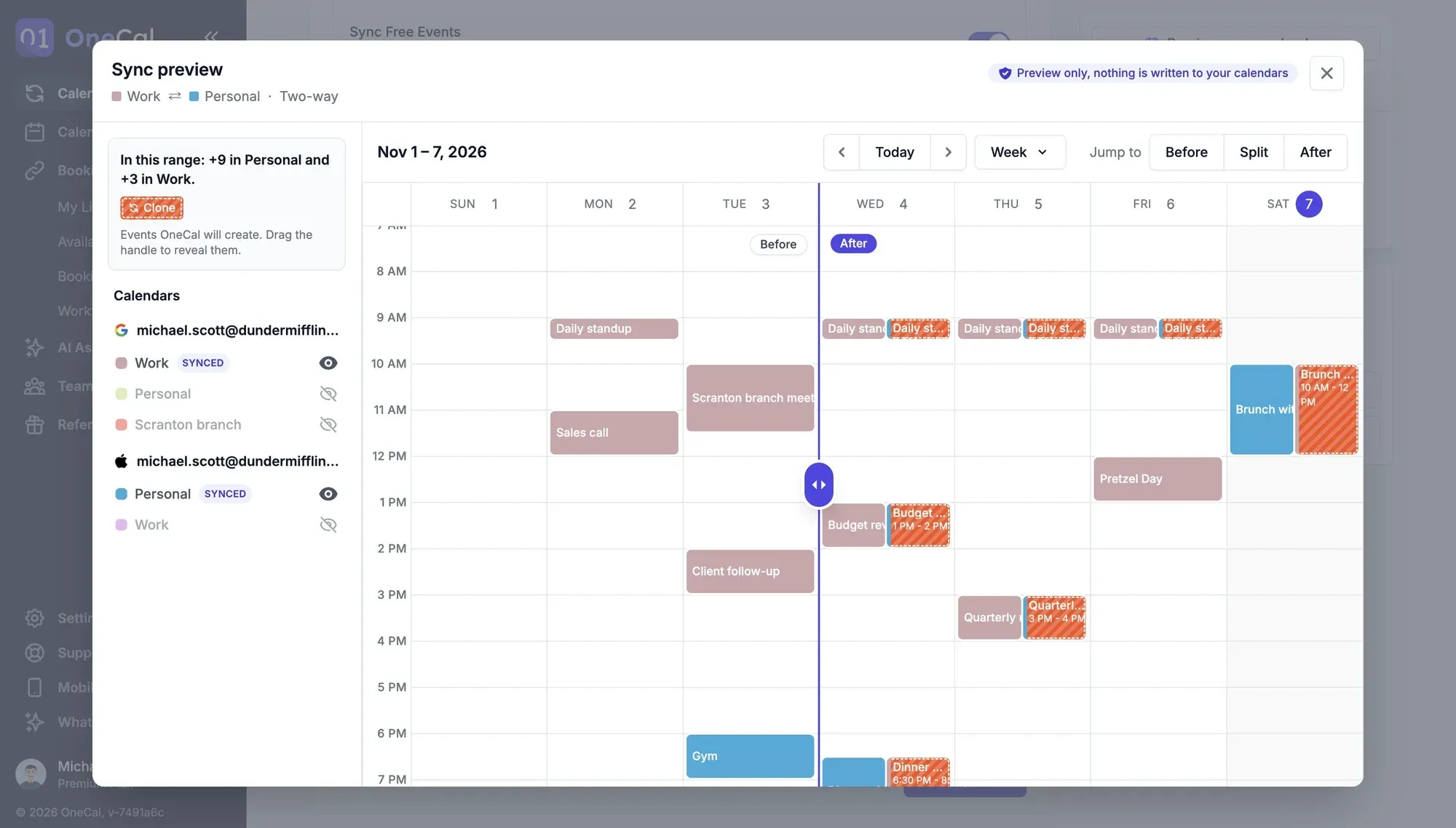
Note: Once the configuration is set, OneCal will automatically update your calendars. This includes real-time updates for any changes made to events.
OneCal copies current and future events, not past ones. For an Outlook source calendar, it copies events up to 3 months ahead, and later events are copied automatically as they come within that range. Recurring events that continue into the future are also copied.
You can read more about each option in the OneCal calendar sync documentation, and on the Outlook Calendar sync and Google Calendar sync pages.
What are the Benefits of Using a Calendar App like OneCal?
Automatically copy events between calendars. OneCal integrates with Google Calendar, iCloud, Outlook, and any CalDAV calendar such as Fastmail, Yahoo, Zoho, and Nextcloud, allowing you to copy events between all of these providers. Whether you're syncing Google Calendar with Apple Calendar or syncing Outlook Calendar with Apple Calendar, OneCal handles the rest, keeping all your schedules in sync.
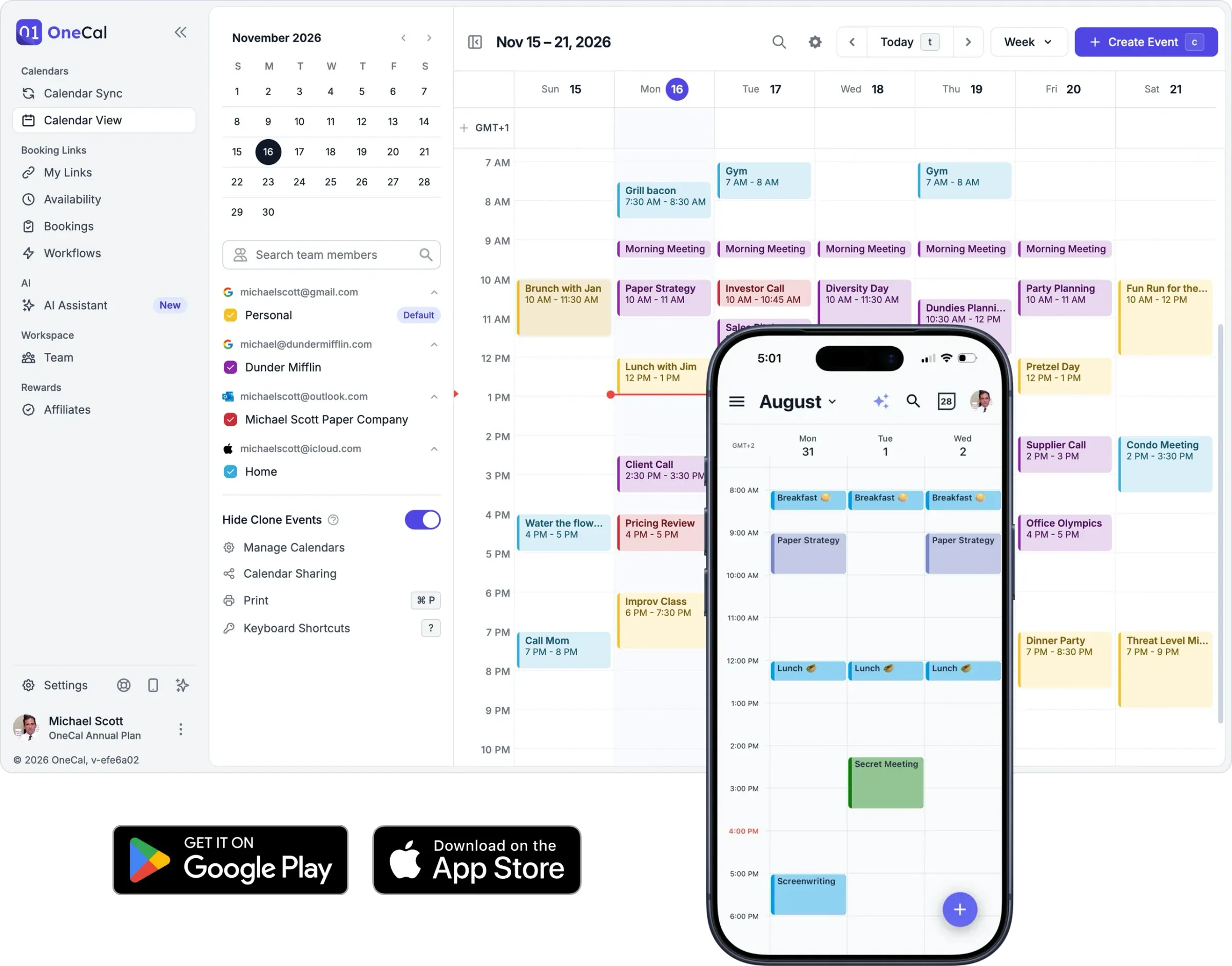
All-in-One Calendar View. OneCal provides a single view where you can see all your appointments, meetings, and events from different calendars like Google, Outlook, Apple iCloud, and CalDAV calendars. This means you don't have to keep switching between apps to stay organized. For example, if you add a meeting to Google Calendar, it will automatically appear in OneCal, making it easier to keep track of everything.
Control over what's copied between calendars. With OneCal, you can control what information gets copied between your calendars. This feature is particularly useful if you want to keep certain details private, such as marking events as 'busy' without showing the specifics. This way, you can share your availability without compromising your privacy.
Simple Setup on Any Device. OneCal is a user-friendly tool that you can set up easily on your desktop or phone. The OneCal iOS and Android apps let you create and manage calendar syncs from your phone. Furthermore, the calendar sync runs in the cloud, so you don't need to keep any software open on your devices in order to copy events between calendars.
These are only some of OneCal’s features, but if you want to learn more, you can go and visit our pricing and plans or try our 14-day free trial, no credit card required.
Automatically Copy Events Between Calendars with OneCal
Manual methods like exporting and importing can work for one-time transfers, but they lack the efficiency and flexibility needed for ongoing management.
OneCal provides a comprehensive solution for real-time, automated event copying between calendars, improving your scheduling experience and privacy.
Copy events between multiple calendars, manage privacy, and avoid scheduling conflicts. The Starter plan costs $5 per user per month billed annually, or $6 billed monthly and includes 2 connected calendars, which is enough for one Outlook calendar and one Google calendar. You can start a 14-day free trial, and no credit card is required.
If the Copy Does Not Work
- The Save Calendar option is missing or greyed out. You are probably using the new Outlook, which has no File menu, so publish the calendar and download the ICS file instead, as described under Method 1.
- Google Calendar imported fewer events than you expected. Check the Date Range you selected when you saved the calendar in Outlook. Google shows how many events it imported after each import.
- You have a .zip file. Open the .zip file, take out the .ics files, and import each one separately.
- The subscribed Outlook calendar does not show new events. Google refreshes a calendar added by URL on its own schedule, and you cannot force a refresh. If you need changes to show quickly, use a calendar sync tool.
- The Publish option is missing. Your organization may have turned off calendar publishing, so ask your IT admin.
FAQ
Can I copy a single Outlook event to Google Calendar?
Yes. Forward the invitation to your Gmail address and accept it there, or save the event as an .ics file in classic Outlook and import the file into Google Calendar.
Does an imported Outlook calendar update automatically?
No. An import is a snapshot, so events you add, change, or delete in Outlook after the import won't change in Google Calendar. Use the published ICS link or OneCal if you need ongoing updates.
Can I export a calendar from the new Outlook?
Not directly. The new Outlook and Outlook on the web have no Save Calendar option, but you can publish the calendar under Settings > Calendar > Shared calendars, open the ICS link, and download the file.
Will recurring events and attendees copy over?
Use an .ics file for recurring events, because Google warns that repeating events from a .csv file might show up as a series of one-time events. Google does not import guests or conference data with any import. With OneCal, you can choose to copy the participants and the meeting link along with the title, description, and location.
How do I copy Outlook events to Google Calendar on a Mac?
Sign in to Outlook on the web, publish the calendar, and either download the ICS file for a one-time import or add the ICS link to Google Calendar. OneCal also works on a Mac, because it runs in the browser.
How long does Google Calendar take to show new events from a published Outlook calendar?
It can take several hours, and sometimes up to 24 hours, because Google controls the refresh schedule. OneCal, by comparison, copies new Outlook events to Google Calendar in real time.
Is it free to copy Outlook events to Google Calendar?
The export, published ICS link, and single-event methods are free. OneCal is a paid tool with a 14-day free trial, and its Starter plan costs $5 per user per month billed annually, or $6 billed monthly.