How To Make Google Calendar Private and Manage Visibility | A Step-by-Step Guide
Table of Contents
Keep Your Calendars Secure Using OneCal!
With OneCal, you don't have to worry about sharing your calendars or making them public. You can sync all your calendars in real time while keeping them private.
If you use Google Calendar to keep track of your personal or work schedules, it's important to know about its privacy settings and the risks of keeping your calendars public.
Understanding how to adjust your Google Calendar settings is key, especially if your calendar has private information.
In this article, we'll talk about how to keep your Google Calendar private, manage who can see your calendar, and other key settings to make sure your calendar is safe and your privacy is intact.
For a detailed guide on Google Calendar sharing, please read our in-depth article on How To Share Google Calendar.
Quick answer: Open Google Calendar on a computer, hover over your calendar, and click the three dots. Click "Settings and sharing", open "Access permissions for events", and untick "Make available to public". Then check the "Shared with" list and remove anyone who should not have access. Personal Google Calendars are private by default, so you only need these steps if the calendar was shared or made public before.
How to Make Google Calendar Private
To make Google Calendar private and ensure that your calendar won't be accessible through Google Search, via URL, or other means, follow these steps:
- Open Google Calendar: On the web, you can access Google Calendar through this URL: https://calendar.google.com/calendar
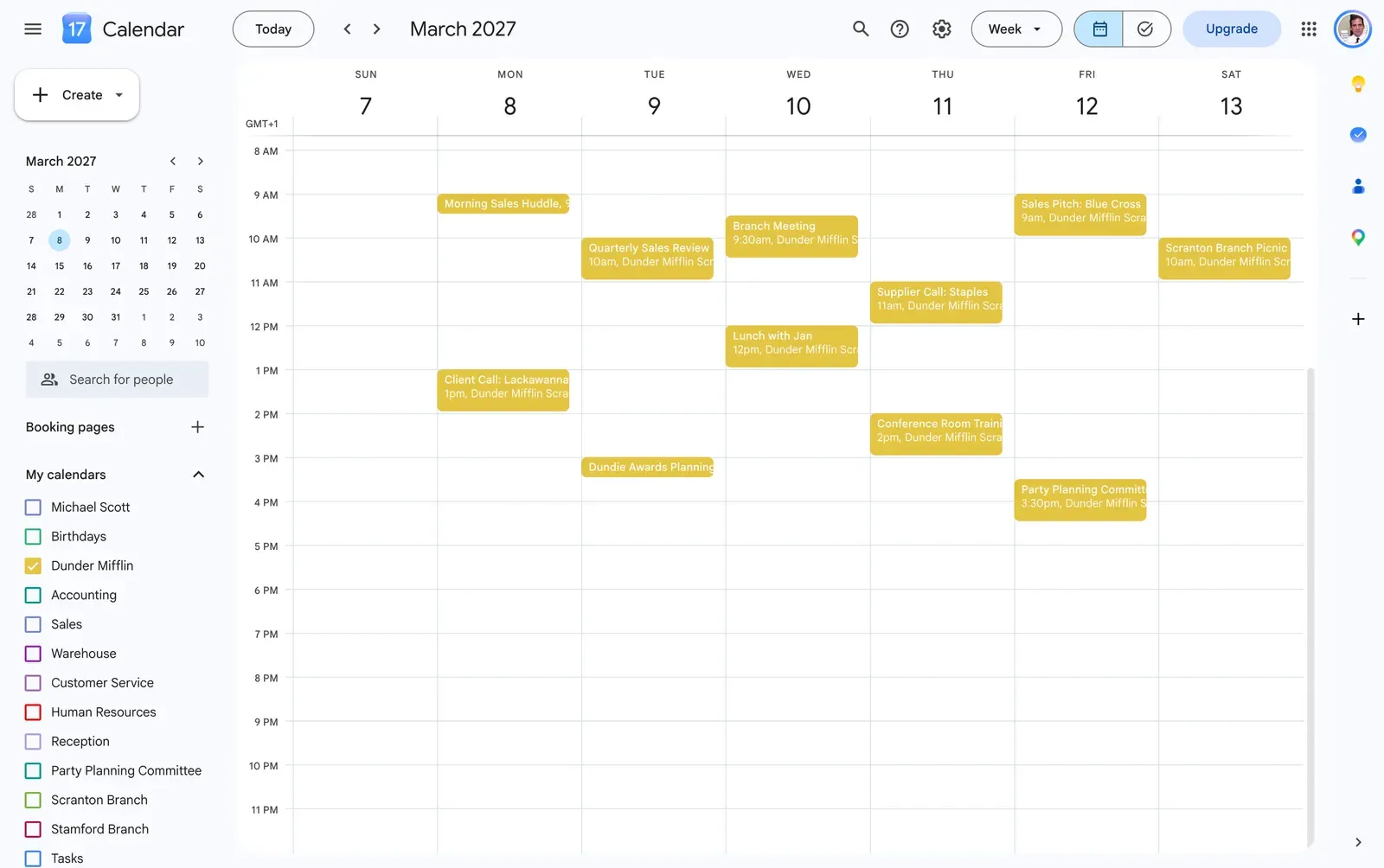
- Hover over the Google Calendar you want to make private: The calendars are located on the sidebar on the left of the page, the section is called "My Calendars".
- Click the three dots icon (⁝): Clicking the three dots icon lets you see the calendar options.
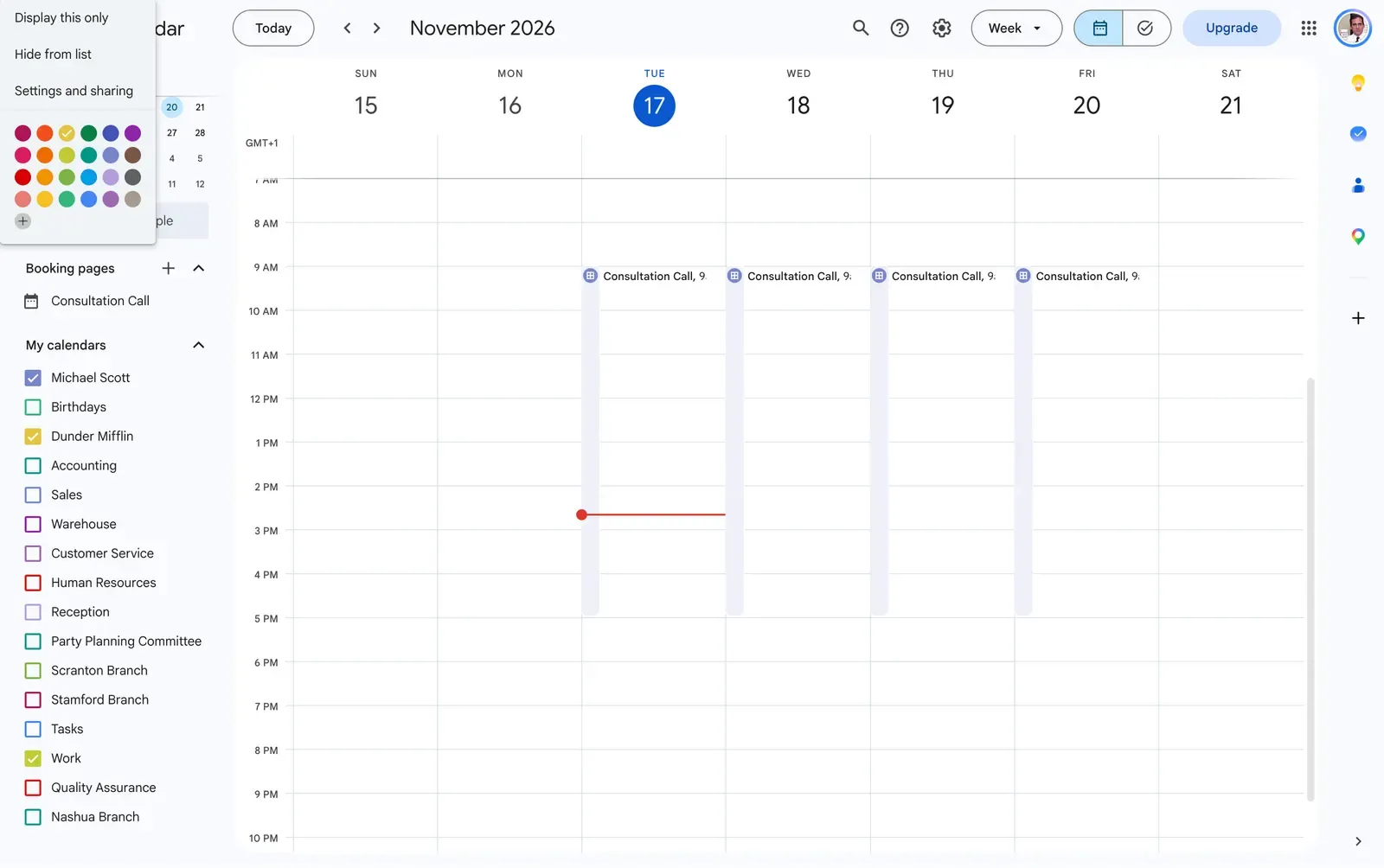
- Click "Settings and sharing": This menu contains all the settings related to this calendar.
- Click "Access permissions for events": This section is where you can choose to make the calendar public, or private.
- Uncheck the "Make available to public" checkbox: If your calendar was available to the public, uncheck the "Make available to public" checkbox. Unchecking this setting makes sure that the calendar is not available to the public, Google Search, or through any other means.
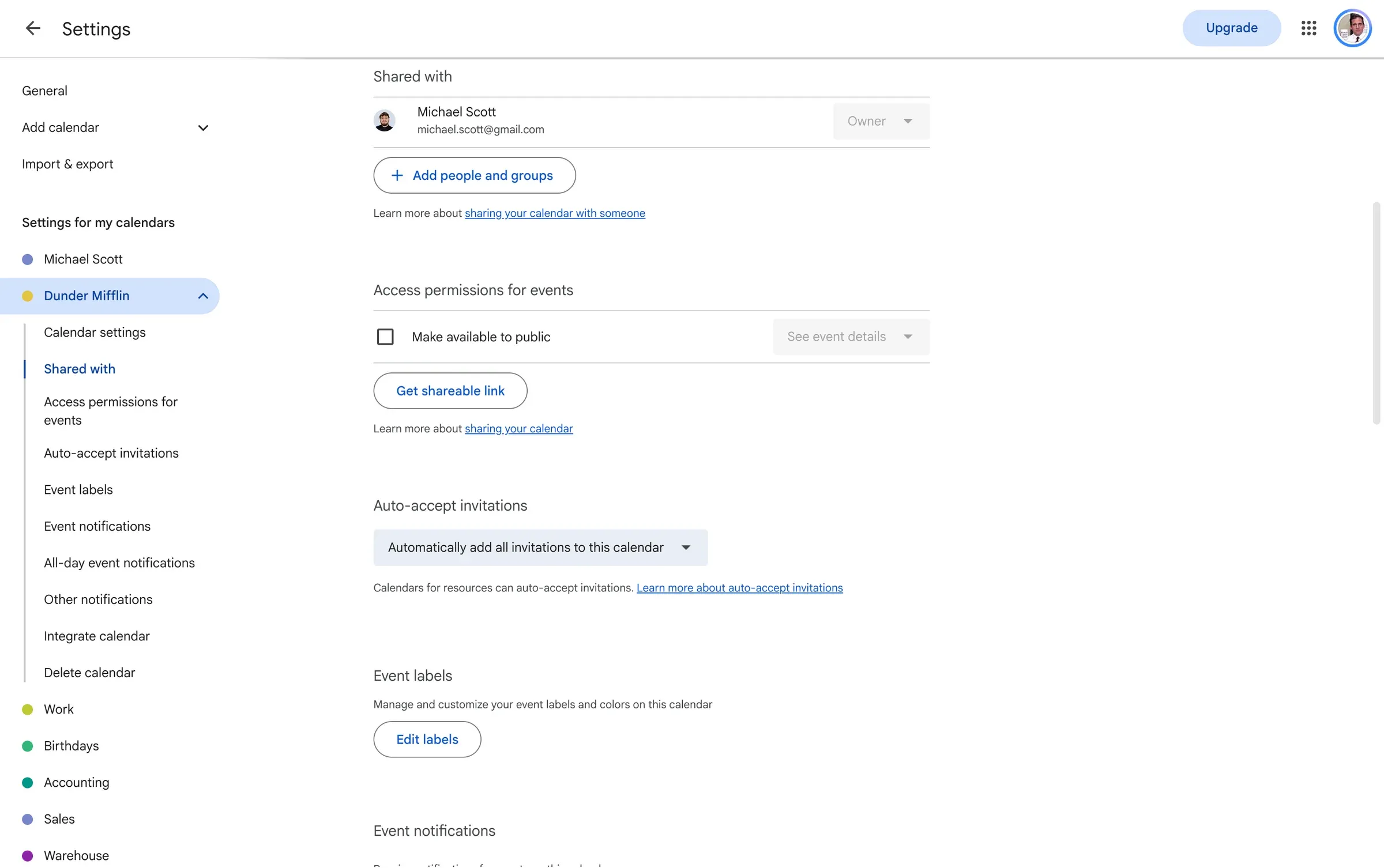
- Uncheck "Make available for [your organization]": This step only applies to work and school accounts, where you can uncheck it if you do not want everyone in your organization to find and view the calendar.
- Review the "Shared with" section: Making the calendar private does not remove people you shared it with earlier, so click the X next to anyone who should no longer have access.
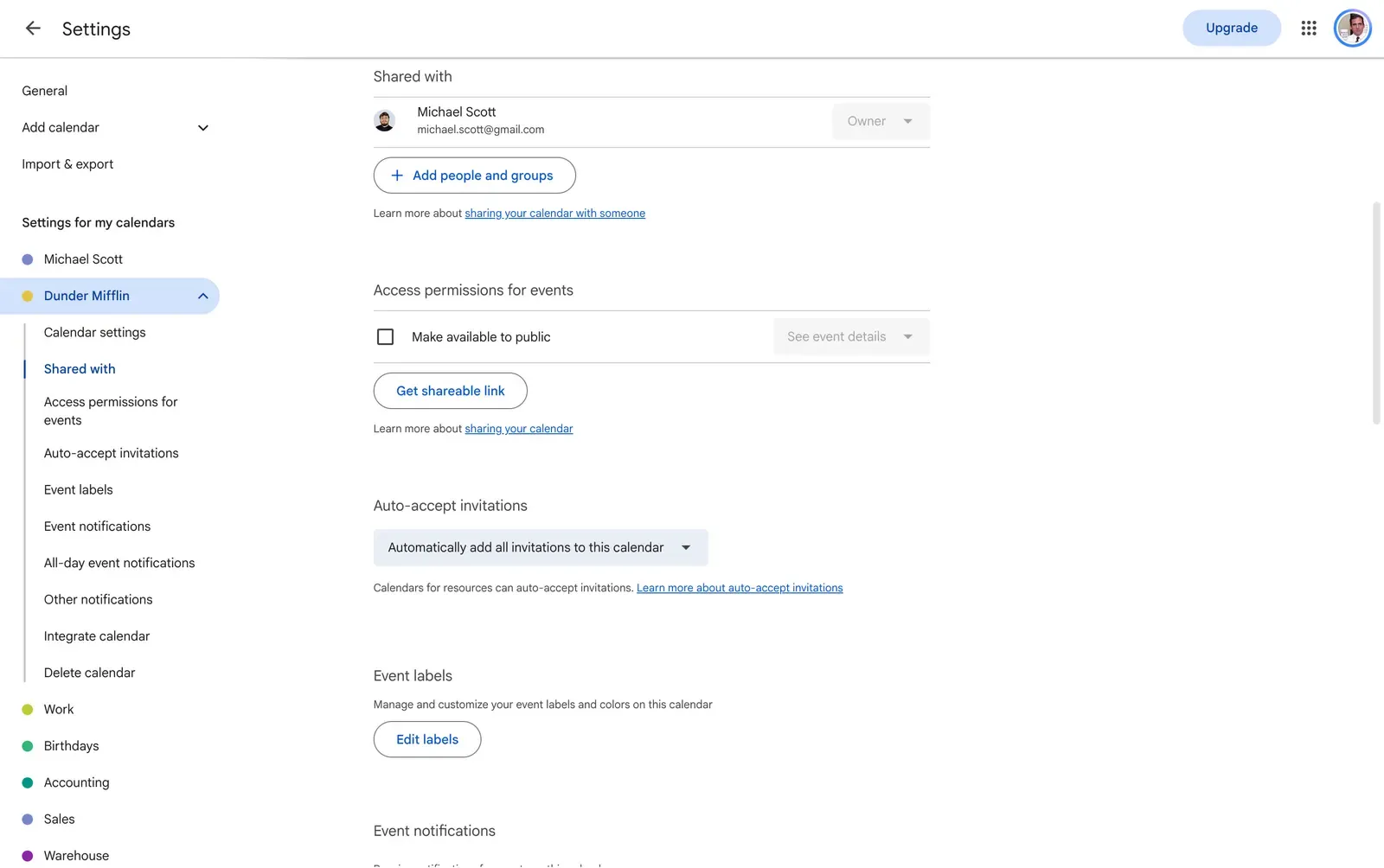
- Your Google Calendar is now private.
How to Check Who Can See Your Google Calendar
After you make the calendar private, it is worth checking what other people can see, following the steps below:
- Open "Settings and sharing" for the calendar, as described in the steps above.
- Click "Shared with": This section lists every person and group that has access, together with their permission level.
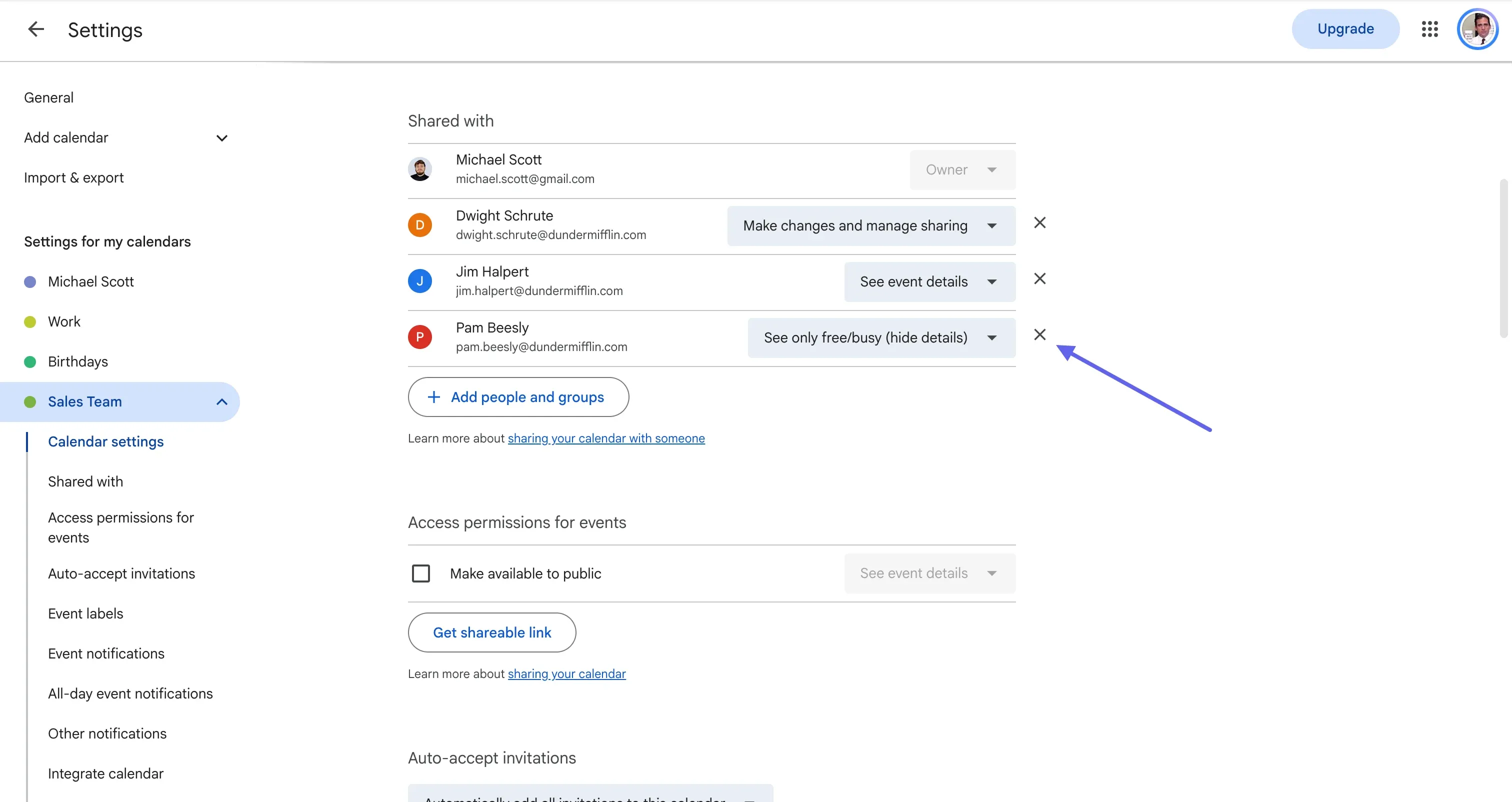
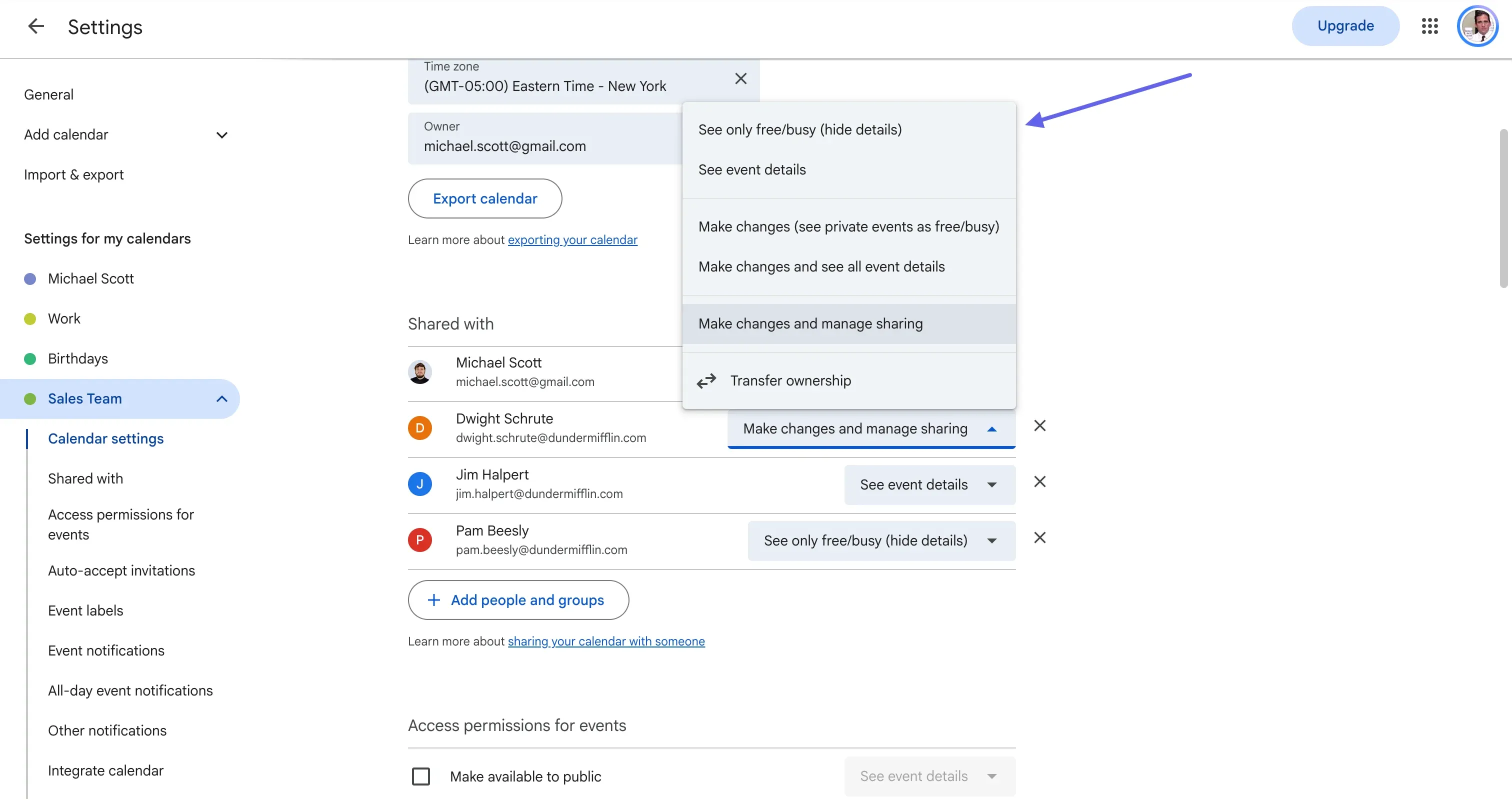
- Remove or lower access: Click the X next to a person to stop sharing with them, or open the permission menu next to their name and choose "See only free/busy (hide details)".
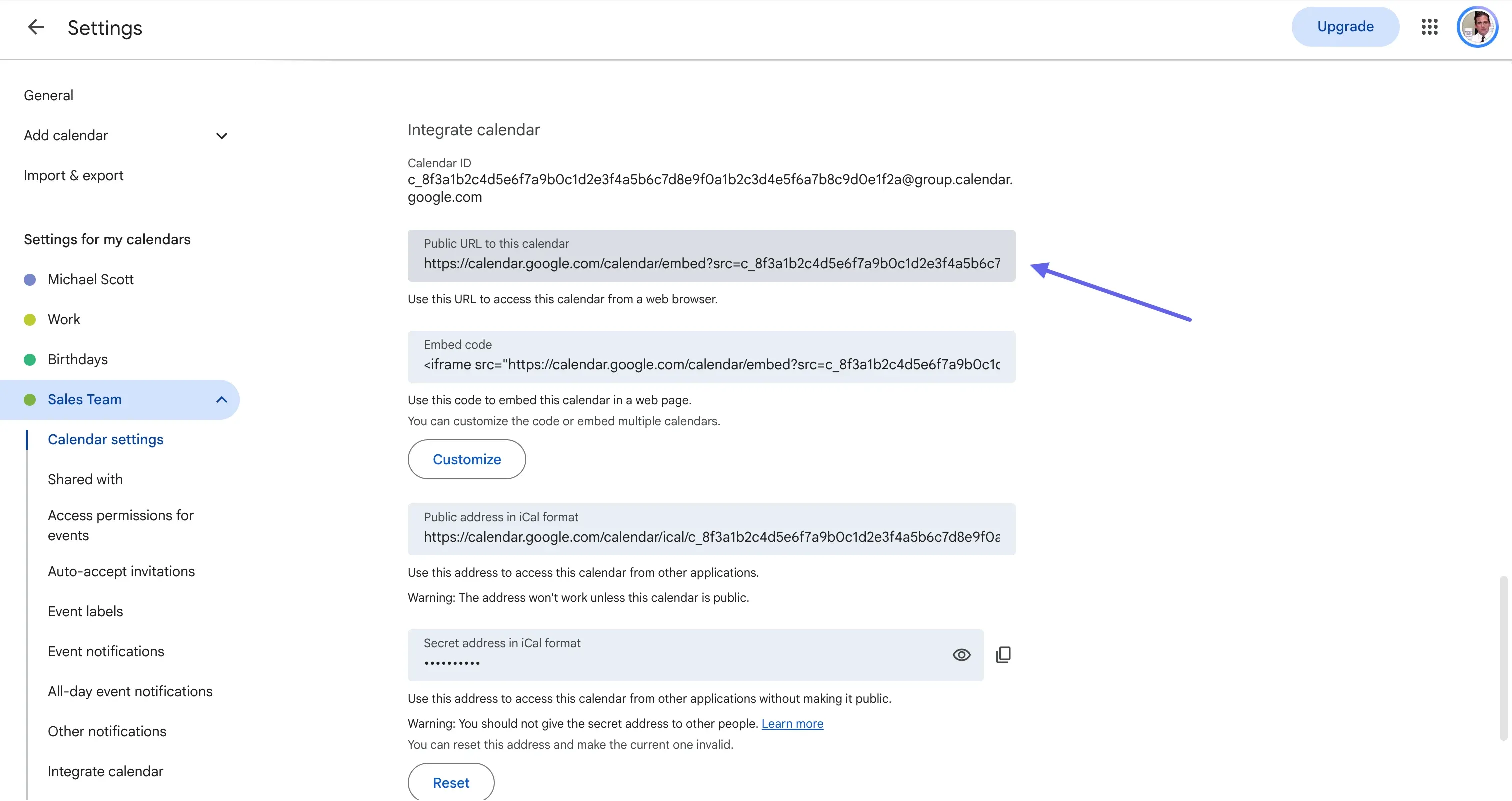
To see the calendar as a stranger would, open the "Integrate calendar" section and copy the link under "Public URL to this calendar".
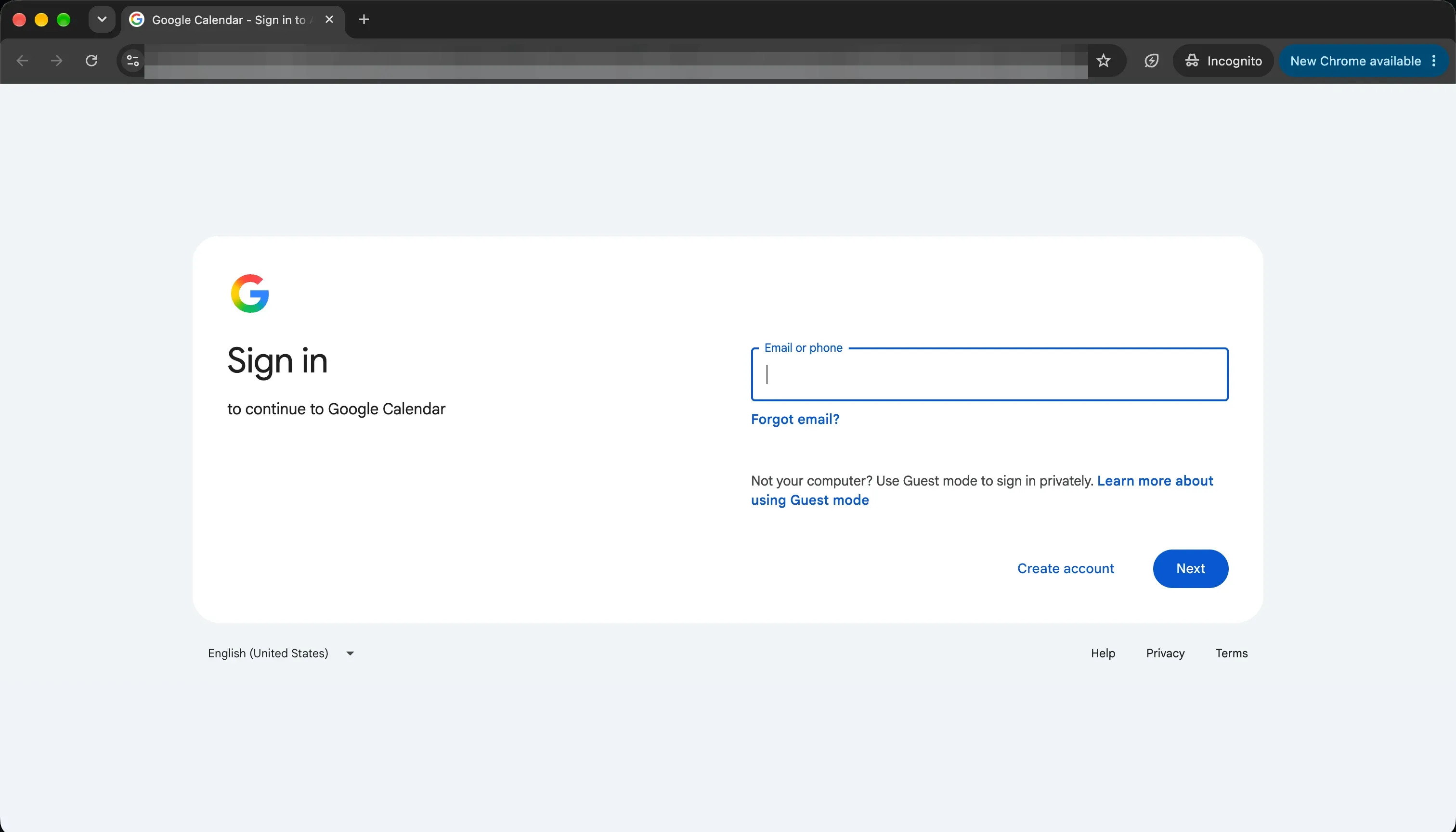
Then open the link in a private (incognito) browser window, where you are not signed in. If the calendar is private, Google shows a sign-in page instead of your events, so strangers cannot see anything. If the calendar is public, the page shows your calendar with the details that the public is allowed to see.
Other apps can also read your calendar if you gave them access in the past, see how to revoke third-party app access from your Google Account to review each one and revoke the access accordingly.
How to securely make your Google Calendar Public
If you need to share your Google Calendar and make it public, be cautious about which settings you check. To securely make your Google Calendar public, follow these steps:
- Open Google Calendar: On the web, you can access Google Calendar through this URL: https://calendar.google.com/calendar
- Hover over the Google Calendar you want to make public: The calendars are located on the sidebar on the left of the page, the section is called "My Calendars".
- Click the three dots icon (⁝): Clicking the three dots icon enables you to see the options for that calendar.
- Click "Settings and sharing": This menu contains all the settings related to this calendar.
- Click "Access permissions for events": This section is where you can choose to make the calendar public or private.
- Check the "Make available to public" checkbox: This section enables you to make the Google Calendar public, allowing you to get a shareable link and allowing others to view your calendar.
- Confirm that the Google Calendar will be available to the public: When you check the "Make available to public" checkbox, Google Calendar warns you that your calendar will be available to the public, including Google Search.
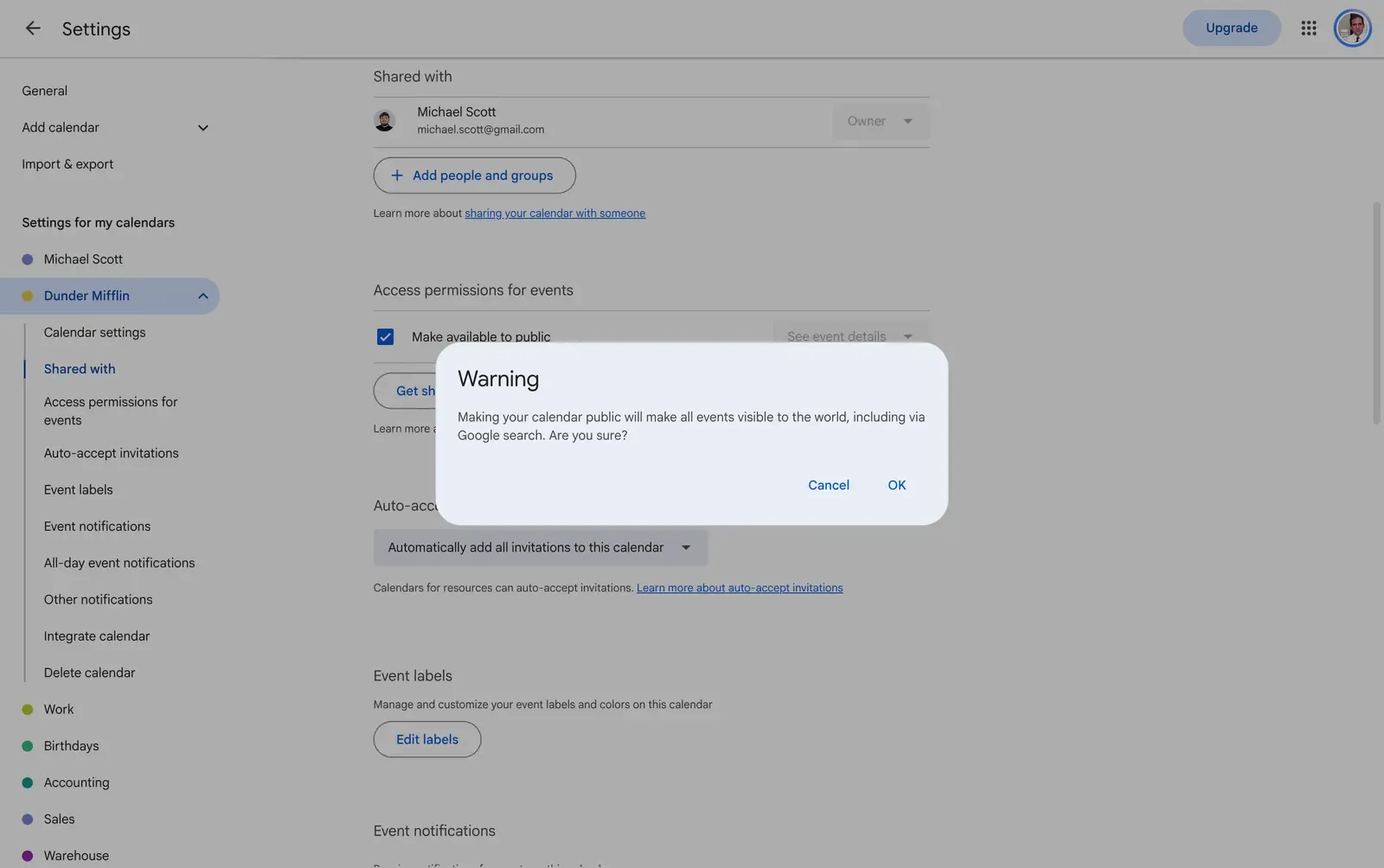
- Select "See only free/busy (hide details)": After checking the "Make available to public" checkbox, it's crucial to select "See only free/busy (hide details)" on the dropdown on the right of the "Make available to public" checkbox. This makes sure that even though others can see your calendar, they can only see the busy slots, not the event details.
- If you also want to make the event details public, you can select "See event details". Proceed with caution, as by selecting this option, everyone can see all your events along with private details.
A safer option: share a busy-only link with OneCal
If you only want people to see when you are busy, you do not have to tick "Make available to public" in Google at all. With OneCal Public Calendar Feeds, you choose which calendars to include, turn off "Include Event Details" to share busy times only, and get a Web Feed URL and an ICS Feed URL. You give the links only to the people you choose, and you can delete the feed at any time, which stops the links from working.
How to Share Your Google Calendar via Email, Group, or Link
You can share your Google Calendar with individual people or Google Groups instead of making it public. In "Settings and sharing", open "Shared with", click "Add people and groups", enter the email address, and choose a permission level. Our guide on how to share Google Calendar has the full steps.
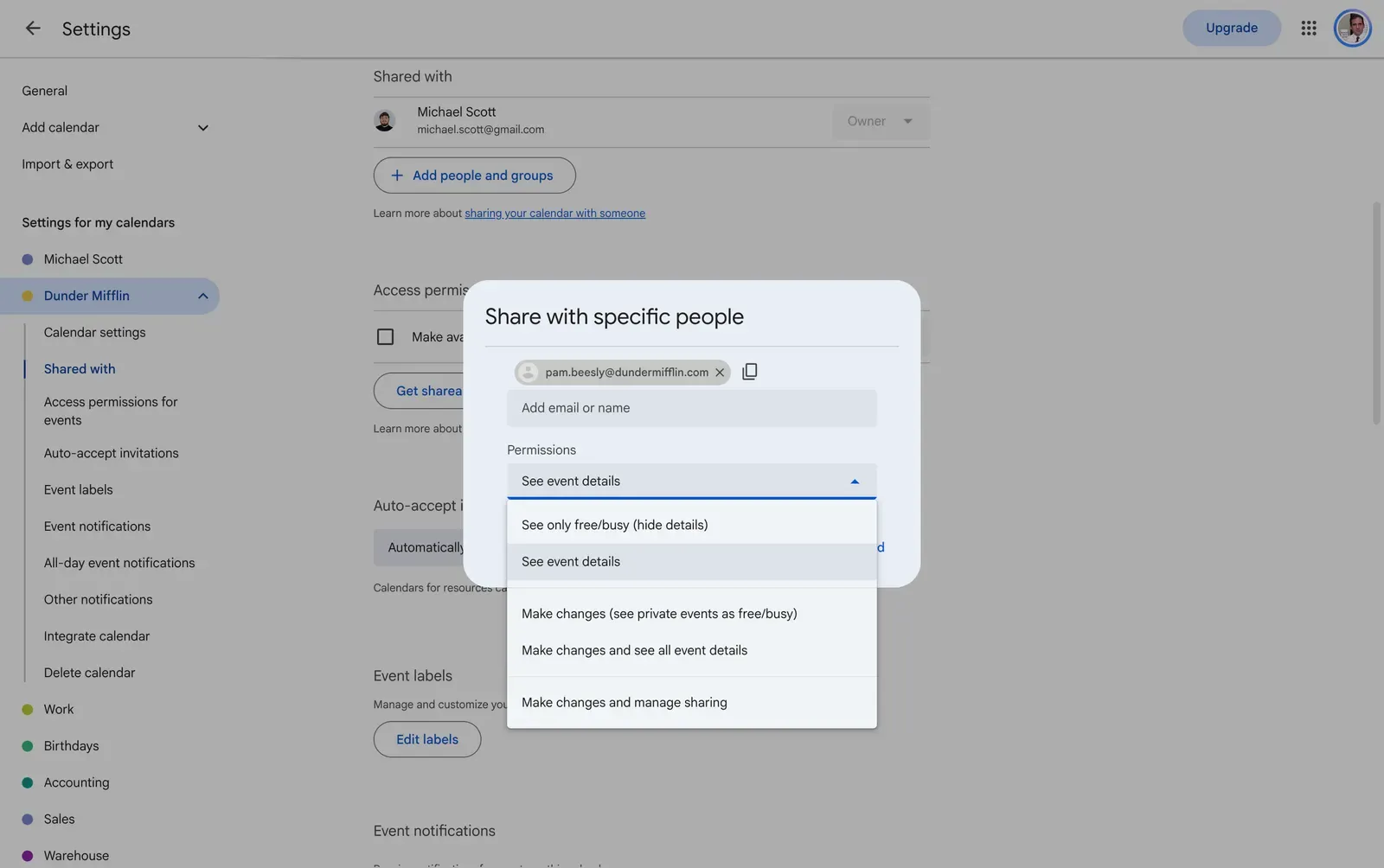
The permission level decides what each person can see and do:
Permission level | What the person can see and do |
|---|---|
See only free/busy (hide details) | Sees when you are busy, with no event names or details |
See event details | Sees event names, times, places, and descriptions |
Make changes (see private events as free/busy) | Can edit events that are not private, while private events show only as busy |
Make changes and see all event details | Can edit events and see their details, including private events |
Make changes and manage sharing | Has full control of events and can share the calendar with others |
For privacy, give each person the lowest level that works, and "See only free/busy (hide details)" is enough for most coworkers and clients.
You can also generate a public shareable link under Access permissions for events, but be aware that anyone with the link can access your calendar. You can't limit access by person, nor customize how your calendar looks.
Want more control and branding?
In this case, using a third-party appointment software like OneCal, you can share a private booking link that lets people book time with you, while you control exactly what they see. A private booking link can be one-time, usage-limited, or expiring.
Plus, you can style the booking page with the appearance editor (brand color, cover image, and fonts), and OneCal reads your availability from Google, Outlook, iCloud, and CalDAV calendars, all from one place.
Try OneCal free for 14 days, no credit card needed.
How to Make Your Calendar Visible Within Your Organization (Google Workspace Only)
If your calendar is part of a Google Workspace account (like a company or school), you can control visibility within your organization.
- In the Access permissions for events section, check the box labeled Make available for [Your Organization]
- Choose the permission level:
- See only free/busy (hide details)
- See all event details
Keep in mind that your organization's admin may have set default sharing rules that affect what you can change.
How to Change Visibility for Individual Events
Sometimes you may want to hide or share only specific events on your calendar. Here's how you can manage an event's visibility in Google Calendar:
- Open Google Calendar on your desktop.
- Click the event you want to change, then click the Edit (pencil) icon.
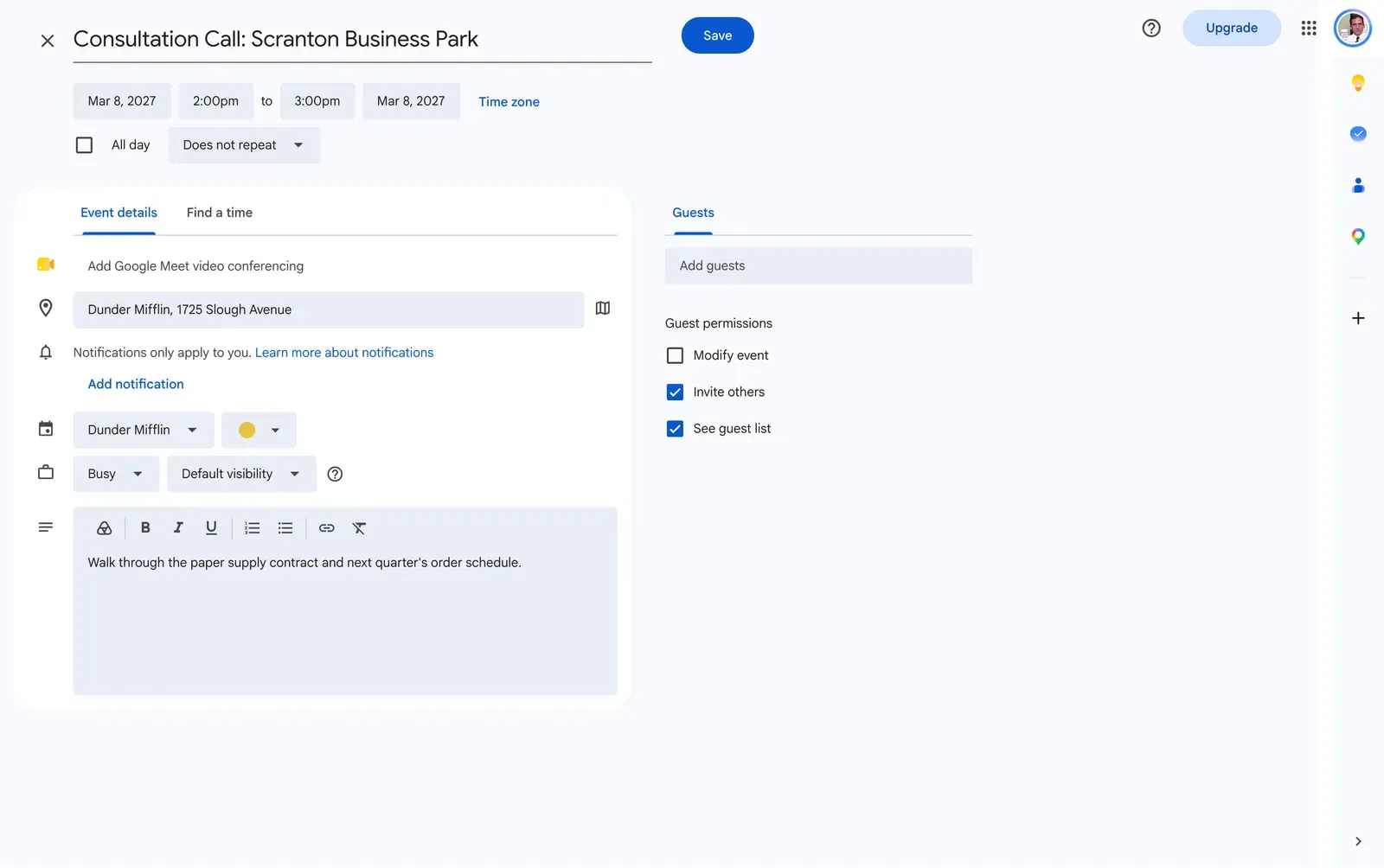
- Find the Default visibility dropdown menu.
- Choose "Default visibility", "Public", or "Private". The table below explains what each option does.
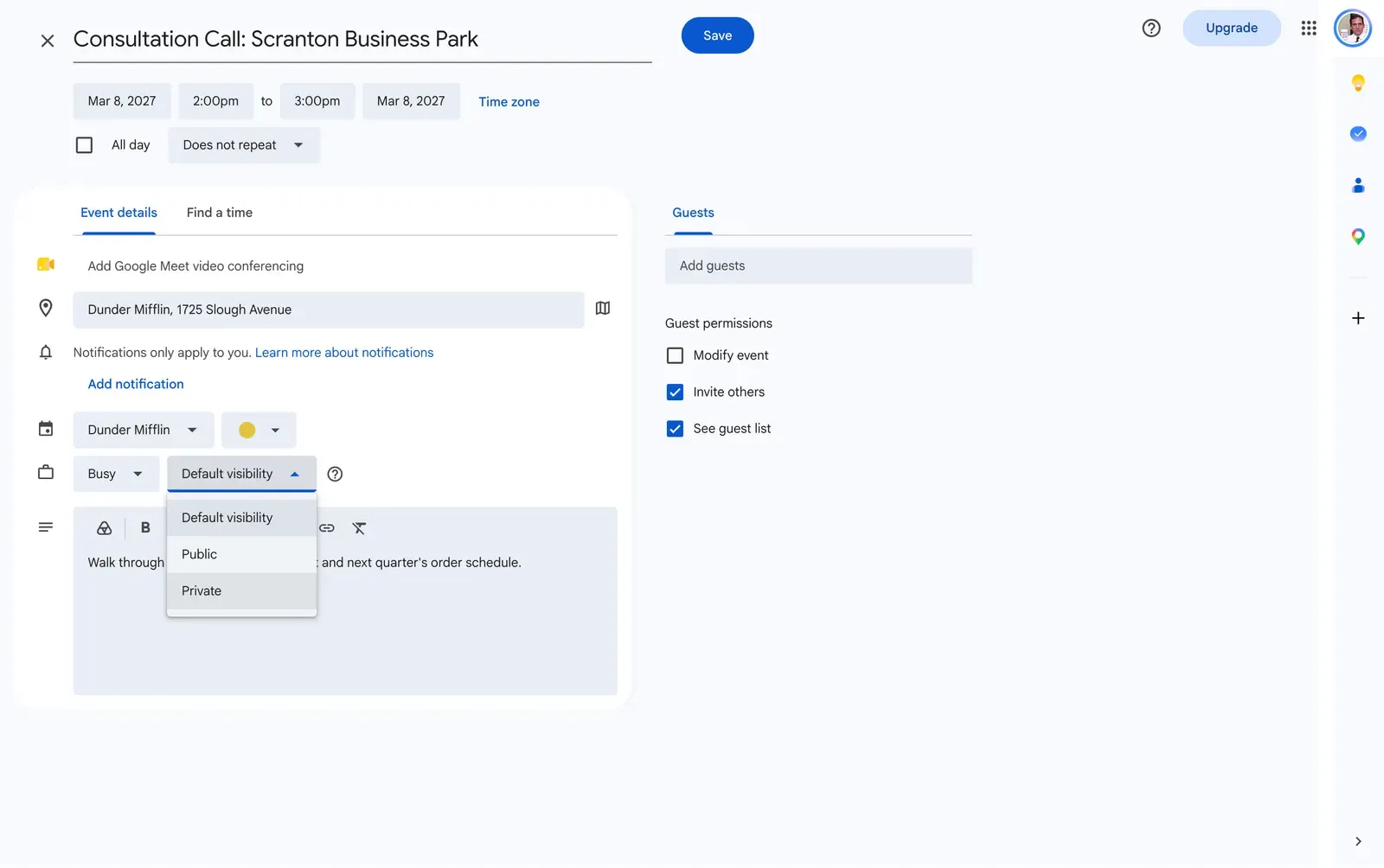
- Click Save to apply your changes.
Event visibility | Who can see the event details |
|---|---|
Default visibility | The event follows the sharing settings of your calendar, so people who can see event details see this event, while people with free/busy access only see that you are busy |
Public | Anyone who can see your calendar can see this event's details, even if they only have free/busy access |
Private | Only you and people who have "Make changes and see all event details" access or higher can see the details, while everyone else only sees that you're busy at that time |
Note that a private event can still show some basic info, since Google says the start time, end time, and event creator may be visible when you invite guests or book rooms. Also, events that Gmail adds to your calendar are visible only to you by default, even if you share your calendar.
How to Make an Event Private on iPhone and Android
These steps are from the Google Calendar app on iPhone, and the app works in a similar way on iPad and Android:
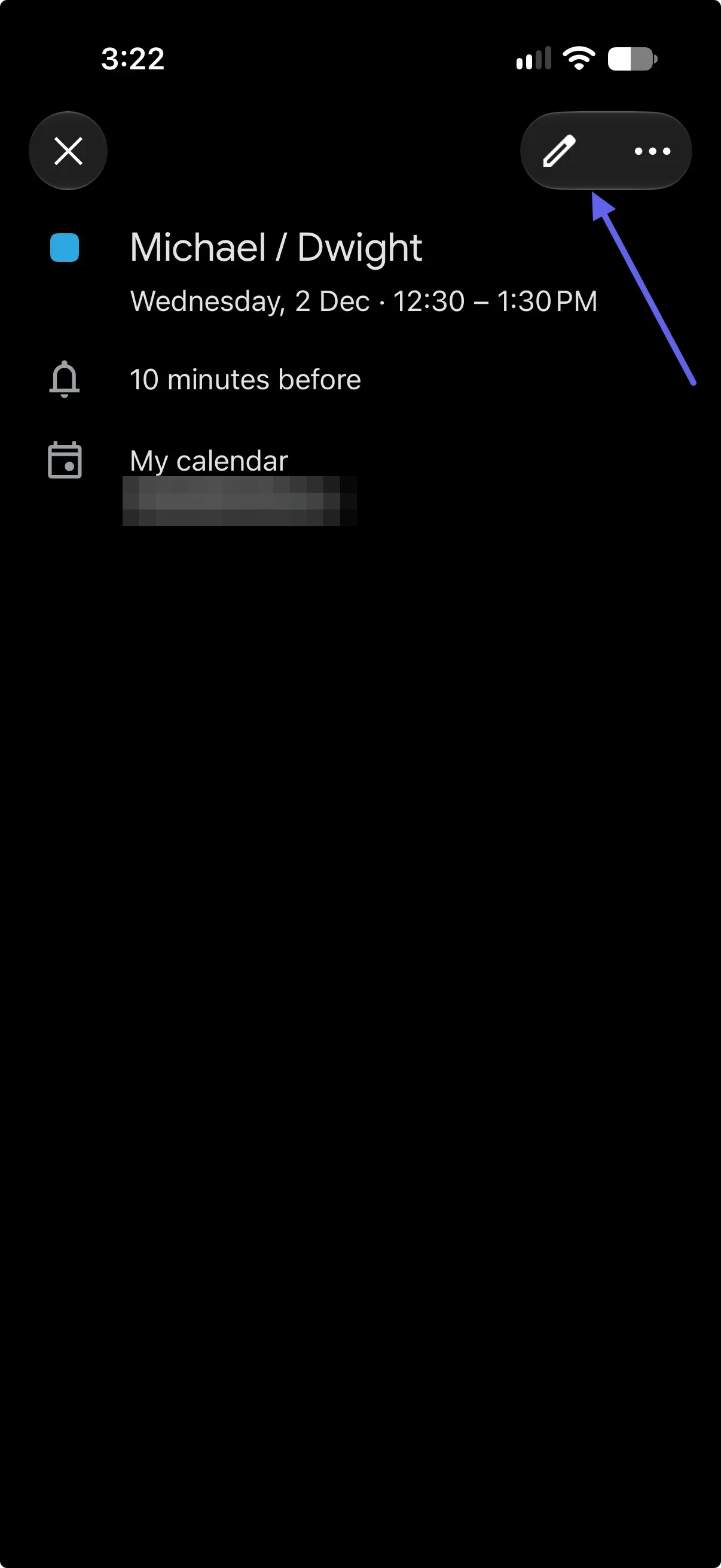
- Open the Google Calendar app and tap the event.
- Tap the Edit (pencil) icon at the top right.
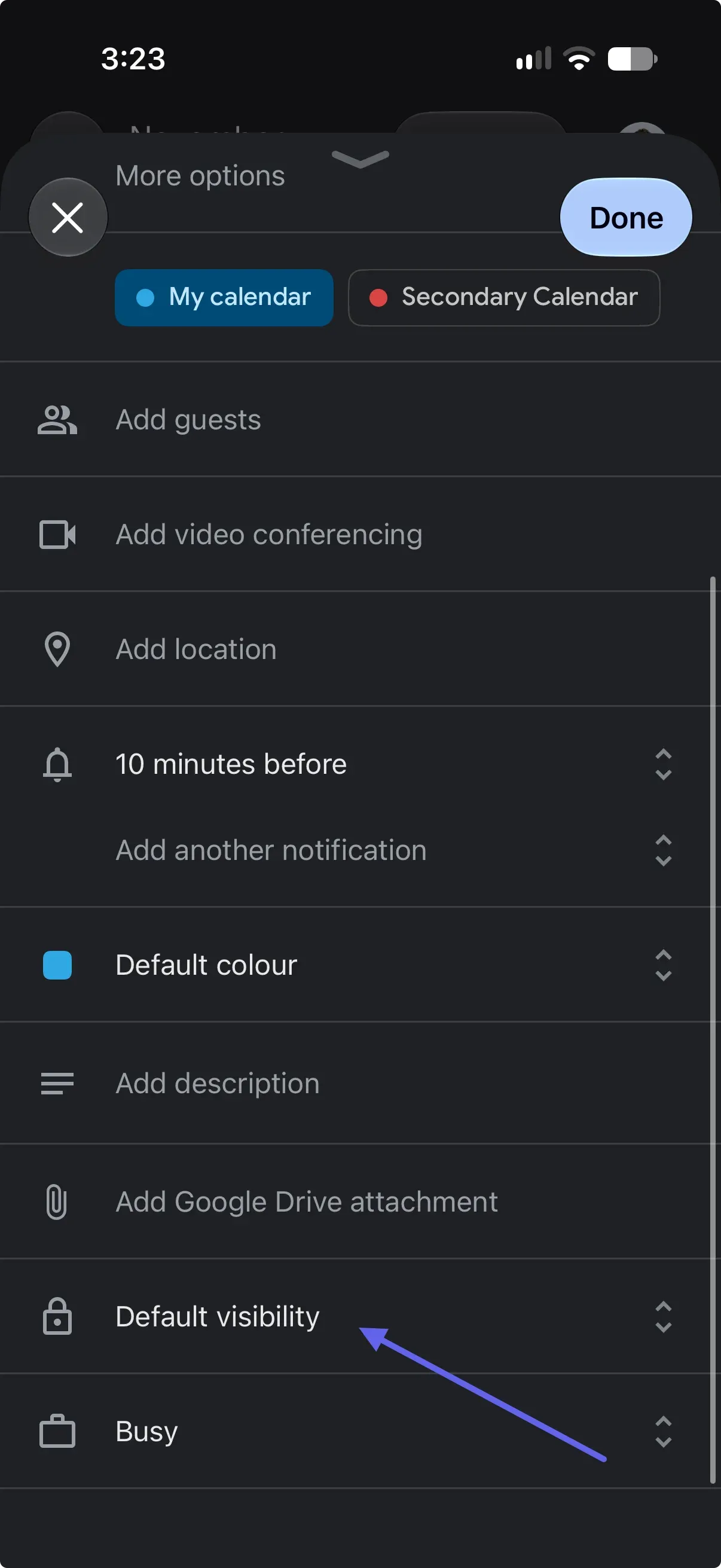
- Scroll down and tap "Default visibility", next to the lock icon.
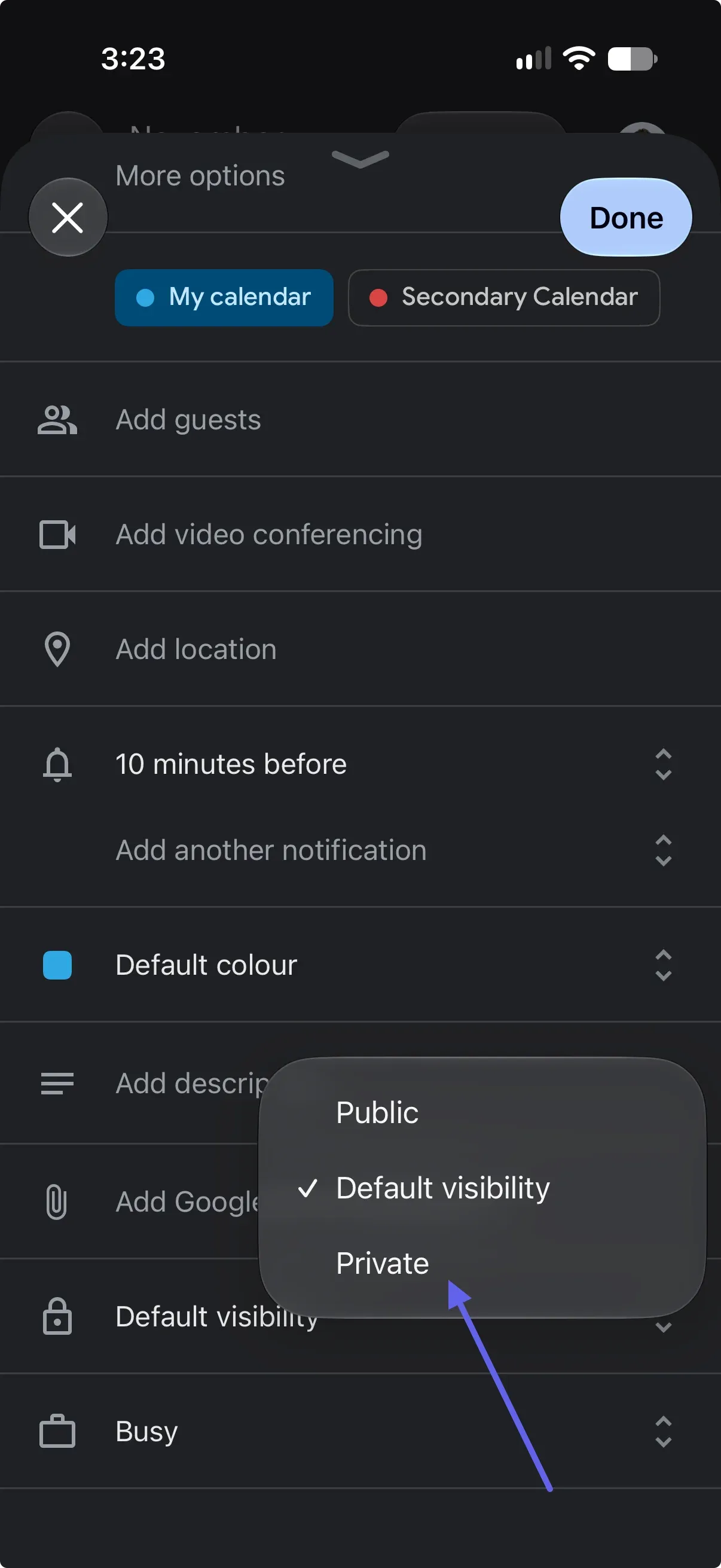
- Choose "Private".
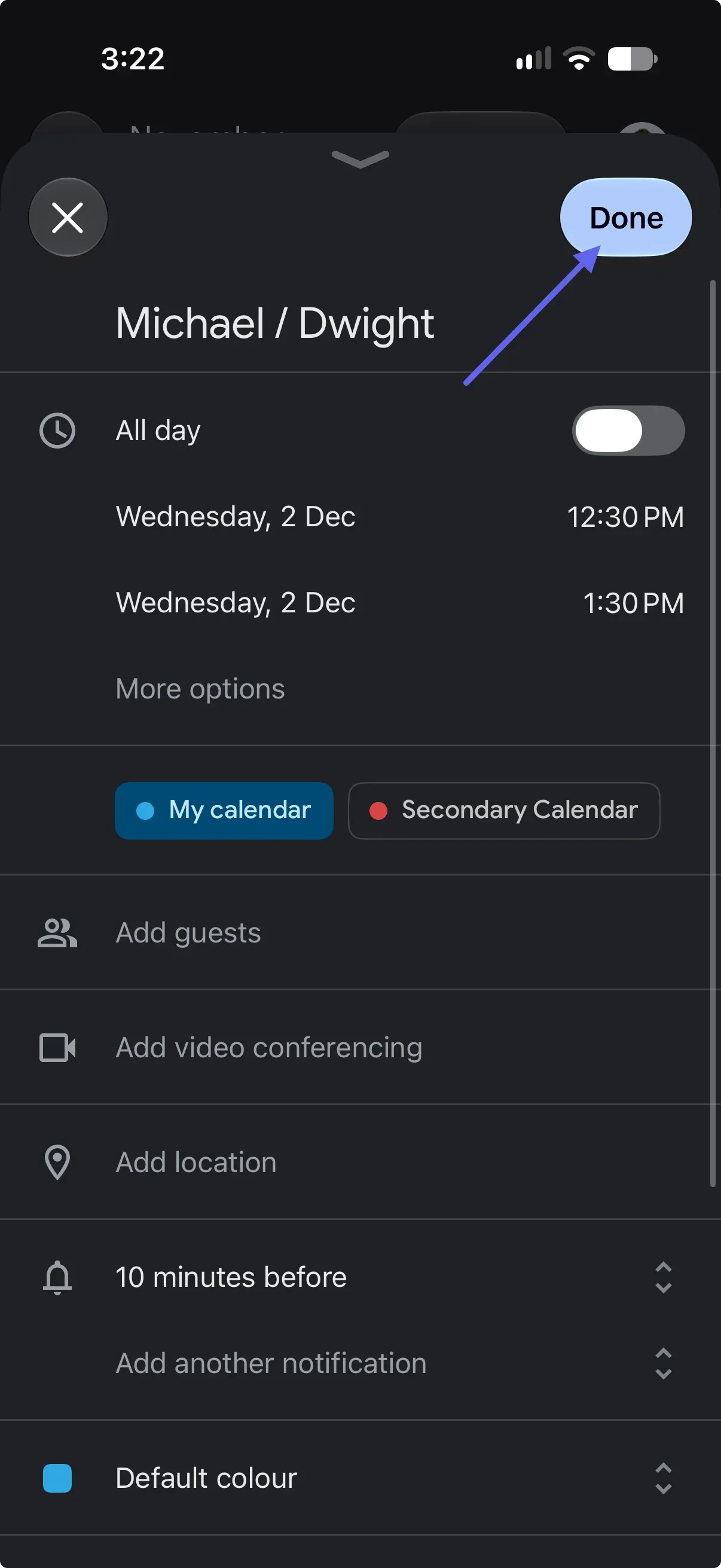
- Tap "Done" at the top right.
How to Set the Default Visibility for New Events
Google Calendar has no separate switch that makes every new event private. A new event uses "Default visibility", which follows the sharing settings of the calendar, so you control new events by controlling the calendar:
- Keep "Make available to public" unticked.
- Give people "See only free/busy (hide details)" access, so every new event shows only as busy to them.
- Set single events to "Private" when you want to hide them even from people who can see event details.
In a Google Workspace account, the admin sets the default for how calendars are shared within the organization, and that default applies until you change your own calendar settings.
Note: If you're using more than one calendar (like managing personal and work calendars), Google Calendar alone won't sync everything. With OneCal, you can automatically sync all your calendars across platforms, so you manage visibility in one place and avoid conflicts.
How to Reset the Secret iCal Address
Every Google Calendar has a "Secret address in iCal format", which is a private link that lets another calendar app read your calendar without making the calendar public. Anyone who has this link can see all your events with full details, so treat it with caution, almost like a password. If the link was shared or exposed, reset it:
- Click the Settings (gear) icon at the top right of Google Calendar, then click "Settings".
- Under "Settings for my calendars", click the name of your calendar.
- Click "Integrate calendar".
- In the "Secret address in iCal format" section, click "Reset": Google creates a new secret address, and the old one stops working.
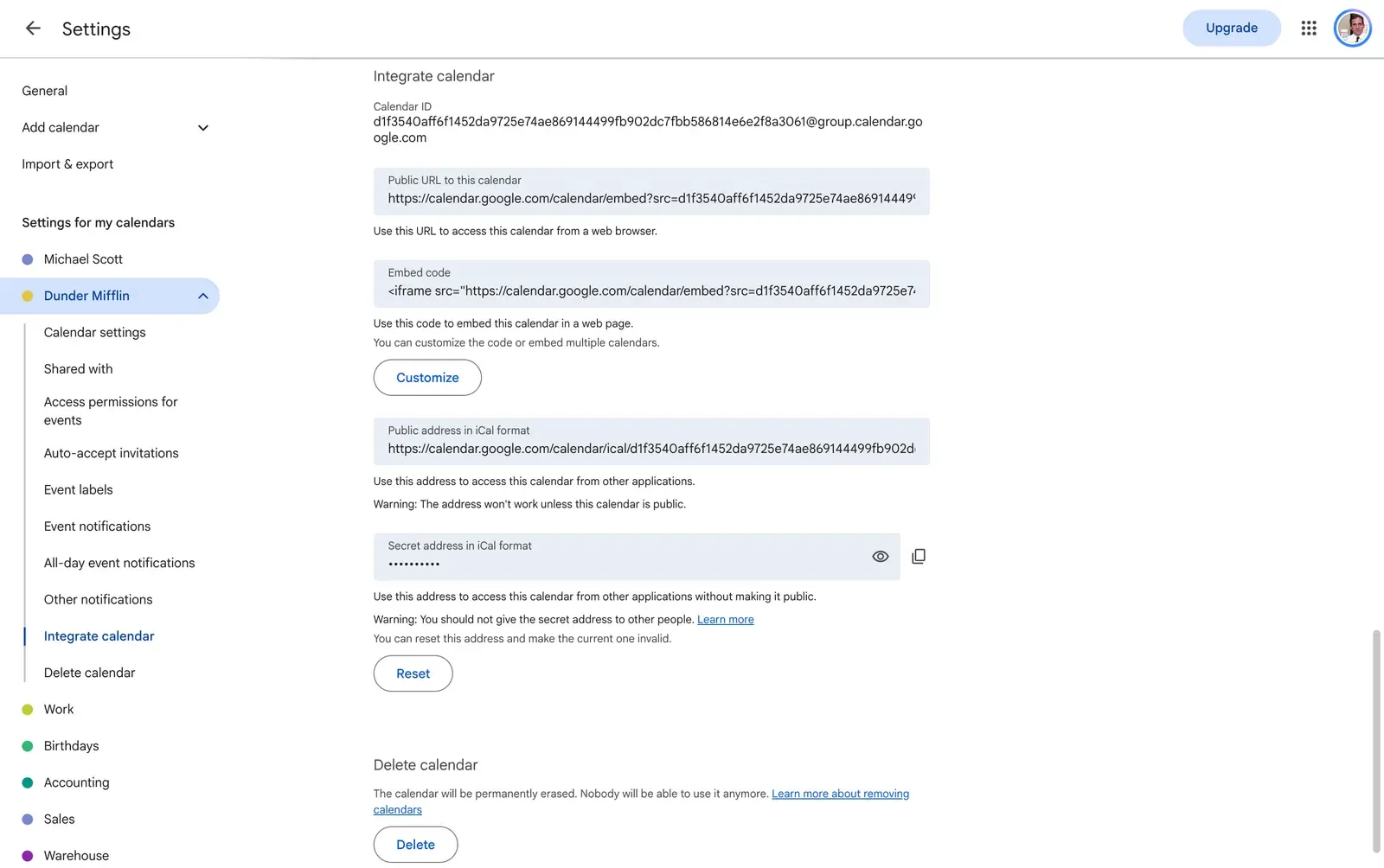
If you use a work or school account and cannot find the secret address, your admin may have changed the sharing settings. Our guide on how to get an .ics URL for your calendar explains these links in detail.
Google Calendar Privacy Checklist
Use this short list to confirm that your calendar is private:
- "Make available to public" is unticked.
- On a work or school account, "Make available for [your organization]" is unticked or set to "See only free/busy (hide details)".
- The "Shared with" list shows only people who still need access.
- Sensitive events are set to "Private".
- The secret iCal address was reset if you ever shared it.
- Third-party apps that you no longer use have no access to your Google Account.
If you also use an Outlook Calendar, read on how to manage Outlook Calendar visibility to make sure your Outlook Calendar is private and you're not sharing it with someone you shouldn't.
How to privately share Google Calendar with other Google or Outlook calendars
You might be inclined to export a Google Calendar and import it to Outlook or another Google Calendar to streamline the schedule and prevent double bookings. You do not have to make the Google Calendar public to do this, because Google provides a "Secret address in iCal format". Still, the secret link shows every event and all its details to anyone who has it, which puts your Google Calendar's privacy at risk if the link ends up in the wrong hands.
The most secure way to share your Google Calendar with other calendars, while keeping the events private, is by using OneCal. Using OneCal, you can securely share your Google Calendar with Outlook or Google Calendar, without worrying that others might see your private event details.
The illustration below shows a visual representation of how OneCal automatically syncs Calendars in real-time.
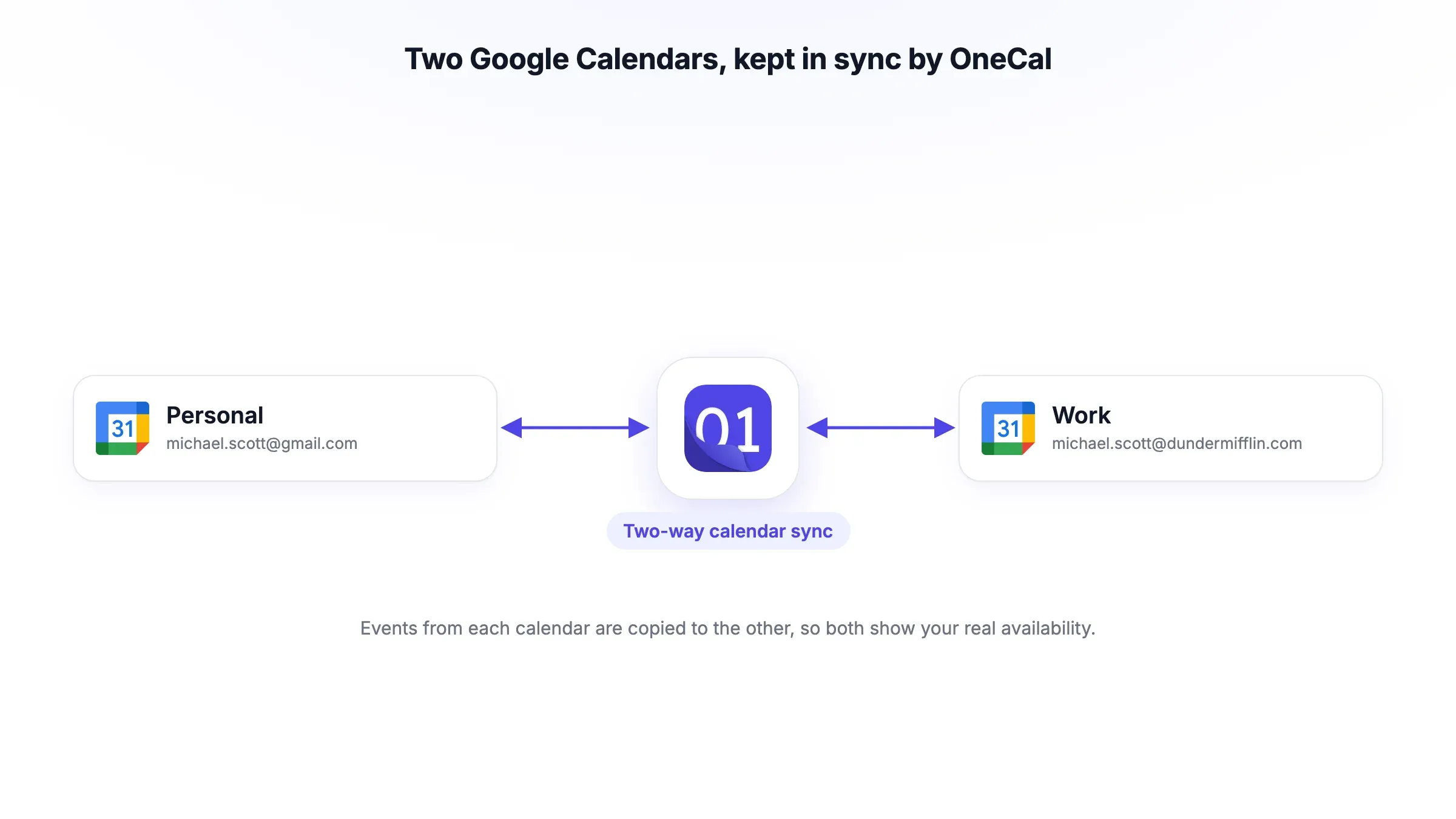
Follow this step-by-step guide on how to sync your Google Calendars using OneCal:
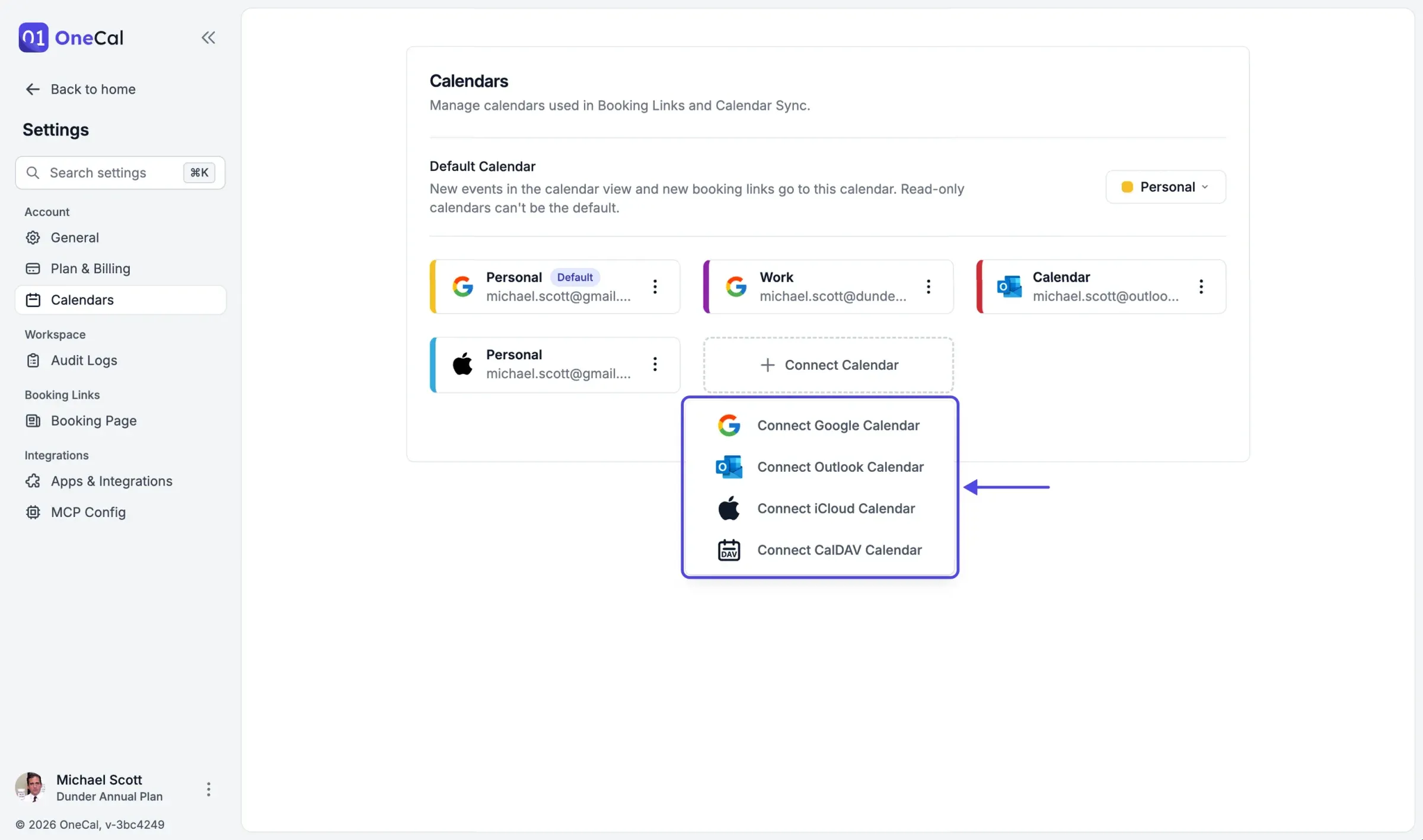
- Connect your Google Calendars: You can connect multiple Google Calendars to OneCal (2, 5, or 50 calendars, depending on your plan), and you can share them at once, without the need to repeat the same steps for each calendar.
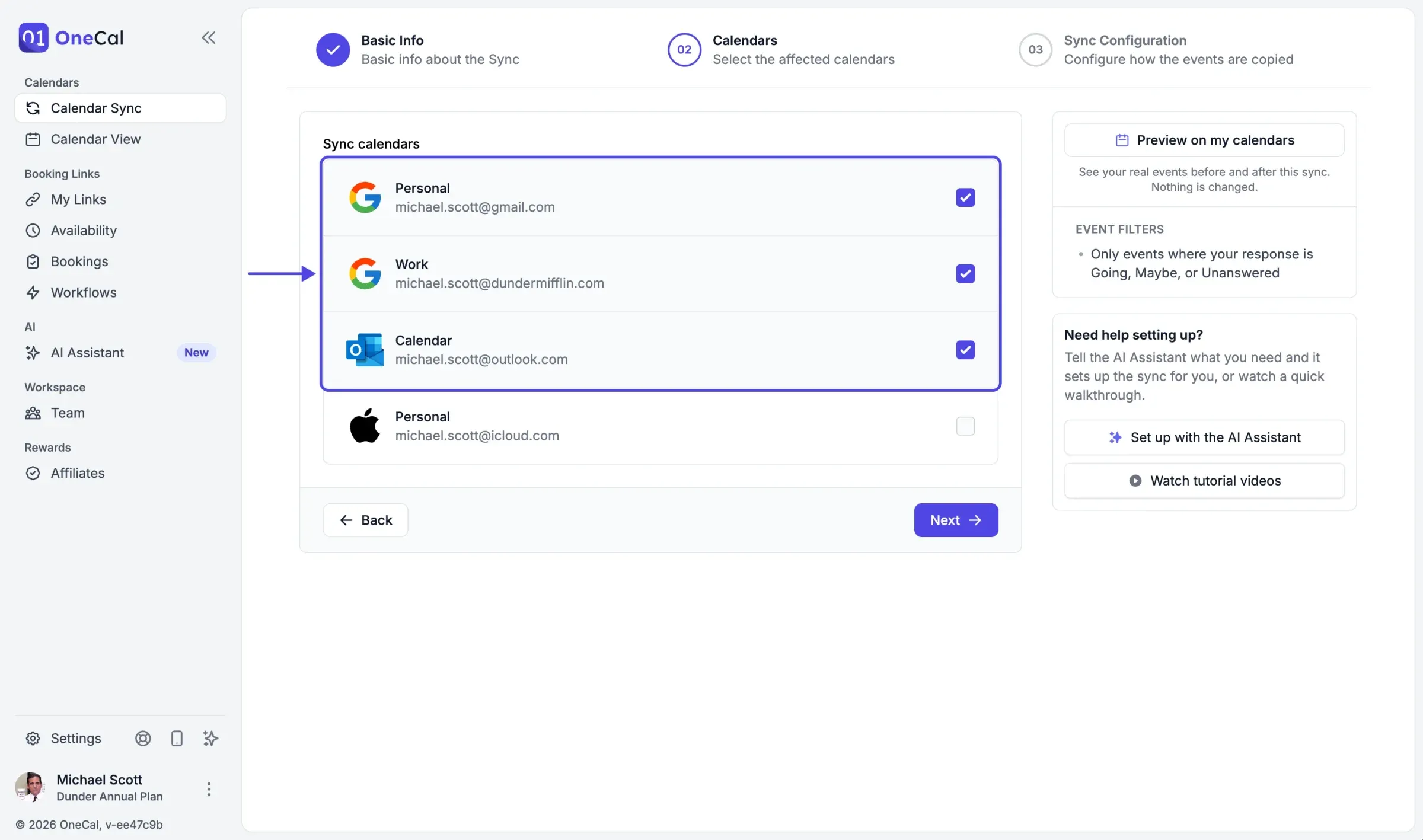
- Choose which calendars to sync: Using OneCal, you can sync one calendar to another, to many, or multiple calendars simultaneously. The platform is fully configurable and modular.
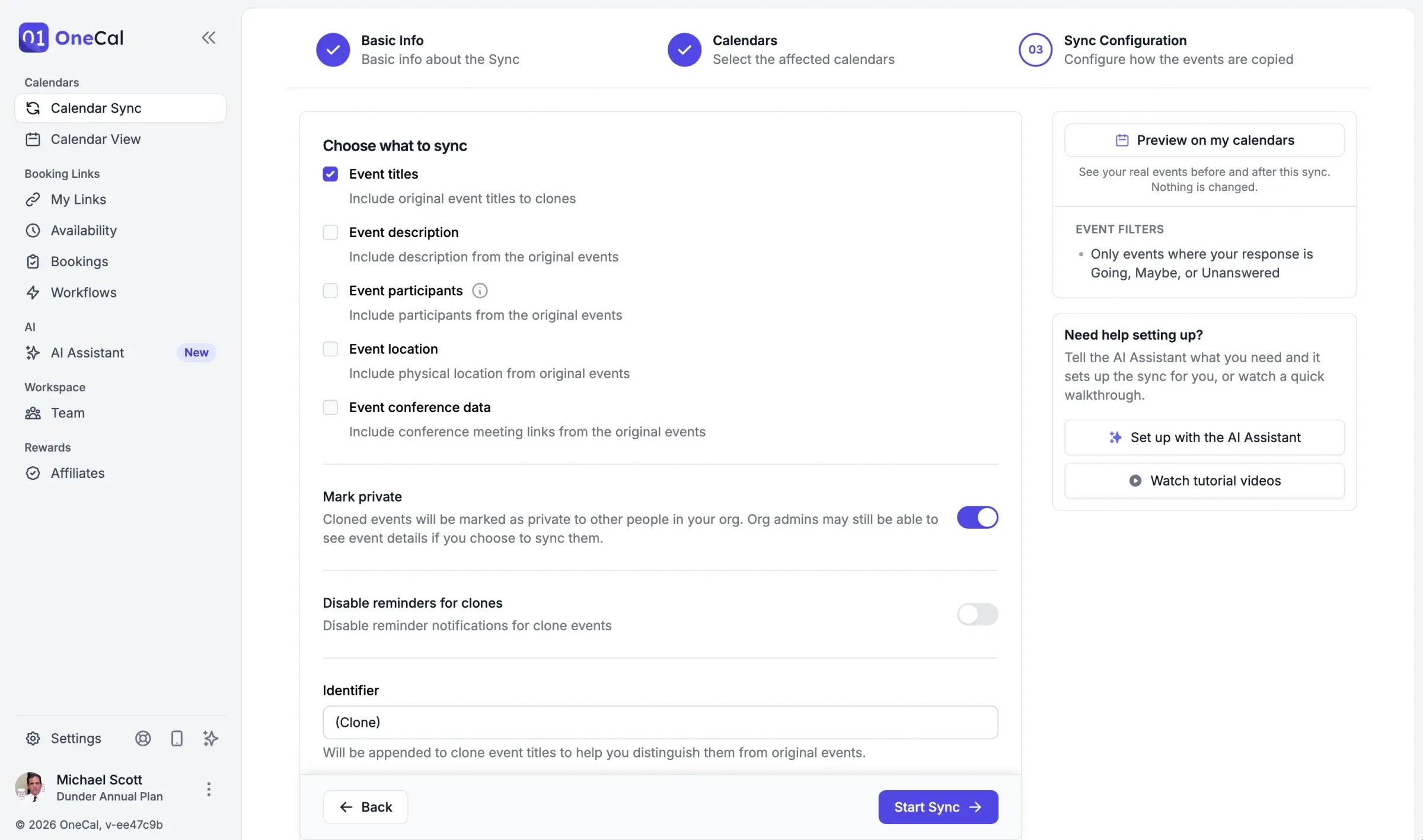
- Configure how events are copied: This is the major difference between OneCal and sharing manually via Google Calendar. Google Calendar lets you share either all event details or only free/busy, but it cannot share some fields and hide others. OneCal lets you pick each property of your events that you want to copy, such as the title, description, participants, location, and meeting link. You can also hide titles behind a custom title such as "Busy" and mark the copies as private.
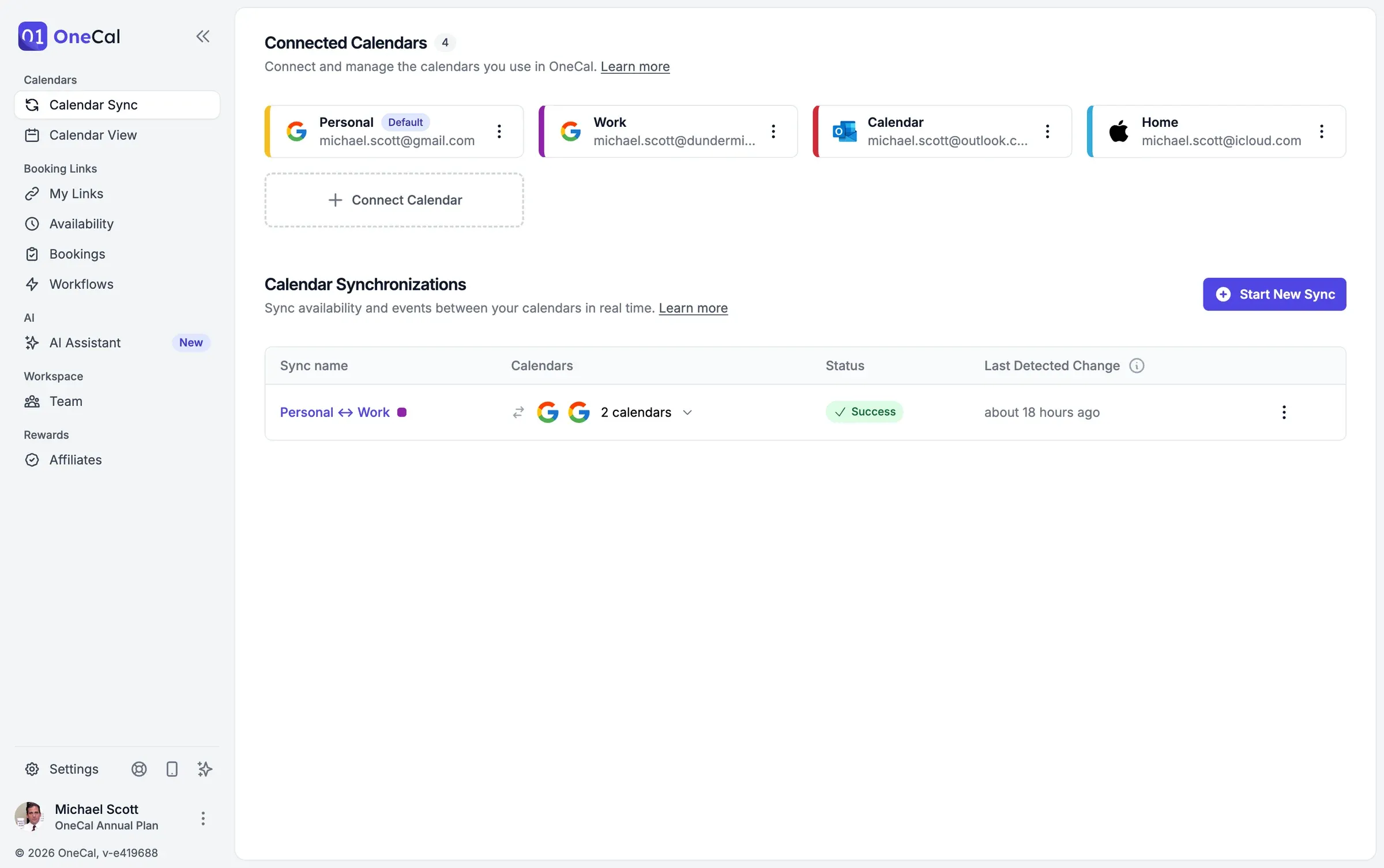
- Your Calendars are synced! OneCal keeps Google and Outlook calendars updated in real time.
Keep Your Google Calendar Private and Secure Using OneCal
OneCal is the go-to platform when it comes to managing Google Calendars. It allows you to sync your Google, Outlook, iCloud, and CalDAV calendars while keeping your calendars private and secure.
For each calendar sync, you can hide titles behind a custom title such as "Busy", mark the copies as private, and leave out descriptions, participants, and locations. OneCal is SOC 2 Type II compliant and does not store your calendar event data, and you can read more on the data security page.
You can sign up for a 14-day free trial, with no credit card required, to try syncing your calendars using OneCal. Avoid meeting conflicts and privacy concerns, save time, and focus on what matters.
FAQ
What's the safest way to share a Google Calendar with Outlook without exposing event details?
Use OneCal to sync the two calendars. OneCal copies only the fields you choose (for example, just busy blocks, or just event titles), so private information stays hidden.
Why is exporting a Google Calendar and importing it elsewhere risky?
The secret iCal link shows every event with full details to anyone who has the link, and it keeps working until you reset it. If you make the calendar public instead, the calendar can also be found through Google Search. A calendar sync that copies only busy blocks avoids both risks.
How does OneCal differ from Google's built-in sharing?
Google sharing works per calendar, so a person sees either all event details or only free/busy, and Google cannot share some fields while hiding others. OneCal lets you choose individual fields to sync (title, description, participants, location, meeting link), for each calendar sync, keeping sensitive data private.
Furthermore, unlike Google Calendar sharing, which creates a secondary calendar when imported, OneCal syncs calendars directly and accurately blocks your availability across all calendars (secondary calendars don't block your availability).
Is it safe to post a public calendar link on social media?
Only if the calendar shows free/busy only. Otherwise, the link can reveal your full schedule to strangers.
Is my Google Calendar private by default?
A personal Google Calendar is private by default, so nobody can see it until you share it or make it public. In a Google Workspace account, the admin sets a default for sharing inside the organization, so coworkers may see your free/busy times or your event details until you change your calendar settings.
What do other people see when I mark an event as Private?
They see a block that says "Busy" with no title or details, while only you and people who have "Make changes and see all event details" access or higher can see the details.
Can I make a Google Calendar event private on my phone?
Yes. In the Google Calendar app, open the event, tap the Edit (pencil) icon, tap "Default visibility", choose "Private", and tap "Done".
What does "See only free/busy (hide details)" mean?
It means people can see when you are busy, but they cannot see event names, guests, locations, or descriptions.
Can my employer or Google Workspace admin see my private events?
Yes, on a work or school account, they can. Google's admin help says that super administrators and admins with the Manage Calendars permission can see all event details in everyone's calendars, no matter how the calendars are shared. Keep personal events on a personal Google account if you do not want your employer to see them.